Leave your number. A trip expert calls you back with routes, dates and an honest word on the altitude.
2027 dates are not out yet
The Government of India has not yet announced the 2027 schedule or registration dates. They are published on kmy.gov.in, and places on the official Yatra are allotted by a computerised draw. Private journeys through Nepal run on their own operator dates and are separate from the official Yatra.
Travels from Nepal into Tibet on its own dates, with no ballot to win. Permits, itinerary, cost and border arrangements are all separate from the official Yatra.
Fixed departures, by helicopter or overland
Tibet China visa and permits arranged for the group
Both are official. One is the traditional trekking route, the other the gentler alternative.
What you are choosing
Lipulekh PassUttarakhand
Nathu La PassSikkim
Status
Traditional official route
Alternative official route
Running since
1981
2015
Approximate duration
About 22 days
Not stated in the official sources
Approximate cost
About Rs 2.09 lakh per person
Not stated in the official sources
Trekking load
About 200 km of trekking
Typically less trek-heavy than Lipulekh
Agency on the Indian side
KMVN
STDC
Suits
Pilgrims who want the traditional route and are comfortable with long trekking.
Travellers who prefer a less strenuous journey with official logistics on the Indian side.
Where a figure is missing, the official sources do not state one. Confirm everything on kmy.gov.in before you apply.
How the official application works
Check your eligibility on kmy.gov.in.
Make sure your passport is valid for at least six months from the year of travel.
Fill in the online application and choose your route.
Upload the documents and complete the declarations.
Wait for the computerised draw of lots.
If you are selected, complete the medical screening for high altitude travel.
Follow the logistics for your route: KMVN for Lipulekh, STDC for Nathu La.
Attend the pre-departure briefing and travel with your assigned batch.
What you need to have ready
For the official Yatra
An Indian passport valid for at least six months from the year of travel
The online application completed on kmy.gov.in
Passport size photographs as the portal asks for
Scanned copies of your passport
The declarations and undertakings the portal requires
Medical fitness documents, after selection
Any route specific forms from KMVN or STDC
For a private journey
A colour scan of your passport, for the permit application
An ordinary passport valid six months or more. Diplomatic passports are not accepted
Your original passport with four photographs, for the China visa stamp
Indian passport holders should also carry a voter card
Foreign passport holders reach Kathmandu three working days early for the Chinese visa
The ground
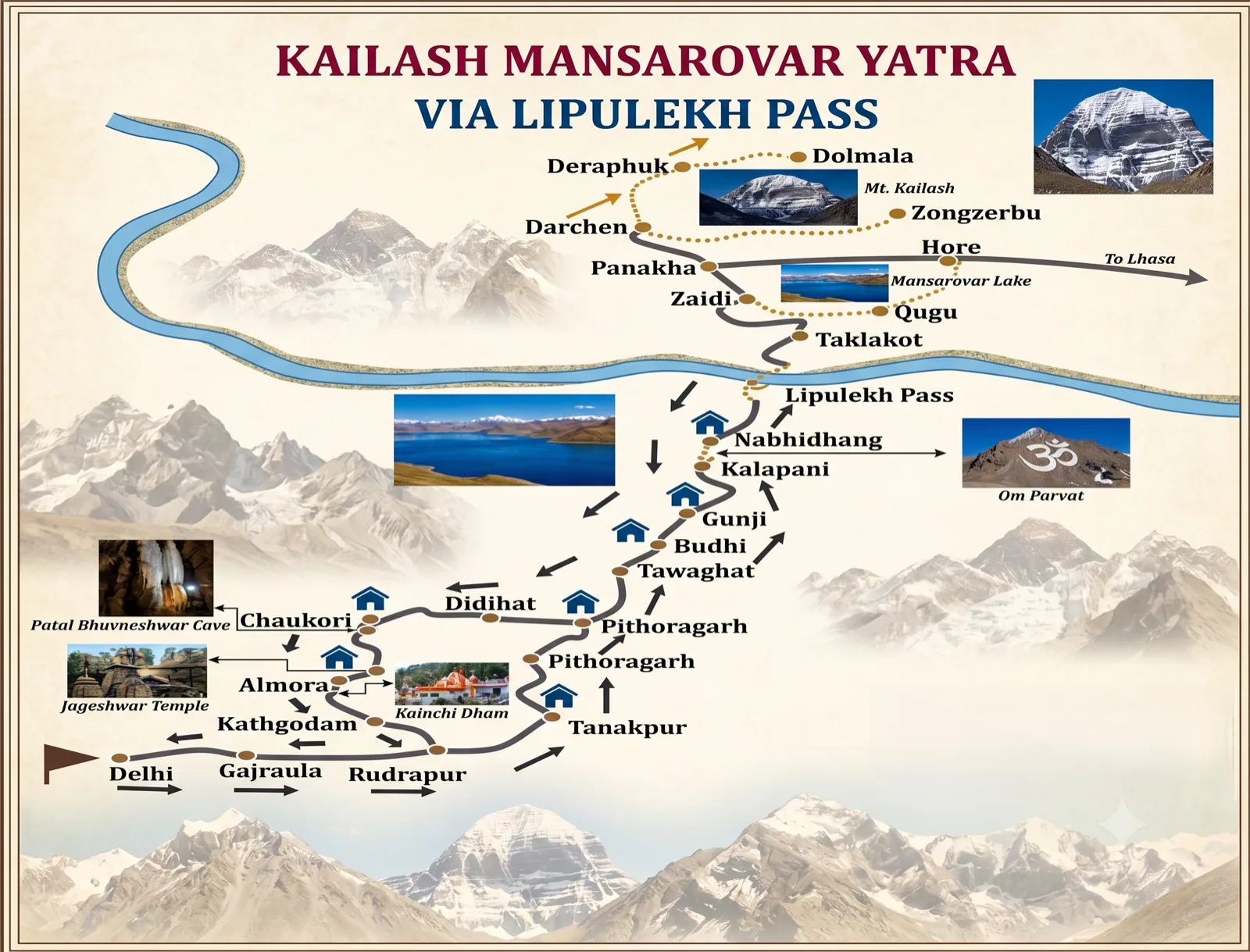
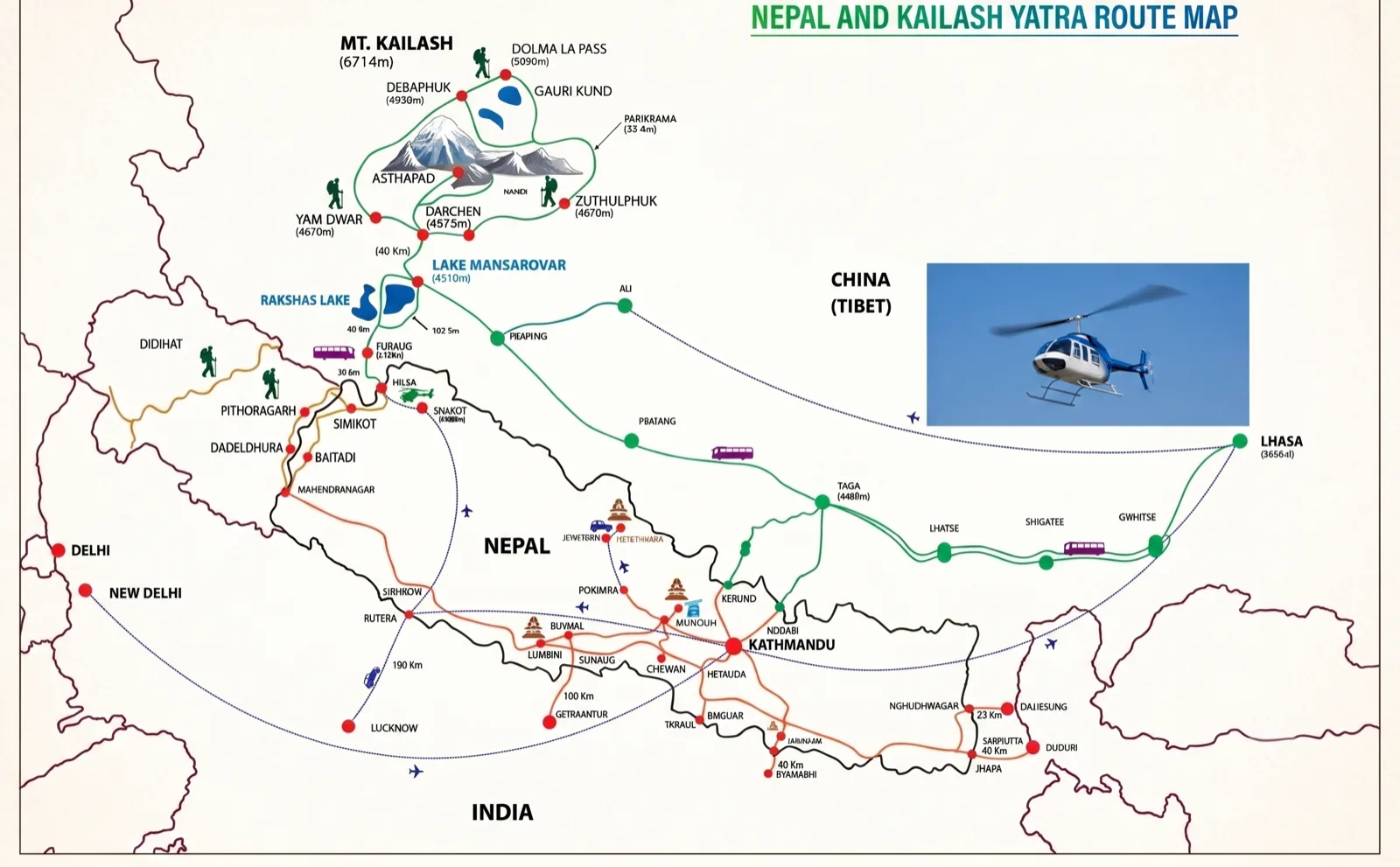
The two ways in, drawn out
The Indian route over Lipulekh, and the Nepal route that our journeys use.
Via Lipulekh Pass, the traditional Indian routeVia Nepal, by road and by helicopter
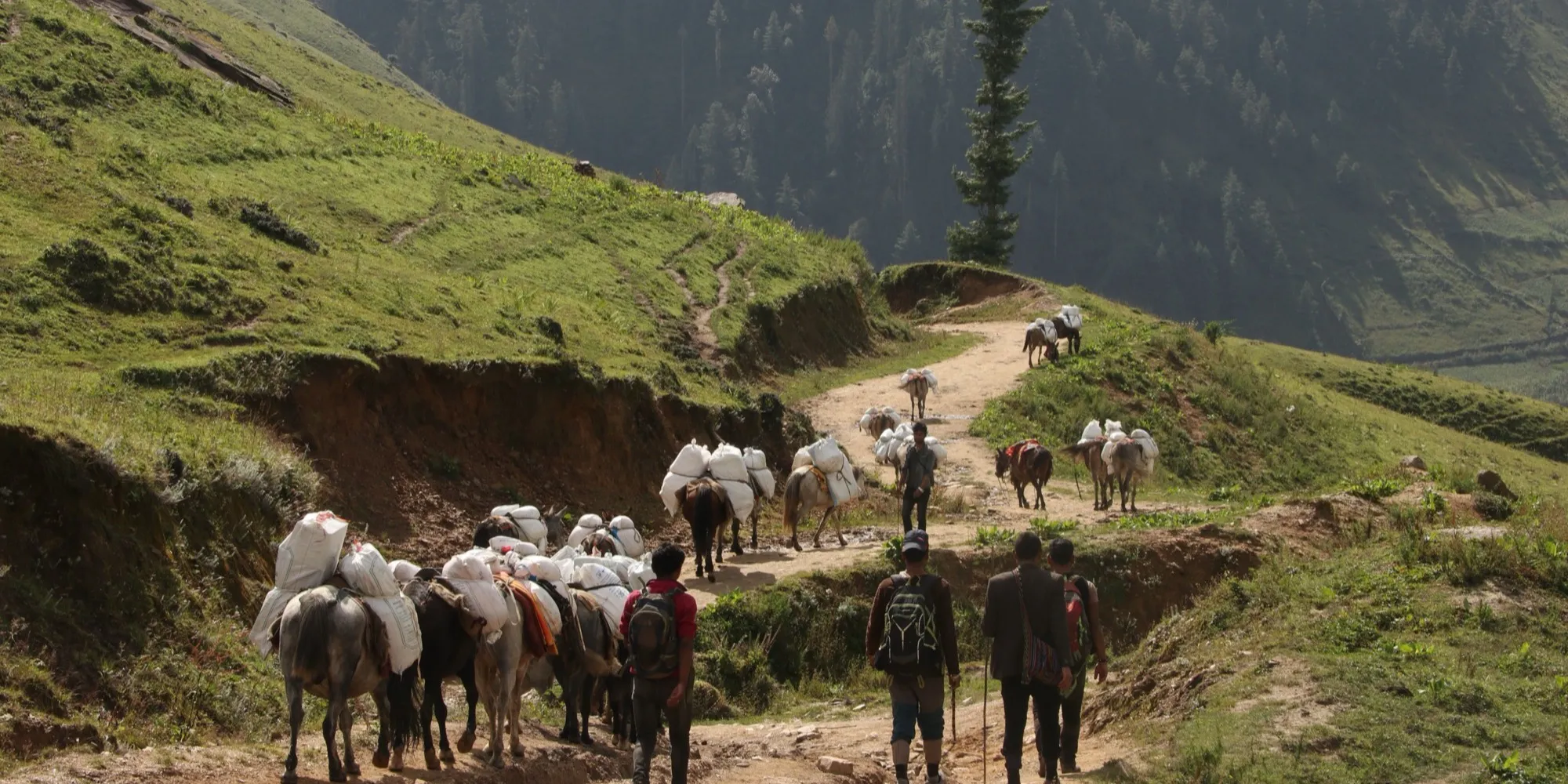
The Nepal overland route
Kathmandu to Darchen, 3,300 metres upward
Read left to right and you are climbing. The gap between two stops is why the journey takes the days it does.
1,300 mKathmanduWhere the journey is prepared: documents, briefing and group arrangements.
1,600 mSyabrubesiThe first long mountain drive, and the last Nepali town before the border.
2,900 mKerungThe border crossing into Tibet, and the first real acclimatisation stop.
4,450 mSagaA remote, open stretch of the plateau. Travel slowly and drink more water here.
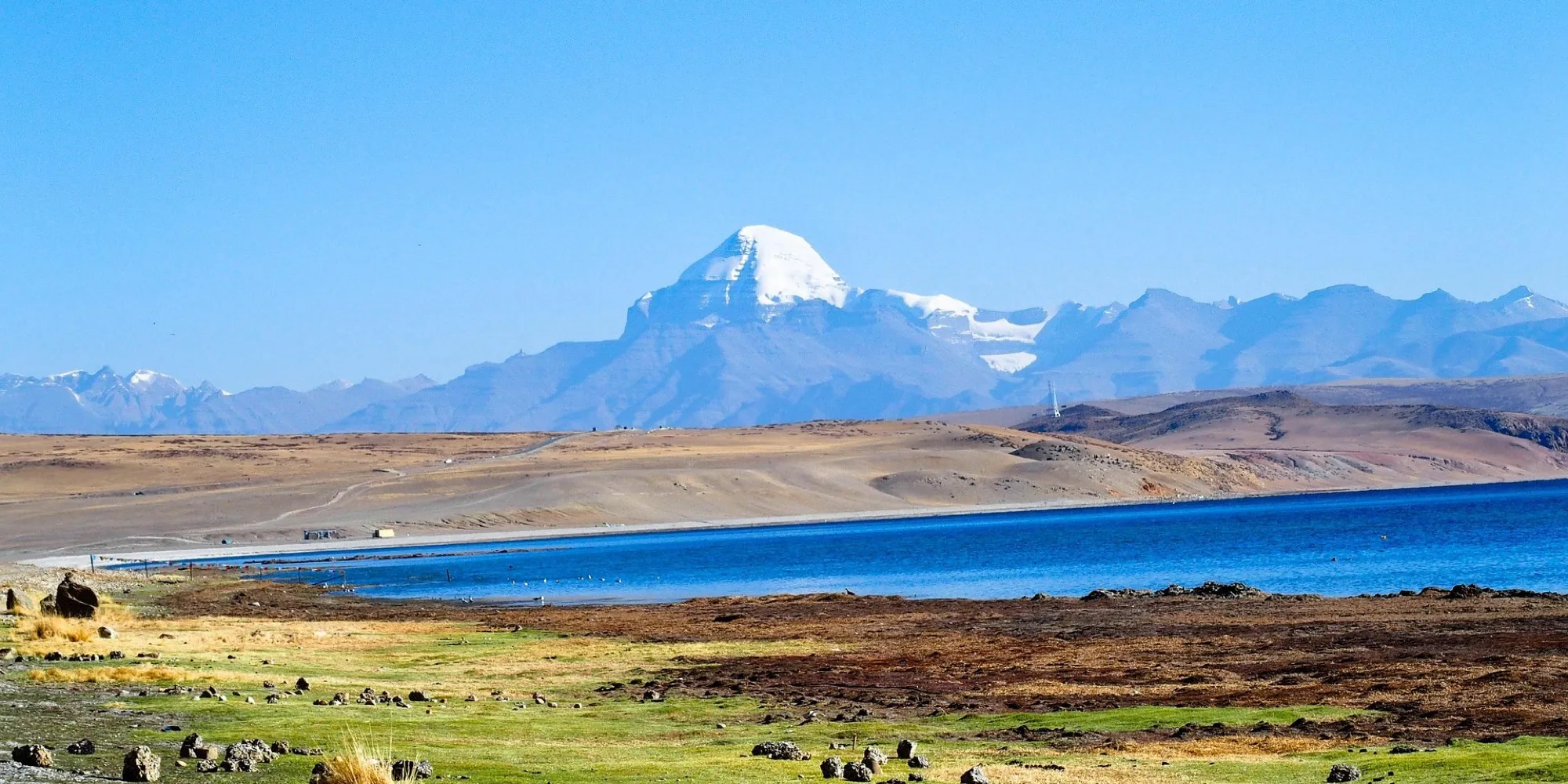
4,500 mLake MansarovarFor most pilgrims the emotional centre of the journey.
4,600 mDarchenThe base for the Kora. Gear, warm clothing and papers are checked here.
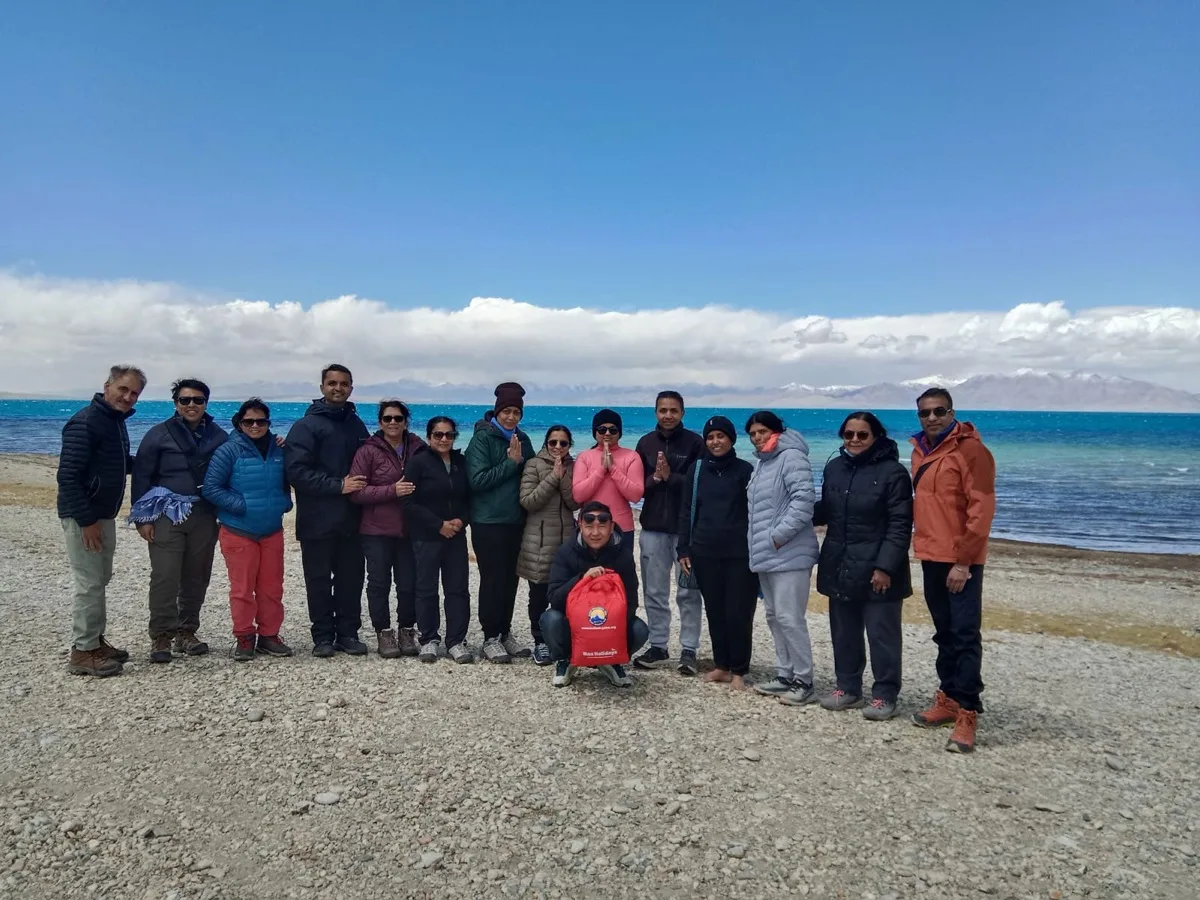
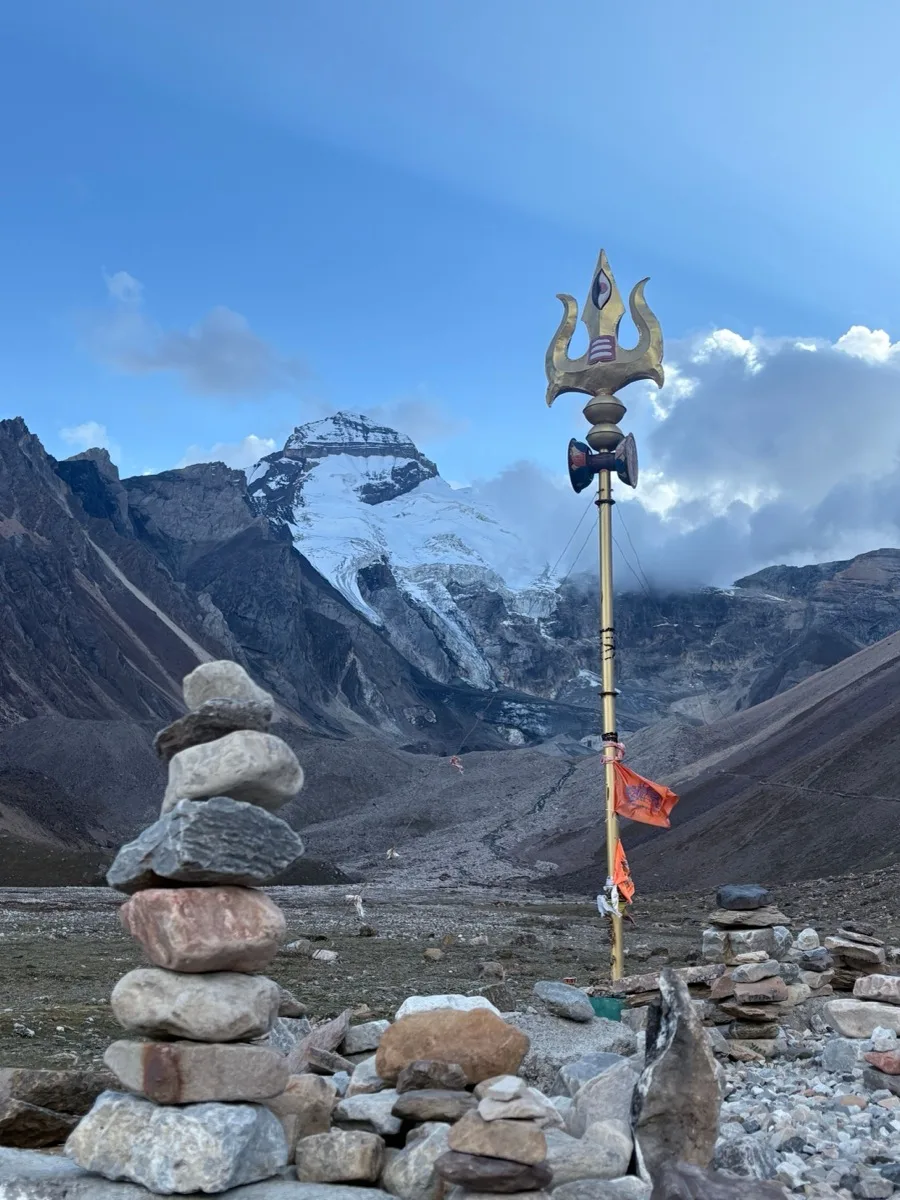
The Nepal side, before the plateauLake Mansarovar, 4,500 m
The parikrama
The Kailash Kora
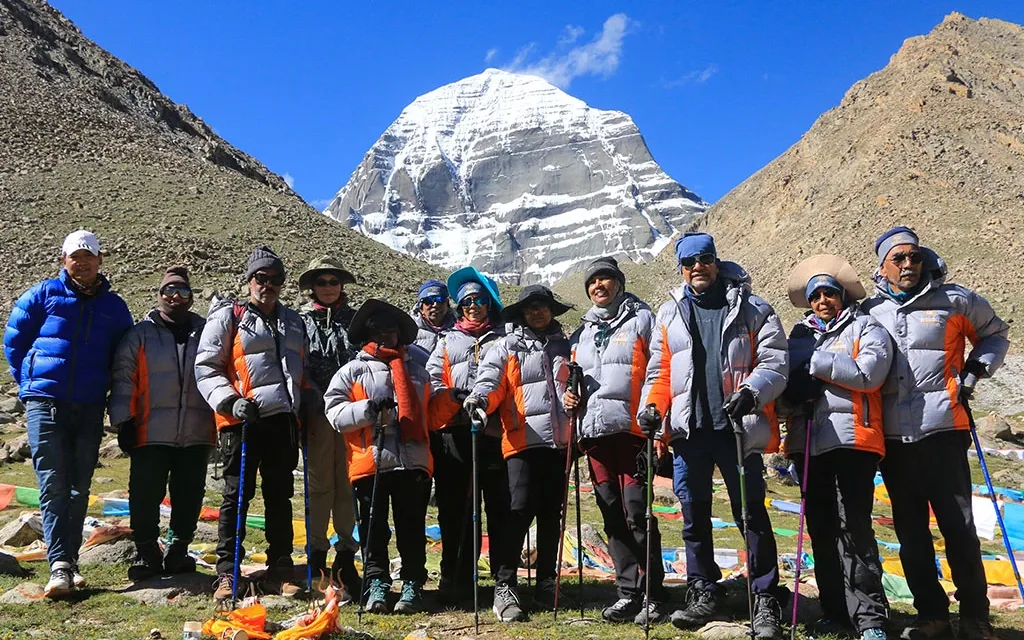
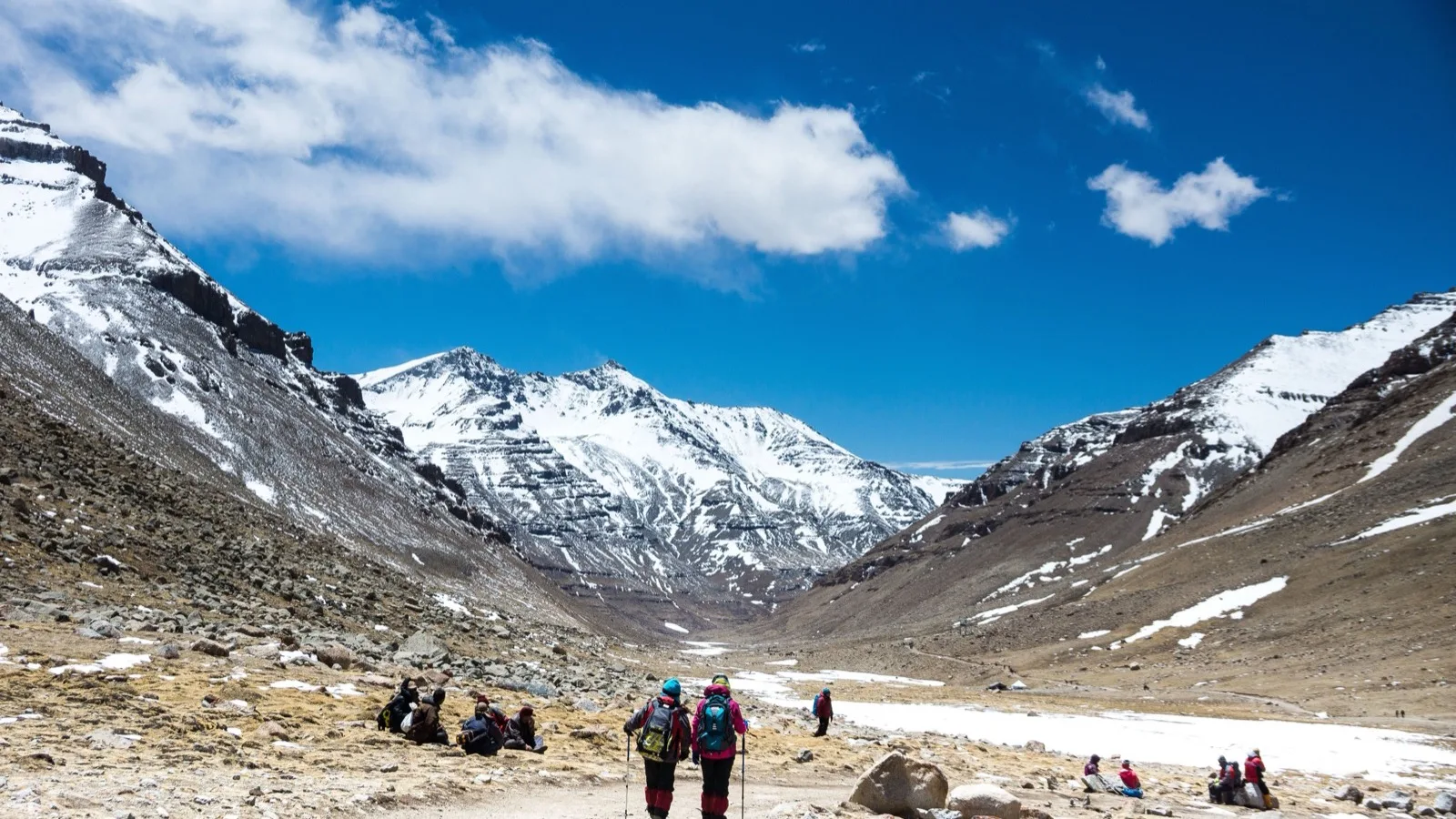
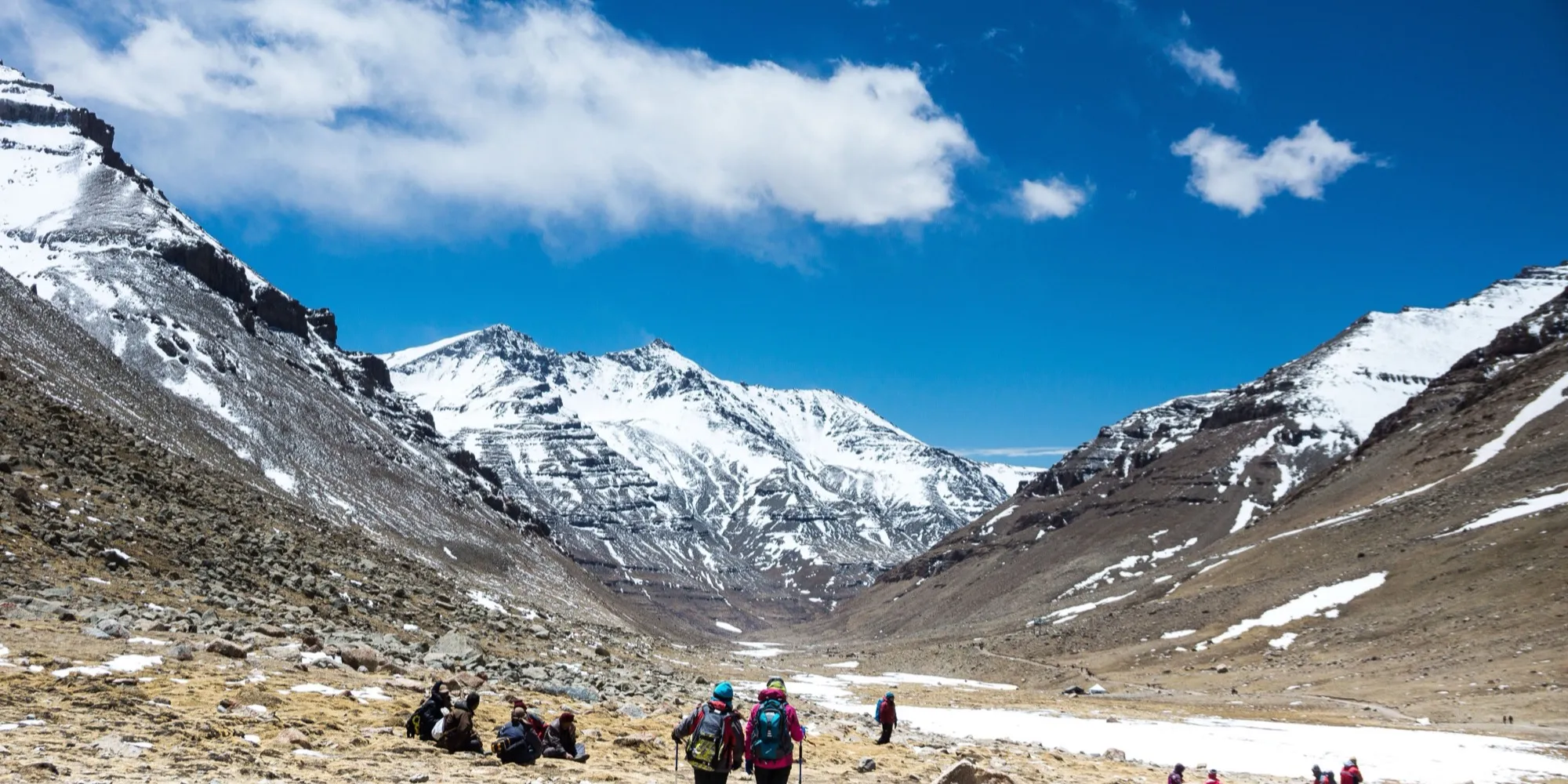
The Kora is the sacred walk around Mount Kailash, three days on foot from Yamadwar back to the road head at Maniwall. It is hard work, and the reason is the altitude rather than the gradient: the highest night is at Derapuk, 4,890 m, and even a fit walker finds the days longer than the distances suggest.
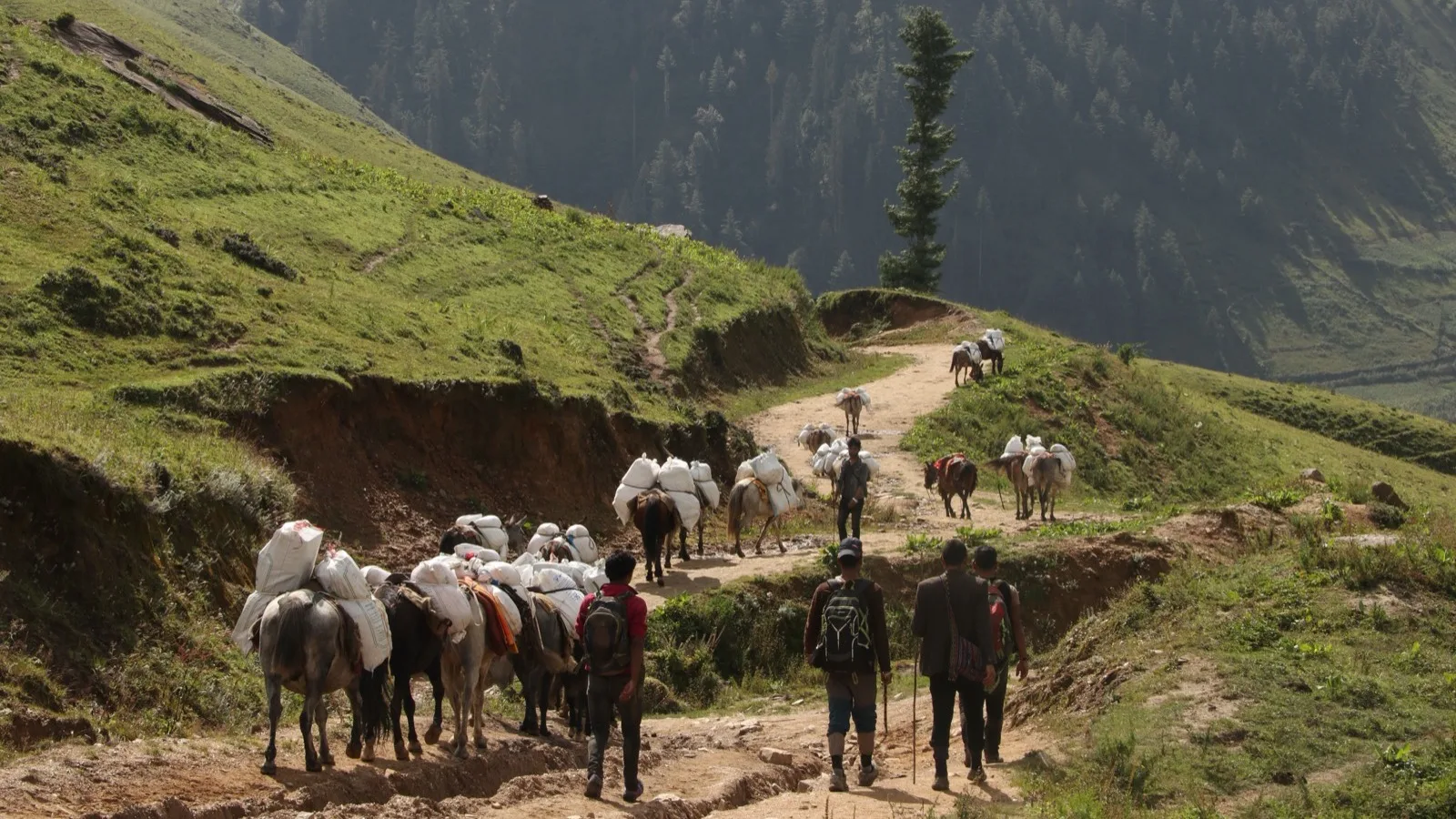
Not everyone walks it, and the journeys are planned for that. Pilgrims who are not walking go to Yamadwar, take darshan of Mount Kailash, complete three parikramas there and wait at Darchen while the rest of the group is on the circuit. Horses can be hired for the long middle day.
4,730 mYamadwarThe gateway where the Kora begins. Pilgrims who do not walk the full circuit come here, take darshan and turn back.
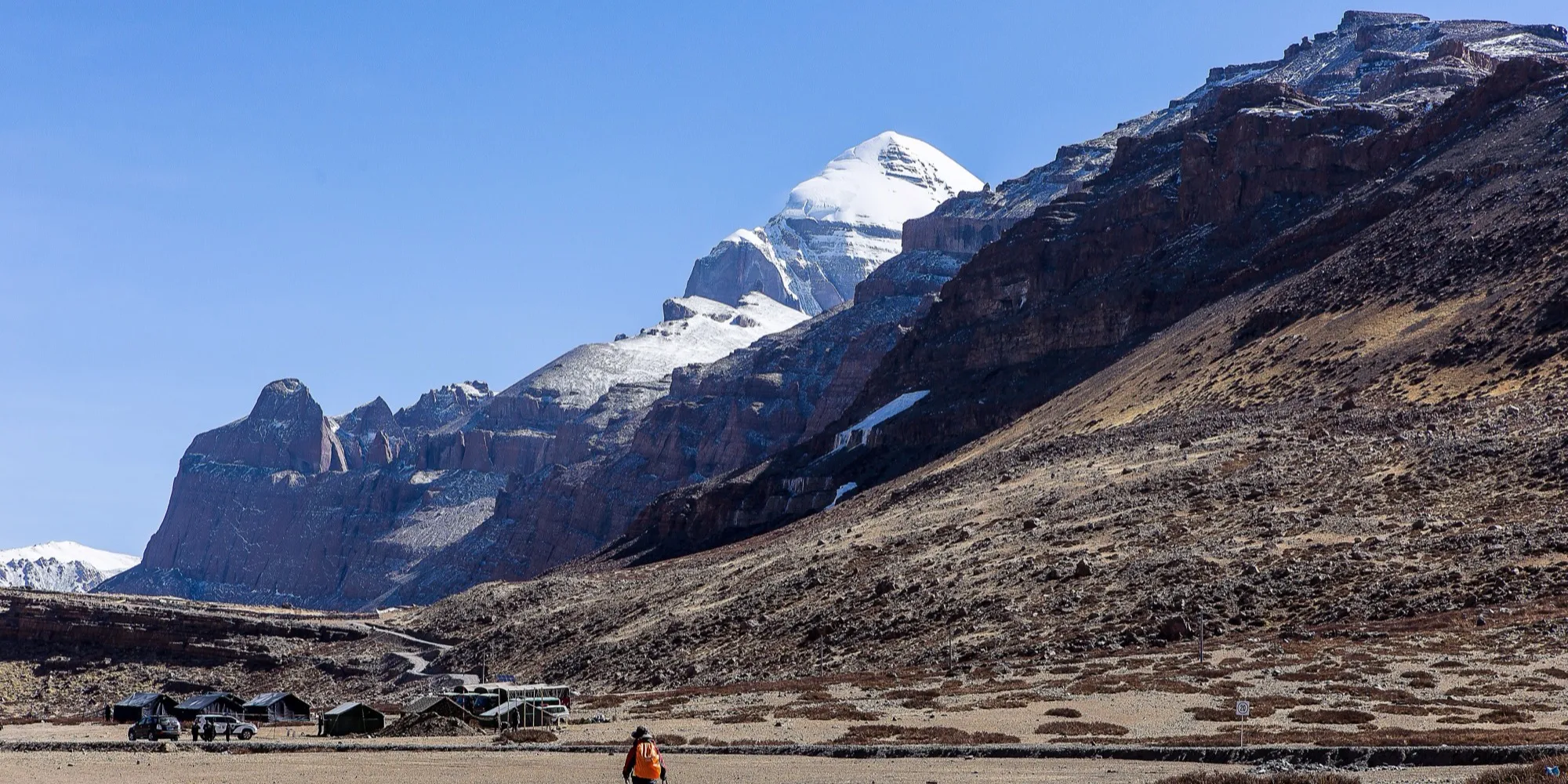
4,890 mDerapukDay one of the Kora, about 12 km on foot, facing the north face of Kailash.
4,790 mZuthulphukDay two, about 22 km. The longest day, demanding because of the altitude rather than the climb.
4,600 mManiwallAbout 8 km down to the road head, where the vehicles wait.
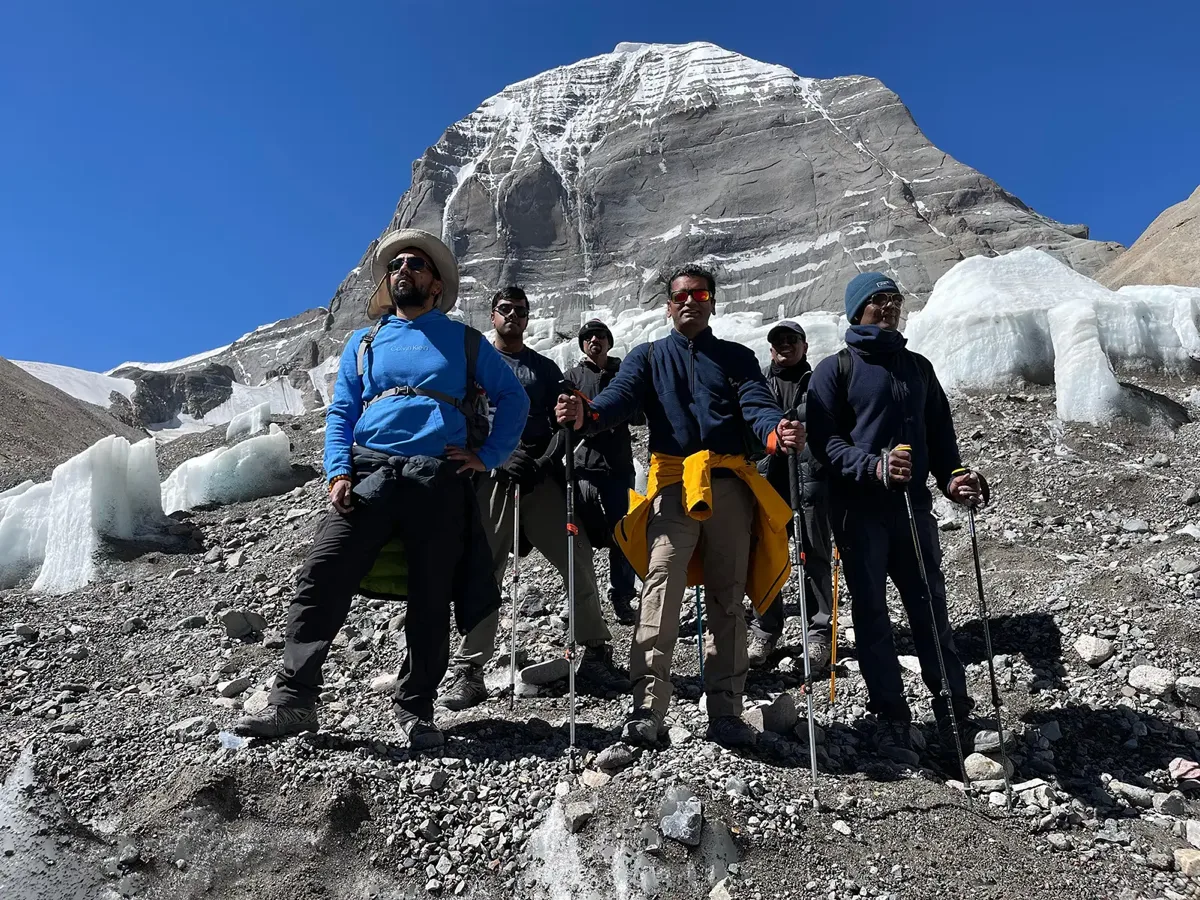
Below the north face, on the first day of the Kora
Our journeys
Two ways we take you, both through Nepal
One trades days for helicopter legs. The other treats the road as part of the pilgrimage.
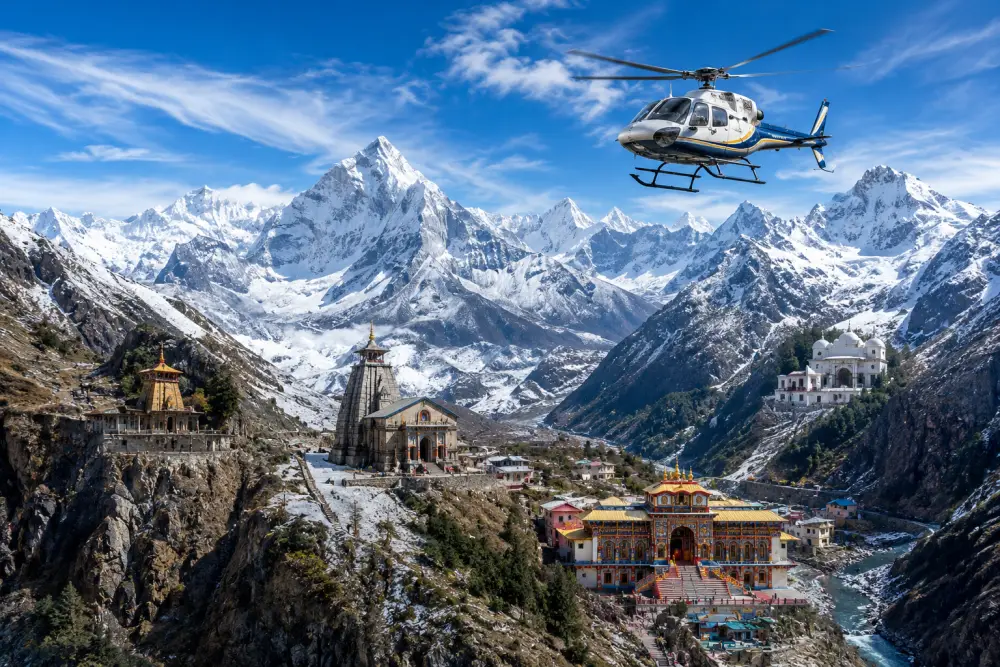
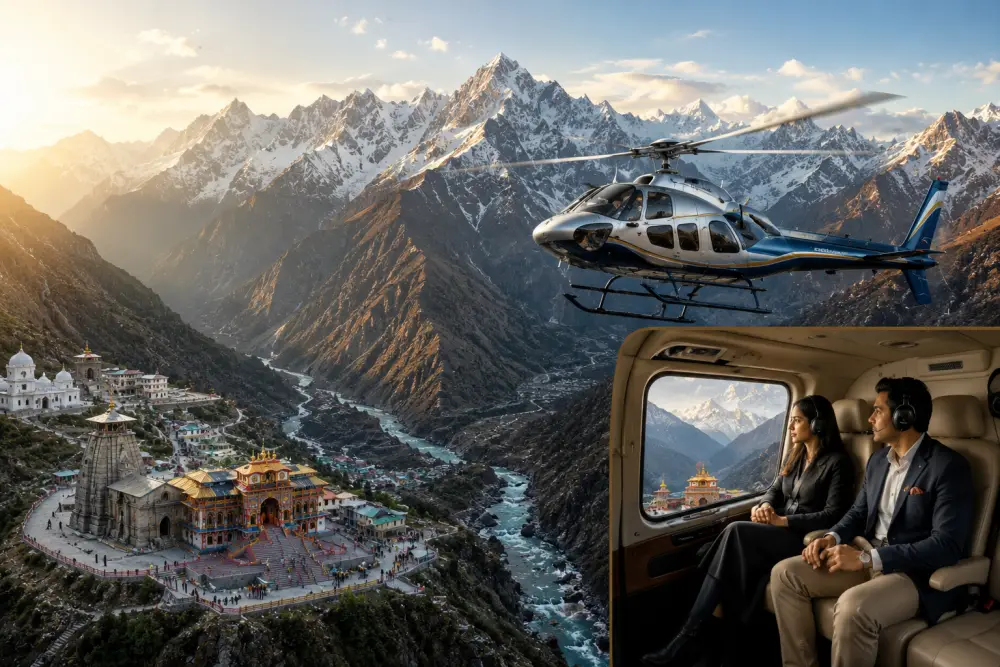
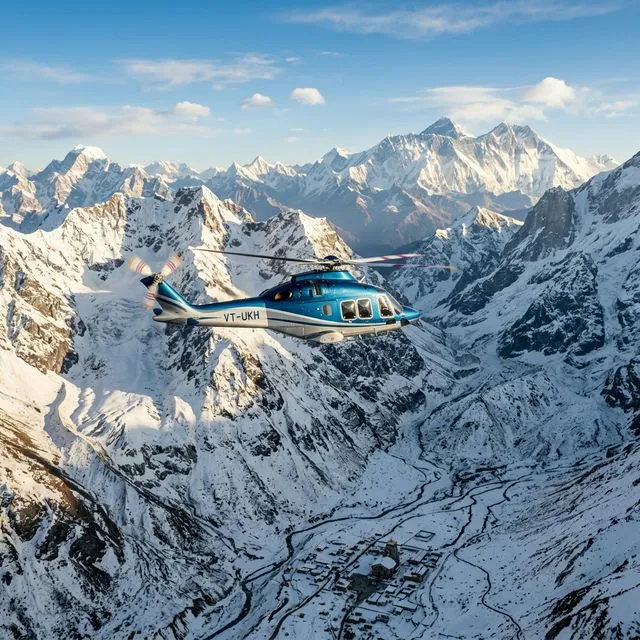
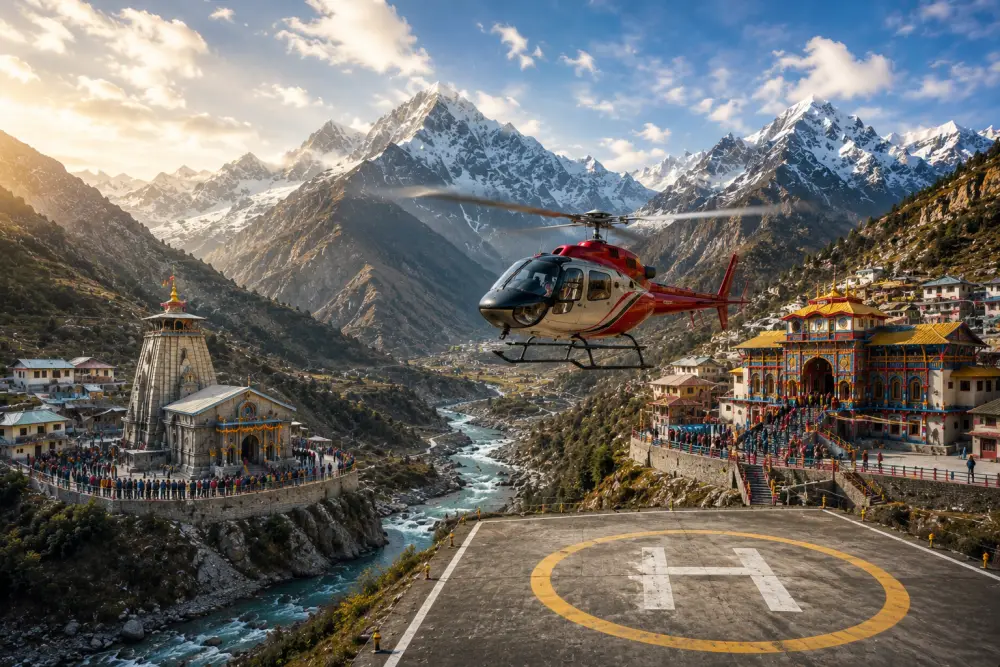
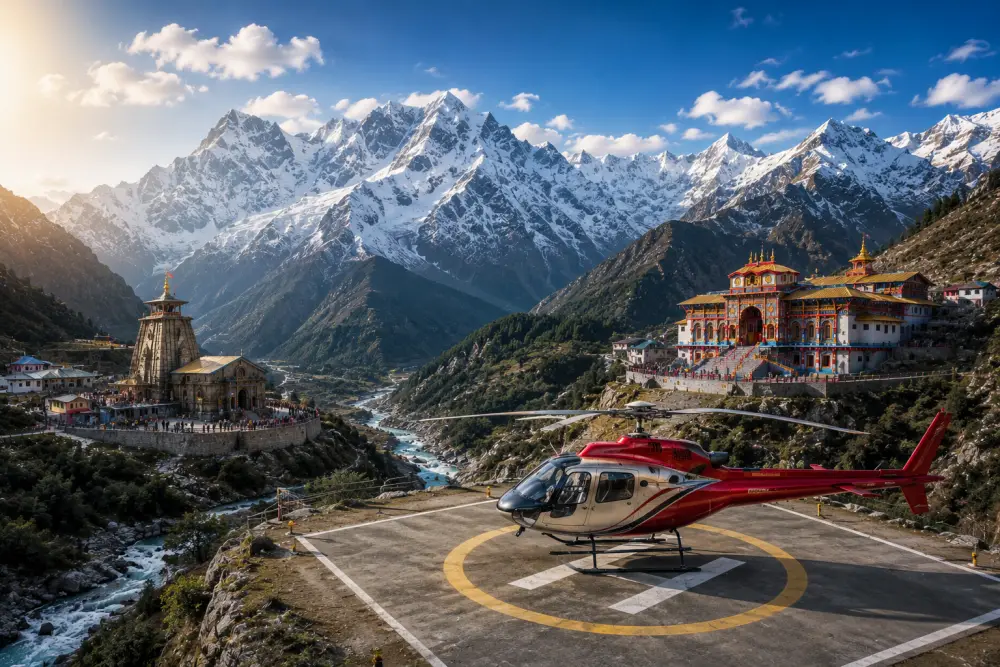
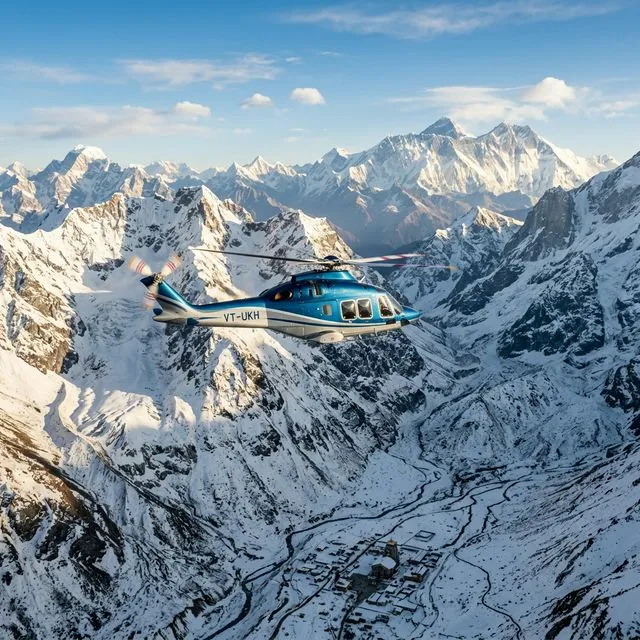
The short route. A flight to Simikot and a helicopter over the Himalaya to Hilsa cut out the long overland drive, so the whole pilgrimage fits into nine days from Lucknow.
The classic overland pilgrimage. Fourteen days from Kathmandu across Nepal and the Tibetan plateau, with two acclimatisation days built in and the road journey treated as part of the pilgrimage rather than a transfer.
None of it is expensive, and all of it has to start months before you travel.
Start earlyDocuments, clothing and health checks all take longer than people expect. None of it can be done in the last week.
Walk before you goRegular walking in the months before the journey does more for you than anything you can buy.
Pack for coldWeather on the plateau changes within an hour. Layers matter more than one heavy coat.
Drink more than you want toHydration is the simplest defence against altitude, and the easiest to neglect.
Move slowlyRushing is what makes people ill. Rest when your body asks, not when the schedule allows.
Keep papers within reachPassport and permits are checked often, and on a cold morning in a queue you will want them in a pocket, not a bag.
What to pack
Windproof jacket, a thick warm pullover and a raincoat
Thermal underlayers, warm full sleeve t-shirts and four cotton t-shirts
Four pairs of trousers, five pairs of warm woollen socks and warm gloves
Trekking shoes and a pair of rubber sandals
Monkey cap and sun hat, sunglasses
Strong sun cream, lip balm and moisturiser
A one litre water bottle, a torch with spare batteries and a dust mask
Your regular medicines and a personal first aid kit
Good to know
Temperature
Between May and August, roughly 4 to 20 C by day and minus 1 to 10 C at night.
Age limit
The Chinese authorities do not permit the Kailash parikrama for pilgrims aged 65 or above.
Oxygen
A cylinder travels with the group for emergencies. Most pilgrims never need it, and some prefer to carry a small portable one, which can be bought in Tibet.
Food
Cooks travel with the group for the whole journey and carry their own equipment. Meals are Indian vegetarian throughout.
Money
Indian rupees are accepted in Nepal but not in Tibet. Currency is exchanged into yuan on arrival.
Phone and internet
A Chinese SIM can be bought at Kerung or Taklakot. It receives calls and gives you internet, but will not place outgoing calls.
Photography in Tibet
Chinese law prohibits photographs, recordings and printed material of a political nature, including anything relating to the Dalai Lama. This is enforced.
Carry emergency cash
Keep about Rs 50,000 aside. If weather or an evacuation adds a night or a flight, it is paid on the spot.
This is not a leisure tour. Weather, roads and border formalities all change without notice, and the journey is planned to absorb that rather than pretend it will not happen.
Questions pilgrims ask
Before you commit to 2027
When do the 2027 dates open?
The Government of India had not announced the 2027 schedule or registration dates at the time of writing. They are published on kmy.gov.in, and selection for the official Yatra is by computerised draw. Private journeys through Nepal run on their own dates and do not use the ballot.
What is the difference between the official Yatra and a private journey?
The official Yatra is organised by the Ministry of External Affairs through Lipulekh Pass in Uttarakhand or Nathu La Pass in Sikkim, and you have to be selected in a draw. A private journey travels through Nepal into Tibet, has no ballot, and has its own permits, itinerary, cost and border arrangements. They are separate things, and the details of either should be confirmed with the operator and the authorities before you commit.
Do I have to walk the Kora?
No. The Kora is the three-day walk around Mount Kailash and it is demanding because of the altitude rather than the gradient. Pilgrims who are not walking it go to Yamadwar, take darshan of Mount Kailash and complete three parikramas there, then wait at Darchen while the group walks. The journey is planned so this is a normal choice, not a failure.
How high does the journey go?
The highest night is at Derapuk, 4,890 m. Lake Mansarovar is 4,500 m and Darchen 4,600 m. Both journeys build in acclimatisation days before reaching that height, which is why neither is shorter than it looks.
How fit do I need to be?
Fit enough to walk for several hours on consecutive days at altitude. Being fit at sea level does not make the altitude easier, which surprises people every year. Walking regularly in the months beforehand is the preparation that actually helps.
What happens if the weather closes the route?
The helicopter and flight legs depend on weather, and the roads on the plateau depend on conditions. If a leg cannot run, the plan changes, and costs from that change are not part of the journey price. This is why you carry emergency cash and why the journey is not planned to the last minute.
Plan your 2027
Tell us your dates. We will plan the rest.
Leave your number and a trip expert will call you back with the route that fits your fitness and your paperwork, and with the 2027 dates as soon as they are announced.
Honest advice on whether to apply for the official Yatra or travel privately
Permits, visas and the document trail handled for you
A plan built around acclimatisation, not around the shortest possible trip