








Spiritual Guides and Gurus
Aghoracharya Baba Keenaram
This article provides a comprehensive historical, philosophical, and anthropological analysis of Baba Keenaram hagiography, his seminal literary contributions, the sacred geography of his headquarters at the Krim Kund Sthal in Varanasi
 By Prerak "प्रेरक"
19 min read
By Prerak "प्रेरक"
19 min read

Socio-Spiritual Reform of Aghoracharya Baba Keenaram: The Kinarami Lineage
The evolution of the Aghor Panth within the broader tapestry of Hindu sectarian history represents one of the most radical developments in Indian non-dualistic philosophy. Historically rooted in the ancient, esoteric traditions of the Pashupatas, Kapalikas, and Kalamukhas, the Aghor path was long characterized by extreme ascetic reclusiveness, transgressive ritual practices, and a deliberate isolation from organized society. This paradigm underwent a profound structural and philosophical transformation during the seventeenth and eighteenth centuries. The primary catalyst for this shift was Aghoracharya Baba Keenaram, a historical figure who unified disparate, wandering ascetic lineages into a cohesive, institutionalized order.
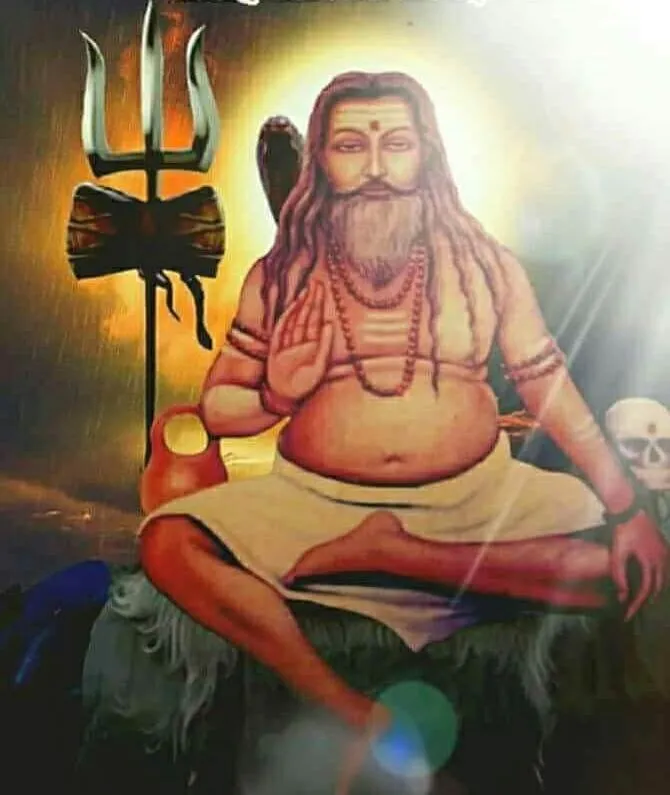
By synthesizing the rigorous, non-dualistic practices of Shaiva-Shakta Tantra with the devotional, accessible elements of Vaishnavism, Baba Keenaram engineered a unique socio-spiritual framework. This framework redirected the spiritual power (tapobal) of the ascetic toward the systemic upliftment of marginalized communities, the eradication of feudal exploitation, and the dismantling of caste-based social hierarchies. This article provides a comprehensive historical, philosophical, and anthropological analysis of Baba Keenaram's hagiography, his seminal literary contributions, the sacred geography of his headquarters at the Krim Kund Sthal in Varanasi, the unbroken succession of the Kinarami lineage, and the contemporary socio-political legacy of his mission.
Hagiography and Early Life: From Miraculous Birth to Worldly Renunciation
The historical reconstruction of Baba Keenaram’s early life requires navigating a rich hagiographical tradition that frames his physical incarnation as a direct manifestation of Lord Shiva. Born in 1601 CE (Vikram Samvat 1658) on Aghor Chaturdashi in the month of Bhadrapad, Keenaram emerged from a modest Kshatriya agrarian family in the village of Ramgarh, historically a part of the Varanasi division and later bifurcated into the Chandauli district of Uttar Pradesh. His parents, Akbar Singh and Mansa Devi, had reached middle age without conceiving a child; their fortunes changed following a premonitory dream experienced by Mansa Devi, which foretold the birth of a spiritually transcendent soul.
                     [Birth: 1601 CE, Ramgarh]
                                |
               (Three-day Silence & Monastic Blessing)
                                |
            [Naming Custom: Symbolic Sale for Gold ("Keena")]
                                |
               (Tragic Premonition: Bride's Death)
                                |
                [Renunciation & Search for Gurus]
At his birth, several extraordinary anomalies were recorded that signaled his eventual spiritual departure from conventional societal norms. Hagiographical accounts state that the newborn child neither cried nor suckled at his mother’s breast for the first three days of his life. This state of suspended animation was broken only on the third day when three wandering monks, traditionally understood to be earthly manifestations of the Hindu triad (Brahma, Vishnu, and Shiva), arrived at the household, took the infant in their arms, and whispered sacred mantras into his ear. Upon receiving this transmission, the child began to cry, an event commemorated through the celebration of the Lolark Shashti festival, which serves as the traditional initiation rite (Sanskar) of the child.
Astrological calculations performed shortly after his birth predicted a life of immense spiritual longevity and global renown, but warned of severe existential perils if the child remained legally and symbolically within his natal family. To avert these unfavorable astrological portents, his parents adhered to a local symbolic custom. The newborn was temporarily transferred to a neighboring family and subsequently "sold back" to his biological parents for a token quantity of gold. This transaction gave rise to his name Keena (derived from the vernacular term for "bought"), while his formal astrological name was recorded as Rashi.
Even during his early childhood, Keenaram demonstrated a profound inclination toward asceticism. At the age of five, while peer groups engaged in conventional play, he collected stones to serve as crude representations of deities, performing elaborate pujas with wild flowers and water, and chanting the names of the Divine for hours.
This trajectory of intense spiritual detachment was dramatically accelerated by personal tragedies during his youth. In accordance with the socio-religious expectations of the era, Keenaram's parents arranged his marriage when he reached the age of twelve. The night prior to the formal Gauna ceremony—the ritual consummation where the bride is formally escorted to her in-laws' home—the young Keenaram demanded a meal of rice and milk from his mother.
In the cultural framework of northern India, this specific meal was strictly associated with mourning and funerary rituals, and its consumption prior to an auspicious occasion was considered a terrible omen. Despite his mother's intense distress and efforts to dissuade him, Keenaram remained resolute and consumed the meal. The following morning, the family received news that the prospective bride had suddenly passed away. Following this event, and the subsequent death of his parents during his teenage years, Keenaram severed his remaining domestic ties, renounced all claims to his ancestral property, and departed Ramgarh to seek formal spiritual initiation.
The Consecration Journey: Dual Lineages and Esoteric Initiations
An analysis of Baba Keenaram's spiritual development reveals a deliberate, systematic integration of diverse theological paths. His journey did not follow a linear progression within a single sect; instead, he underwent a dual consecration that bridged the dualistic devotion of Vaishnavism with the non-dualistic, transgressive practices of Shaiva-Shakta Tantra.
                 +-----------------------------------+
                 |        Baba Keenaram's            |
                 |      Spiritual Consecration       |
                 +-----------------+-----------------+
                                   |
         +-------------------------+-------------------------+
         |                                                   |
         v                                                   v
+-----------------------------+                     +-----------------------------+
|    Ramanuji Vaishnavism     |                     |    Shaiva-Shakta Aghor      |
|  Initiate of Baba Shivaram  |                     |  Initiate of Baba Kaluram   |
| (Saguṇa Devotional Bhakti)  |                     | (Nirguṇa-Yoga Non-Duality)  |
+-----------------------------+                     +-----------------------------+
The Vaishnava Foundation under Baba Shivaram
Keenaram’s first formal initiation occurred in Ghazipur under Sant Shivram (also recorded as Baba Shivaramji), a highly respected householder saint belonging to the Ramanujacarya sect of Vaishnavism. Under Shivram's guidance, Keenaram mastered the scriptural foundations of devotionalism and engaged in intense, daily meditation. During this period, a key hagiographical event occurred that signaled Keenaram's latent spiritual authority.
While staying at the dwelling of the householder saint Baba Shiva Das (historically associated with Shivaram's lineage), Keenaram was sent to perform his daily ablutions in the river Ganges. Shiva Das, harboring silent suspicions that the young disciple was a divine incarnation, followed him and hid in the adjacent riverbank bushes to observe him. As Keenaram approached the water, the Ganges became extremely restless, and its level rose rapidly until the swelling currents touched the boy’s feet before instantly settling back into their normal channel. This event convinced Shiva Das of the young disciple's advanced spiritual status.
Despite his deep reverence for his first preceptor, Keenaram's path eventually diverged from conventional Vaishnava monasticism. Following the death of Shivram’s wife, when the aging guru decided to remarry, Keenaram openly confronted him, arguing that a second marriage at an advanced age was highly unbecoming of a spiritual master. This ideological dispute prompted Keenaram to leave Ghazipur.
However, his early training in Vaishnavism permanently shaped his spiritual vocabulary. Unlike traditional, highly reclusive Aghoris who strictly rejected all Vaishnava imagery, Keenaram integrated saguṇa Ram-bhakti (devotion to Lord Rama) into his teachings, a synthesis that allowed him to communicate complex non-dual concepts to the general public. In honor of Sant Shivram, Keenaram later established four distinct Vaishnava ashrams:
- Maruphpur
- Naidhi
- Parampur
- Mahuarpur
The Girnar Consecration and the Encounter with Baba Kaluram
Following his departure from Ghazipur, Keenaram traveled to Mount Girnar in Gujarat, a sacred geography historically associated with Lord Dattatreya, the primordial master of yoga and the archetypal Avadhuta. On Mount Girnar, Keenaram experienced a direct visionary encounter with Dattatreya, who initiated him into the supreme secrets of yoga and formally consecrated him into the Aghor sect. Guided by these mystical revelations, Keenaram returned eastward to Varanasi, the eternal city of Shiva, to seek his ultimate earthly preceptor: Baba Kaluram.
Baba Kaluram was an advanced, highly unconventional Aughar mendicant who resided directly within the cremation grounds of Harishchandra Ghat on the banks of the Ganges. Kaluram was known to engage in highly unusual practices, including feeding roasted chickpeas to the skulls and skeletons scattered across the cremation grounds. To evaluate Keenaram's spiritual progress, Kaluram subjected him to a series of rigorous, esoteric tests. When Keenaram first observed Kaluram calling the skulls to eat, he utilized his own spiritual powers of immobilization (stambhana), causing the skulls and skeletons to freeze and ignore Kaluram's commands.
Recognizing that he was in the presence of an equal, Kaluram demanded fresh fish to satisfy his hunger. In response, Keenaram looked toward the Ganges and petitioned the river; immediately, a large fish leaped from the water, flying through the air to land directly at his feet, where it was roasted on a nearby funeral pyre for their meal.
Finally, Kaluram pointed to a seemingly bloated, lifeless corpse floating down the flooded Ganges. Keenaram declared that the body was actually alive and called out to it. The floating body immediately navigated to the riverbank; when the shrouds were unrolled, a living man emerged, who was subsequently named Ram Jivan Ram and initiated as a disciple.
Upon witnessing these demonstrations of spiritual mastery, Baba Kaluram revealed his true, divine form as Lord Dattatreya. He formally initiated Keenaram, granting him the supreme Aghor Guru Mantra, and transferred the spiritual custody of the Krim Kund Sthal to him before departing his physical body. This meeting is celebrated in the famous lineage verse: "Keena keena sab kahe, Kalu kahe na koi" (All speak of Keenaram, but none speak of the hidden preceptor Kalu).
Theoretical and Metaphysical Foundations: The Textual Corpus of Baba Keenaram
In contrast to many contemporary ascetics who operated strictly within oral traditions, Baba Keenaram committed his realization to writing, leaving behind a highly sophisticated literary corpus. This corpus provides the philosophical and metaphysical foundations of the modern Aghor tradition. His five surviving texts are:
- Viveksar (The Essence of Discernment)
- Ramgita
- Ramrasal
- Unmuniram
- Gitavali
Among these, the Viveksar, composed around 1755 CE (Vikram Samvat 1812), stands as the primary and most authoritative treatise on the principles of Aghor non-duality.
Metaphysical Monism and Macrocosmic Equivalence
The philosophical architecture of the Viveksar is grounded in a radical, experiential non-dualism (Advaita) that shares structural similarities with the Upanishadic system of Shankara, yet radically departs from it in its ethical and material implications. While Shankara's classical Advaita Vedanta posits that the empirical world is an illusion (maya) to be systematically negated (neti neti) to realize Brahman, the Aghor philosophy of Keenaram asserts that the material world is a real, divine projection of the absolute consciousness.
The Viveksar outlines a profound equivalence between the human body (the microcosm) and the cosmic universe (the macrocosm), a concept known in Tantric literature as Pinda-Brahmanda. This relationship can be expressed through a proportional equivalence: PINDA/BRAHMANDA
Where the individual physiological and psychological framework, denoted as pinda, is structurally and ontologically isomorphic to the absolute cosmic reality, brahmanda. Because the five physical elements constituting the human body are self-born and ultimately return to the Self, there can be no fundamental division between the internal self and the external universe.
The Reversal of Consciousness: From Ghor to Aghor
A core contribution of Keenaram's text is the linguistic and psychological deconstruction of the terms Ghor and Aghor. The Sanskrit root Ghor denotes that which is terrifying, rigid, unnatural, and bound by fear, hatred, disgust, and social conditioning. By applying the negating prefix A-, Keenaram defines Aghor as the natural, simple, effortless, and undifferentiated state of consciousness.
+--------------------------------------------------------------+
|                   The Descent of Consciousness               |
+--------------------------------------------------------------+
|  Primordial State of "Aghor" (Simple, Natural, Pure)         |
|                                                              |
|                     [Social Conditioning]                    |
|                              v                               |
|  Acquisition of "Vikaras" (Desire, Caste Ego, Attachment)    |
|                              v                               |
|  Conditioned State of "Ghor" (Terrified, Divided, Impure)    |
+--------------------------------------------------------------+
According to this framework, every human being is born in the pristine, uncomplicated Aghor state. As life progresses, societal conditioning, caste prejudices, fears of mortality, and moral dualities create inner distortions (vikaras), transforming natural consciousness into the contracted state of Ghor.
Aghor sadhana is therefore not an unnatural accumulation of powers, but a systematic process of de-conditioning. By actively engaging with elements that society rejects as impure or terrifying—such as the residues of the cremation grounds—the practitioner directly confronts and dissolves the dualities of disgust (ghrina) and fear, returning to the primordial state of non-dual liberation (Sahaj Samadhi).
Sacred Geography: Baba Keenaram Sthal (Krim Kund)
The global headquarters and primary pilgrimage site of the Aghor tradition is the Baba Keenaram Sthal, also known as Krim Kund (or Kring Kund), located in the Ravindrapuri locality of Varanasi. Situated a few hundred meters from the historical Harishchandra cremation ghat, this sacred site is deeply saturated with mythological and hagiographical significance.
      +--------------------------------------------------------+
      |             Baba Keenaram Sthal (Krim Kund)            |
      +---------------------------+----------------------------+
                                  |
         +------------------------+------------------------+
         |                        |                        |
         v                        v                        v
+------------------+     +------------------+     +------------------+
|   Akhand Dhuni   |     |    Krim Kund     |     |   60 Samadhis    |
|  (Sacred Fire)   |     |  (Healing Pond)  |     | (Burial Tombs)   |
+------------------+     +------------------+     +------------------+
The Akhand Dhuni, the Underground Chamber, and the Sitar Legend
The Sthal houses several highly sacred spaces and relics that have been meticulously preserved since the seventeenth century:
- The Akhand Dhuni: This continuously burning sacred fire was first ignited by Baba Keenaram and has been maintained without interruption to the present day. Fed with wood sourced from the cremation grounds, the fire is used for daily rituals, and its sacred ash (bhasma) is the primary offering of the temple. Acceptance of this ash is believed by devotees to ward off physical and spiritual calamities.
- The Underground Meditation Chamber: Located in a room adjacent to the Akhand Dhuni, a hidden trapdoor leads to a deep, subterranean vault used by Baba Keenaram and subsequent masters for intense, silent meditation.
- The Legend of the Sitar and the Flying Foxes: The backyard garden of the Sthal is home to a massive, ancient tamarind tree that historically housed a colony of giant bats (flying foxes). According to monastic records, during the early years of the Sthal, Bija Ramji was playing the sitar for Baba Keenaram with such intense devotion that he was physically carried into the sky. Upon descending, his body was completely covered by these giant bats. Keenaram ordered the mammals to alight on the tamarind tree, where the colony remained for centuries, departing only shortly after the samadhi of the modern saint Aghoreshwar Bhagwan Ramji.
The Therapeutic and Ritual Significance of Krim Kund
The central feature of the Sthal is the sacred reservoir known as Krim Kund. Puranic records state that this pool has existed since the beginning of creation, serving as the penance ground of Maharishi Sumedha. Under Baba Keenaram's spiritual direction, the waters of the Kund were blessed with specific therapeutic properties. Devotees, particularly women and children suffering from chronic illnesses, travel to the Sthal on designated festival dates, such as Lolark Chhath, to submerge themselves in the pool, a practice believed to cure skin conditions and internal ailments.
A similar therapeutic geography is found in Keenaram's native village of Ramgarh, where he excavated a sacred well. Drawing water from specific cardinal directions of this well is traditionally believed to yield distinct medicinal effects.
The Courtesan Dance Tradition
One of the most radical and socially inclusive traditions observed at the Krim Kund Sthal occurs during the festivals of Ramnavami and Lolark Chhath. On these occasions, classical dancers, historical courtesans (baijis), and sex workers from the traditional communities of Varanasi gather at the Sthal to perform devotional dances and songs.
In orthodox Brahmanical temple complexes, these groups were historically barred from entering sacred spaces due to rigid interpretations of ritual purity and pollution. In absolute defiance of these social exclusions, Baba Keenaram established this tradition to demonstrate that no human being is impure or separate from the Divine. This annual performance remains a powerful ritual affirmation of the non-dualistic principles of the Aghor path, asserting that all artistic expression and all human bodies are manifestations of the absolute consciousness.
Institutional Succession: Chronology of the Kinarami Peethadhishwars
The institutional longevity of the Kinarami Aghor tradition is preserved through the Peethadheeshwar system—an unbroken, formal succession of spiritual leaders who oversee the Krim Kund Sthal and its associated monasteries. Prior to Keenaram, the Aghor path lacked centralized governance. The establishment of this lineage structured the tradition, enabling it to survive political transitions and colonizations while maintaining its core teachings.
| Succession | Peethadhishwar (Abbot) | Tenure / Dates | Biographical and Administrative Legacy |
| 1 | Aghoracharya Baba Keenaram |
1601–1771 CE |
Founder and Adi Guru; synthesized Vaishnava and Shaiva-Shakta paths; established the first eight monasteries. |
| 2 | Baba Bija Ramjee |
18th Century |
First initiated disciple; formerly Vija, a bonded laborer freed by Keenaram; famed for his musical and yogic achievements. |
| 3 | Baba Dhautav Ramjee |
18th–19th Century |
Served the Krim Kund Sthal for a remarkable tenure of 65 years, stabilizing the order during colonial expansion. |
| 4 | Baba Gaibi Ramjee |
19th Century |
Governed for 11 years; prioritized physical infrastructure, excavating the Sthal's well whose water cured stone diseases. |
| 5 | Baba Bhawani Ramjee |
19th Century |
Governed for 25 years; preserved internal meditative lineages and the oral hagiographies of the founders. |
| 6 | Baba Jai Narayan Ramjee |
19th–20th Century |
Governed for 45 years; expanded the ashram physical layout, establishing it as a premier seat of sadhana for Aughar monks. |
| 7 | Baba Mathuraramjee |
Early 20th Century |
Served a brief, critical 7-year tenure, maintaining monastic discipline during early modern transitions. |
| 8 | Baba Dal Singar Ramjee |
20th Century |
Characterized by deep, continuous states of samadhi; initiated the order's participation in anti-colonial movements. |
| 9 | Baba Rajeshwar Ramji (Budhau Baba) |
March 1902 – Feb 10, 1978 |
Born to a Kshatriya family in Mahowar; active nationalist and freedom fighter who lived in the jungles of Burma and Tibet; known for his fierce exterior and deep compassion. |
| 10 | Aghoreshwar Mahaprabhu Bhagwan Ramji |
Sep 12, 1937 – Nov 28, 1992 |
Reincarnation of Keenaram; social reformer who made Aghor accessible to householders; founded Sonoma Ashram and the Aghor Foundation. |
| 11 | Aghoracharya Baba Siddhartha Gautam Ram |
Feb 10, 1978 – Present |
Current Abbot; crowned at age nine; established the formal trust ABKASESS to scale humanitarian and educational works. |
The Twentieth-Century Transfiguration: Bhagwan Ramji and Siddhartha Gautam Ram
The Kinarami lineage underwent a radical modernization in the twentieth century. Under the tenth preceptor, Aghoreshwar Mahaprabhu Bhagwan Ramji (revered as a direct reincarnation of Baba Keenaram), the outward practices of the order were deliberately shifted away from terrifying spectacles toward institutionalized social service. Bhagwan Ramji argued that in the modern era, the true "cremation ground" was the suffering of the poor and the marginalized, and that true sadhana consisted of fighting social injustices.
This transition is exemplified by his disciple, Baba Harihar Ramji, who brought these modernized teachings to the West, establishing the Sonoma Ashram in California in 1991 and the Aghor Foundation in Varanasi in 2001.
The current Abbot, Baba Siddhartha Gautam Ram, represents a unique continuation of this legacy. According to monastic hagiography, his birth was shrouded in deep mystery, and he is believed to have been spiritually created by Bhagwan Ramji through his ascetic power (Tapobal). Siddhartha Gautam Ram was introduced into the Aughar tradition at the age of five and ascended the throne of the Krim Kund Sthal on February 10, 1978, at the age of only nine, fulfilling a deathbed prophecy made by Baba Keenaram in 1771 CE that he would return as the eleventh Peethadhishwar.
In a major departure from traditional ascetic aesthetics, Siddhartha Gautam Ram does not wear the traditional loincloth or smear his body with ash; instead, he adopts the clean-shaven appearance and dress of a common Indian youth. This deliberate visual integration allows him to move freely among the public, breaking down the intimidating barriers that historically separated the Aughar from the householder community while maintaining intense, internal ascetic discipline.
Socio-Political Interventions and the Modern Institutional Legacy
The historical significance of Baba Keenaram lies in his application of spiritual authority to directly confront feudal oppression and social inequality. Rather than remaining a passive observer of the political landscape, Keenaram utilized his siddhis (spiritual powers) as instruments of social justice.
To provide a structured base for his dual mission, Keenaram established eight distinct seats of practice across northern India. These eight establishments were divided equally between the Vaishnava and Aghor traditions, creating a physical network that mirrored his theological synthesis.
| Monastery / Ashram Name | Geographic Location | Sectarian Affiliation | Core Socio-Spiritual Mission and Legacy |
| Maruphpur Ashram |
Maruphpur |
Vaishnava |
Established in memory of Sant Shivram; served as a center for saguṇa devotion, scriptural study, and community feeding. |
| Naidhi Ashram |
Naidhi |
Vaishnava |
Focused on rural social harmonization, providing a safe space for inter-caste devotional gatherings. |
| Parampur Ashram |
Parampur |
Vaishnava |
Maintained traditional agricultural lands to support traveling ascetics and provide famine relief. |
| Mahaurpur Ashram |
Mahuarpur |
Vaishnava |
Served as a center for classical music and devotional poetry, continuing Keenaram's artistic synthesis. |
| Krin-Kund Sthal |
Kashi (Varanasi) |
Aghor |
The world headquarters of the sect; houses the Akhand Dhuni and the burial tombs of the lineage masters. |
| Ramgadh Math |
Ramgarh (Chandauli) |
Aghor |
Established at Keenaram's birthplace; features the sacred therapeutic well and acts as a regional pilgrimage hub. |
| Deval Math |
Deval (Ghazipur) |
Aghor |
Situated in the region of his early initiations; focused on providing support to agricultural laborers. |
| Hariharpur Math |
Hariharpur (Jaunpur) |
Aghor |
Designed as an isolated retreat for advanced tantric sadhana and silent contemplation. |
The Modern ABKASESS Trust and Humanitarian Mobilization
In the contemporary era, the social mission of the Kinarami lineage is administered through the Aghoracharya Baba Keenaram Aghor Shodh Evam Seva Sansthan (ABKASESS), a formal trust established by the eleventh Peethadhishwar, Baba Siddhartha Gautam Ram. The trust has successfully translated the non-dual philosophy of the Viveksar into structured, modern developmental programs:
- Educational Initiatives: To address the severe lack of educational infrastructure in rural Bihar and Uttar Pradesh, the trust established the Maa Maitrayini Yogini Senior Secondary School in Gunari-Ara, Bihar. Named after the mother of Bhagwan Ramji, this institution provides modern, high-quality education to children from economically disadvantaged rural families, viewing educational literacy as a necessary prerequisite for human dignity.
- Mass Marriages (Samuhik Vivah): To protect impoverished families from the predatory lending systems and severe debt often associated with weddings in rural India, the trust hosts massive collective marriage ceremonies. ABKASESS finances and organizes these events, providing couples with formal, socially respected ceremonies free of cost, thus directly challenging the economic systems that exploit the poor.
- Healthcare and Ayurveda: The Sthal maintains active research and production facilities dedicated to traditional Ayurvedic medicine. These medicines are manufactured utilizing botanical knowledge preserved within the lineage and are distributed at minimal cost to rural populations lacking access to modern healthcare.
Contemporary Political Integration and State Recognition
The deep historical and social impact of the Kinarami lineage has received significant recognition from contemporary political institutions, most notably under the administration of Uttar Pradesh Chief Minister Yogi Adityanath. This engagement represents a significant alignment of modern statecraft with ascetic heritage.
                     [State Recognition: 2019]
                                 |
              (Development of Ramgarh Tourism Hub)
                                 |
           [Crowning of 425th Birth Anniversary: 2024]
                                 |
        (Chandauli Medical College Named after Keenaram)
In August 2019, Chief Minister Yogi Adityanath traveled to the Chandauli district to participate in the annual birth anniversary celebrations of Baba Keenaram. During this visit, the state government announced a major developmental package to transform Keenaram’s birthplace in Ramgarh into a premier cultural and spiritual tourism destination.
Administered by the Uttar Pradesh Tourism Department, this ongoing project includes the comprehensive restoration of the historical temple complex, the construction of modern pilgrimage infrastructure, and the preservation of the sacred therapeutic well. These initiatives are designed to foster sustainable regional development in an economically marginalized, predominantly agrarian district.
This political integration culminated in September 2024 during the 425th birth anniversary celebrations of Baba Keenaram in Ramgarh. Addressing a massive assembly of devotees and public representatives, Chief Minister Yogi Adityanath framed Baba Keenaram as a key historical symbol of resistance against imperial tyranny and social fragmentation.
Adityanath emphasized that a true Yogi can never be a slave to political power; instead, through spiritual authority, the Yogi compels rulers to align their policies with the welfare of the people. He highlighted Keenaram’s historical opposition to the Mughal Empire, his direct efforts to protect and strengthen tribal and marginalized populations, and his profound reverence for the Ganges.
As a permanent institutional tribute to this legacy, the state government formally named the newly constructed state medical college in the Chandauli district the Baba Keenaram Medical College. This designation represents the ultimate integration of Baba Keenaram’s legacy into the civic identity of northern India. It demonstrates how a spiritual path once associated with the transgressive margins of the cremation grounds has been recognized as a foundational force for public welfare, social integration, and human dignity.
Keep Reading
View All Articles-
स्वामी अवधेशानन्द गिरि : आचार्य महामंडलेश्वर श्री पंच दशनाम जूना अखाड़ा
संन्यासी सत्ता का आधुनिकीकरण: स्वामी अवधेशानन्द गिरि और श्री पंच दशनाम जूना अखाड़ा के विकास का एक विस्तृत विश्लेषण
-
द्वाराहाट: महावतार बाबाजी की साधना स्थली और क्रिया योग की शाश्वत परंपरा
इसकी भौगोलिक संरचना में ऐतिहासिक द्वाराहाट कस्बा, सिद्ध शक्तिपीठ दूनागिरी और अंतिम मोटर मार्ग बिंदु कुकुछीना शामिल हैं, जो महावतार बाबाजी की गुफा के मुख्य प्रवेश द्वार के रूप में कार्य करते हैं ।
-
Sacred Sites of Mahavatar Babaji: The Ultimate Kriya Guide
Explore the physical locations and spiritual history of Mahavatar Babaji's abodes, including Badrinath, Kataragama, and the Dunagiri hills