



Verified Local Directory
Chitkul last inhabited village of India
Chitkul (also spelled Chhitkul) is a high-altitude Himalayan settlement perched at approximately 3,450 metres (11,320 feet) on the right bank of the Baspa River in the Kinnaur district of Himachal Pradesh
 By Spiritual Yatra
12 min read

Chitkul: Geography, Culture, Ecology, and Transition at India's Baspa Valley Frontier
Chitkul (also spelled Chhitkul) is a high-altitude Himalayan settlement perched at approximately 3,450 metres (11,320 feet) on the right bank of the Baspa River in the Kinnaur district of Himachal Pradesh. Widely known as the "last inhabited village of India," it marks the terminal point of the civilian motorable road in the Baspa (Sangla) Valley along the historic Hindustan–Tibet trade route. Contrary to frequent conflation in travel itineraries, Chitkul lies in lower Kinnaur rather than Spiti Valley, though it commonly serves as an early stop on the broader Shimla–Kinnaur–Spiti circuit.
The "last village" label carries important geographic and administrative nuance. Chitkul is the final civilian settlement in the Baspa Valley before the Indo-Tibetan Border Police (ITBP) checkpost at Nagasti (roughly 3–4 km upstream), beyond which civilian movement is restricted. It is also the furthest point along this border corridor that both Indian citizens and foreign nationals can reach without an Inner Line Permit (ILP) or Protected Area Permit (PAP). Under the Government of India's Vibrant Villages Programme (VVP), officials have formally sought to replace the "last village" moniker with "first village of India," reframing frontier settlements from remote endpoints into strategic gateways a shift that changes official framing rather than local geography.
Beneath that reframing, Chitkul is undergoing rapid structural transition. Long shaped by winter out-migration, earthquake-resilient timber-and-stone architecture, and cold-climate subsistence crops, the village now sits at the intersection of Border Roads Organisation (BRO) highway widening, booming seasonal tourism, declining winter snowpack, competition over village springs, and monsoon-triggered geohazards.
Geographic Setting, Access, and the Permit Boundary
Located in southeastern Himachal Pradesh roughly 40 km across high mountain passes from the Uttarakhand border and facing Tibet to the east, Chitkul has only one road in. Travelers follow National Highway 5 (the Hindustan–Tibet Road, formerly NH-22) northeast from Shimla through Narkanda and Rampur along the Sutlej gorge to Karcham, where a narrow valley road branches southeast up the Baspa River through Sangla and Rakchham.
| Route Stage | Approximate Elevation | Distance & Driving Context | Key Role on Route |
| Shimla |
2,276 m |
Starting hill hub (~240–250 km to Chitkul; Jubbarhatti Airport SLV ~250–260 km) |
Nearest small airport and narrow-gauge railhead; Chandigarh (IXC, ~345–355 km) and Kalka (KLK, ~325–350 km) are the main plains hubs |
| Karcham |
1,813 m |
~200 km from Shimla (~6.5–7.5 hr) |
Confluence of Baspa and Sutlej rivers; turn-off from NH-5 into Baspa Valley; site of major hydroelectric infrastructure |
| Sangla |
2,696 m |
~17 km from Karcham (~45–60 min) |
Main commercial town of Baspa Valley; last petrol station, primary choice of stays, and key acclimatization stop |
| Rakchham |
3,048 m |
Along the ~24–28 km Sangla–Chitkul road (~9 km before Chitkul) |
Quiet pastoral settlement and meadows; intermediate acclimatization base |
| Chitkul |
3,450 m |
~24–28 km total from Sangla (~1–1.5 hr) |
End of civilian roadhead; last permit-free settlement on the Baspa axis |
Permit rules along this corridor are frequently misstated online. Indian citizens do not require an ILP anywhere in Kinnaur or along the Shimla-side Spiti route, needing only a valid government photo ID for routine registration at police or ITBP checkposts. For foreign nationals, travel guides and district summaries indicate that lower Kinnaur including Sarahan, Sangla, Rakchham, Chitkul, and Kalpa lies below the Inner Line boundary and requires no PAP. A PAP (colloquially called an ILP) becomes mandatory for foreign travelers only when continuing into Kinnaur's Pooh block beyond Jangi (toward Nako, Pooh, and Charang) or into border villages of Spiti, though OCI and PIO cardholders are governed by foreign-national rules and border regulations can change on short notice. While most regional guides describe offline PAP applications for groups of two or more at DM, ADM, or SDM offices in Reckong Peo or Shimla, recent guidelines also reference electronic issuance via the e-FRRO portal and Indian Visa Su-Swagatam app.
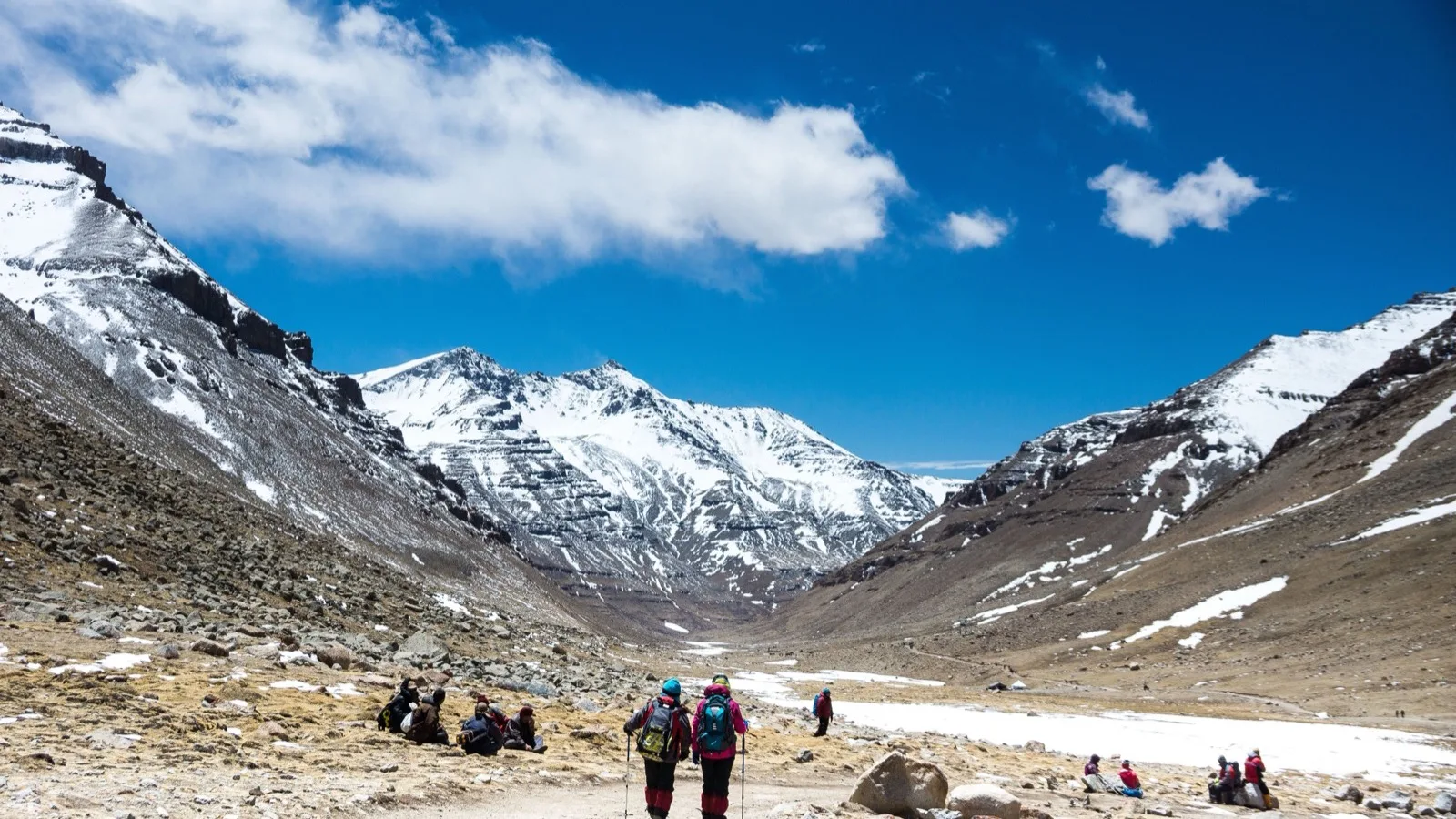
Beyond Chitkul village, an ITBP-built road continues roughly 20 km ahead toward Ranikanda meadows and the Dumti border post where the China border becomes visible but civilian vehicles are barred beyond Nagasti. On foot, Chitkul serves as a historic trailhead for trans-Himalayan treks linking Kinnaur to northern valleys and Uttarakhand's Garhwal region, including the 10 km hike to Ranikanda Meadows (sources vary on whether 10 km is one-way or round-trip), Charang Pass (5,242 m) on the Kinner Kailash Parikrama, Lamkhaga Pass (5,282 m) to Harsil/Gangotri, and Borasu Pass (5,450 m) to Har Ki Dun. Major pass crossings require technical gear, experienced guides, and prior forest or border permits.
| Frontier Settlement | State | Approximate Altitude | Civilian Access & Permit Status |
| Chitkul | Himachal Pradesh |
3,450 m |
Permit-free for Indians and foreigners; civilian road ends at Nagasti ITBP post (3–4 km ahead) |
| Mana | Uttarakhand |
~3,200 m (travel blog figure) |
Near Badrinath; widely promoted as India's "first village" following the Prime Minister's 2022 address |
| Nako | Himachal Pradesh |
3,662 m |
Upper Kinnaur (Pooh block); permit-free for Indians with ID registration at Jangi, PAP required for foreigners |
| Kibithu | Arunachal Pradesh |
~1,200 m (travel blog figure) |
Easternmost roadhead along the Lohit River; border permit protocols apply |
Demographics, Seasonal Migration, and Linguistic Heritage

According to the 2011 Census of India, Chhitkul comprised 127 households and 582 residents (317 males and 265 females), with Scheduled Tribes accounting for 61.51% (358 residents) and Scheduled Castes for 17.70% (103 residents). The village recorded an 80.75% literacy rate (89.27% among males, 70.54% among females) and 461 total workers 59.44% in main employment (over six months annually) and 40.56% in marginal work, reflecting the brief snow-free economy. Earlier and informal accounts cite larger populations, including a 2010 reference of 882 residents and contemporary travel-guide estimates between 600 and 1,000. Heavy snowfall closes the upper valley from roughly mid-November through March, prompting most inhabitants to migrate seasonally to lower Kinnaur, such as Sangla, until spring.
Culturally, Chitkul anchors one of India's smallest linguistic enclaves: Chitkuli Kinnauri (also documented as Chhitkul–Rākchham, ISO 639-3: cik), a Sino-Tibetan (West Himalayish) language spoken natively only in Chitkul and neighboring Rakchham. A 1998 sociolinguistic survey recorded 1,060 speakers. Assessments of its vitality diverge sharply. Global language aggregator Glottolog classifies Chitkuli Kinnauri as "not endangered," citing home acquisition by children. However, dedicated field documentation published in 2019–2021 by linguist Philippe Martinez concludes that the language is far more endangered than previously reported. Intergenerational transmission is reportedly disrupted, the language is not taught in schools, and speakers have borrowed heavily from Hindi and notably more from English than from Standard Kinnauri. Linguistic identity in the valley also reflects caste stratification, with Scheduled Caste communities across Sangla and Kinnaur traditionally speaking Indo-Aryan West Pahari varieties (such as Pahari Kinnauri or Amro bolī) alongside or distinct from upper-caste Tibeto-Burman speech.
Vernacular Architecture and Religious Syncretism
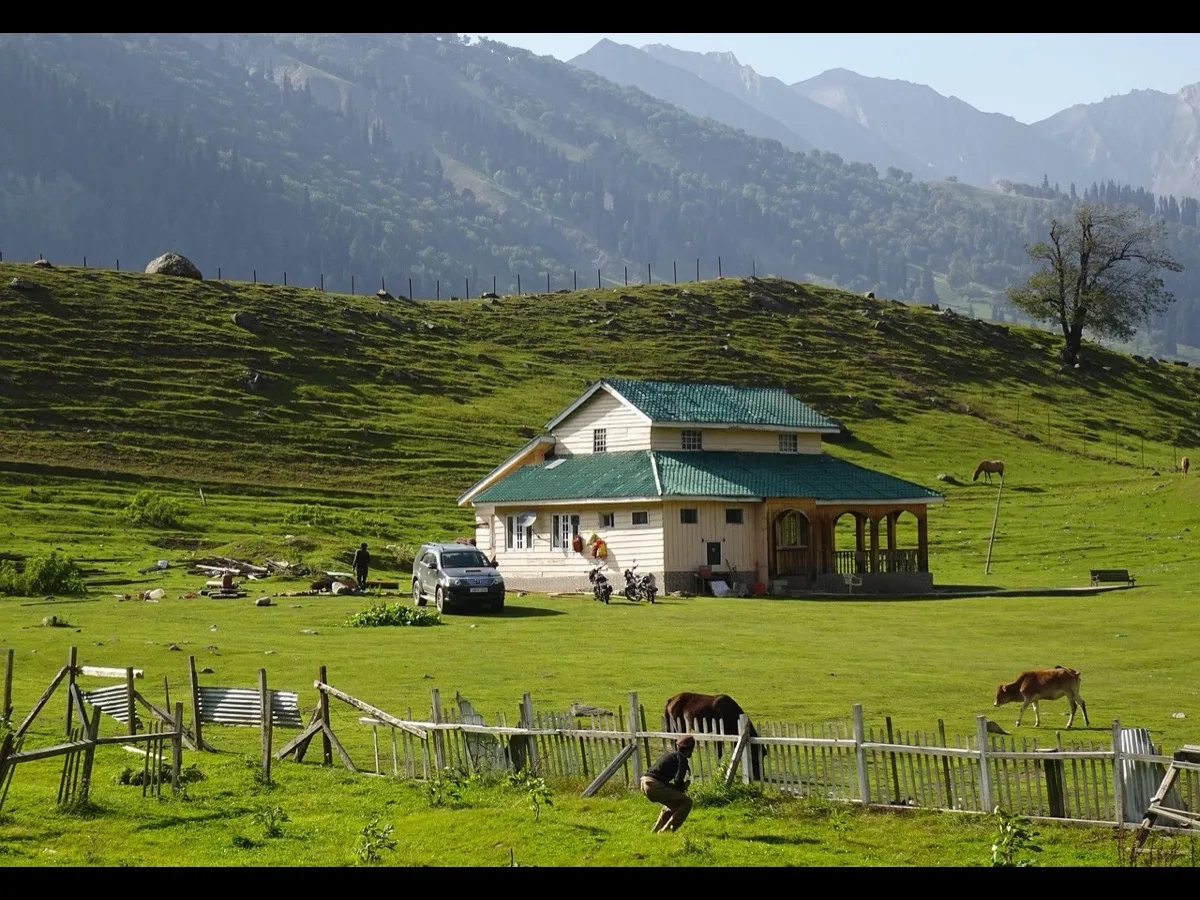
Chitkul serves as a village-scale repository of Kath-Kuni (or kath-khuni, from kashtth for wood and kona for corner) architecture. Engineered across the western Himalayas for extreme cold and seismic resilience, Kath-Kuni walls use dry masonry without mortar: twin parallel horizontal beams of rot-resistant deodar (Cedrus deodara) are laid lengthwise, packed between with rubble stone, and interlocked at perpendicular corners using wooden pegs (kadil). As walls rise, stone courses taper while timber proportion increases, creating a heavy anchored base beneath flexible upper storeys and cantilevered balconies that dissipate seismic energy.
Traditional three-storey Kath-Kuni houses also function as passive thermal shelters. Livestock housed on the ground-floor gaushala generate body heat that rises through wooden floorboards into the middle granary and top-floor family living quarters, while double-skin mud-plastered walls and minimal upper openings retain warmth. Historically topped with wooden planks or steep frost-resistant slate roofs to shed snow, Chitkul's skyline has increasingly shifted toward corrugated tin roofs particularly on the school, ITBP barracks, and newer buildings and concrete construction. According to a regional architecture essay, 1960s timber quotas restricted deodar sourcing, and Kath-Kuni construction costs roughly three times as much as reinforced cement concrete while taking twice as long to build.
Religious life in Chitkul reflects Kinnaur's longstanding synthesis of Himalayan Hinduism and Tibetan Buddhism. At the center of the village stands the Mathi Devi Temple, a three-shrine Kath-Kuni complex believed locally to be around 500 years old. Village lore holds that Mathi Devi revered as the consort of Lord Badrinath journeyed across Kinnaur's seven divisions, appointing guardian deities at Chasu, Kamru Fort, Rakchham, and Rupin Ghati before establishing her permanent abode at Chitkul and bringing agricultural prosperity. The deity is housed in a carved walnut-wood ark draped in cloth and yak-tail tufts; non-local visitors are generally barred from entering the main sanctum and must observe local ritual and photography restrictions. Nearby at the northern end of the village stands a small Kagyupa Buddhist Temple belonging to the Kagyu school of Tibetan Buddhism, housing an ancient Shakyamuni Buddha image, a painted Wheel of Life mandala, and depictions of the Four Directional Kings beside the doorway.
High-Altitude Economy, Agriculture, and Ecological Pressures
During its six-to-seven-month working season, Chitkul's economy combines specialized cold-climate farming with seasonal tourism. Because apples struggle at 3,450 m (thriving lower down in Sangla and Kalpa), village agriculture centers on hardy high-altitude staples and cash crops. Chitkul's glacial-irrigated potatoes benefit from a short growing window and minimal chemical inputs, producing high starch density that commands premium prices. Farmers also cultivate barley, export-oriented green peas, and two varieties of buckwheat: common buckwheat (Fagopyrum esculentum, locally ogla or olgo) and Tartary buckwheat (Fagopyrum tataricum, locally fafra or bras). Maturing in 70–90 days on marginal or shaded slopes unsuitable for orchards, buckwheat has drawn renewed scientific and market interest as a climate-resilient, gluten-free heritage grain, with flour fetching roughly ₹150–160 per kg locally in Kinnaur.
Air Quality Claims and the Rakchham–Chitkul Wildlife Sanctuary
Chitkul is frequently publicized for its atmospheric purity. News reports from 2016–2017 cite an assessment by the Centre for Atmospheric Sciences at IIT Delhi identifying Kinnaur district and Chitkul specifically as having the cleanest air in India. Secondary travel and village blogs cite Kinnaur PM2.5 readings of roughly 3.7 µg/m³ (against a 40 µg/m³ national average) and a 2023 Chitkul estimate of 3 µg/m³ PM2.5, 8 µg/m³ PM10, and 0.8 ppb NO2. While consistent with the village's elevation, conifer cover, and lack of industry, those specific pollutant numbers trace to secondary blogs and media summaries rather than an independently verified primary Chitkul dataset in available academic reports.
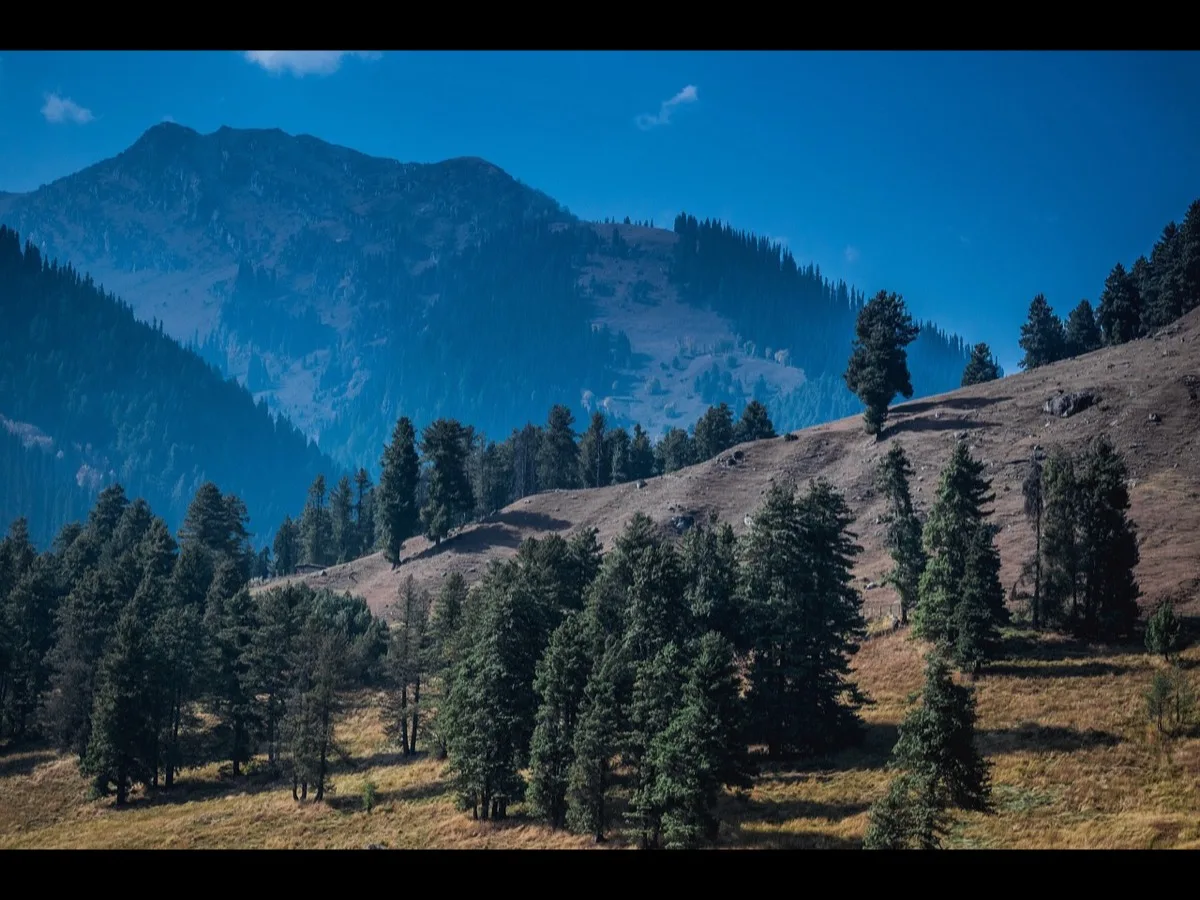
Immediately bordering and encompassing the upper Baspa valley is the Rakchham–Chitkul Wildlife Sanctuary, established in 1989. Official records from the Himachal Pradesh Forest Department, Himachal Tourism, and World Bank environmental reviews list the sanctuary's area as 304 sq km across an elevation range of roughly 3,200 m to 5,486 m (a Key Biodiversity Areas record cited in travel literature lists ~330 sq km, whereas several 2025–2026 competitive-exam digests print 30.98 sq km, indicating an apparent decimal discrepancy in secondary summaries). Situated in a dry, rain-shadow transition zone between the Western and Trans-Himalayas, the sanctuary harbors 322 documented plant species including 127 medicinal plants, rhododendron, oak, juniper, deodar, and endangered chilgoza pine in Kinnaur's dry temperate belt alongside 104 recorded vertebrate species (including snow leopard, critically endangered Himalayan brown bear Ursus arctos isabellinus, Himalayan black bear, musk deer, blue sheep, and Himalayan tahr) and over 150 bird species per Himachal Tourism. An international bird-watching programme in Rakchham in October 2025 recorded over 35 avian species with participants from 15 countries.
Climate Stress, Water Competition, and Plastic Waste
Beneath its pristine image, Chitkul faces mounting socio-ecological stress. Peer-reviewed fieldwork published in Mountain Research and Development (2025) notes that the Himalayas are warming roughly three times faster than the global average and documents acute water competition in Chitkul: reduced winter snowfall combined with 11 new hoteliers tapping pipelines directly into the village water source forced residents in May and June 2022 to halt traditional watermills for the first time in living memory. Simultaneously, rapid expansion of hotels, camps, and day-trippers has outpaced local waste infrastructure. Investigative reporting highlights plastic waste accumulating in village corners and streams, requiring volunteer clean-up drives to haul garbage 250 km down to Shimla because intermediate disposal facilities do not exist. Further down the valley and along the Sutlej gorge, major run-of-the-river hydroelectric projects including the 300 MW Baspa Stage-II scheme (with a 67 m diversion barrage) and the 1,091 MW Karcham–Wangtoo project have drawn community and scholarly scrutiny over forest diversion, muck dumping, and tunneling impacts on mountain springs.
Strategic Infrastructure, Geohazards, and Visitor Realities
Central and state interventions since 2023 are reshaping Chitkul's connectivity and built environment. In June 2023, the Government of India selected Chitkul alongside Pooh, Nako, Leo, and Chango in Kinnaur for development under the Vibrant Villages Programme (backed by a ₹4,800-crore national allocation across five northern border states and Ladakh). Official announcements outlined PSU adoption, a 1 MW power plant, exploration of micro-hydel projects, a cultural and tourist centre, public parking, a community hall, a bus stand, and a mini stadium.
In July 2024, the Border Roads Organisation (BRO) assumed responsibility from the state PWD for widening and metalling the 40-km Karcham–Sangla–Chitkul road. Strategically, this stretch forms part of a planned Karcham–Harshil border link intended to improve troop mobility along Kinnaur and Lahaul–Spiti's 240-km China border; Wikipedia summaries of the corridor estimate it could shorten the circuitous 450 km (nearly 16-hour) inter-state route to about 150 km (2–3 hours). In the near term, active BRO roadworks create localized traffic delays on narrow cliffside shelves.
Road upgrading also contends with severe geohazard risk in the Baspa Valley's fractured slopes. On 25 July 2021, intense monsoon rainfall triggered a catastrophic rockfall opposite Batseri village along the Sangla–Chitkul road, crushing a tourist vehicle and destroying the iron Bailey bridge over the Baspa River. Contemporaneous news dispatches reported 9 tourist deaths and 3–4 injuries, while a subsequent geotechnical study recorded 12 total fatalities (9 tourists and 3 local residents) and days of road closure. Even without major landslides, swollen streams frequently sever access: in July 2026, a flash flood at Mastrang nullah cut off the Rakchham–Chitkul road for roughly 20 hours.
| Operational Factor | Ground Reality in Chitkul | Practical Implication |
| Seasonality |
Road typically open March/April to November; peak conditions May–June and mid-September–October; snowbound December–March |
Build 1–2 buffer days during monsoon or autumn; expect sub-zero nights from October onward and partial camp closures by November |
| Altitude Risk |
3,450 m (~750 m above Sangla and ~1,170 m above Shimla) |
Ascend gradually with an overnight acclimatization stop in Narkanda, Sangla, or Rakchham to reduce Acute Mountain Sickness risk |
| Medical & Fuel |
No hospital, clinic, pharmacy, ATM, or petrol station in Chitkul |
Carry sufficient cash, regular prescriptions, and basic first aid; refuel in Sangla; nearest medical clinic is in Sangla and full hospital in Reckong Peo |
| Connectivity |
Connectivity guides report BSNL as the only network with intermittent signal while Airtel and Vi fail, though a traveler report notes Jio working where Airtel had no service; Wi-Fi is rare or basic |
Treat Chitkul as an offline zone; download maps and confirm onward bookings before leaving Sangla |
| Environmental Etiquette |
Stressed spring water and no local landfill or recycling infrastructure |
Refill reusable bottles, avoid campfires in sensitive areas, stay on marked trails, and carry out all plastic and non-biodegradable waste |
Keep Reading
View All Articles-
All World Gayatri Pariwar : World’s biggest social reformation organisation (AWGP)
Founded by visionary saint, freedom fighter, and social reformer Pandit Shriram Sharma Acharya alongside Mata Bhagwati Devi Sharma
-
Dev Sanskriti Vishwavidyalaya: Blending Ancient Wisdom with Modern Science
Dev Sanskriti Vishwavidyalaya, earning the historic distinction of becoming the first state private university in Uttarakhand.
-
Char Dham Yatra with Family: How to Plan a Comfortable Pilgrimage
Char Dham Yatra with Family: Complete Planning Guide