
Complete Guide to Muktinath (Muktikshetra): The Ultimate Pilgrimage in Nepal
Muktinath, known traditionally as Muktikshetra (the site for salvation), stands as one of the most spiritually profound, historically rich, and visually breathtaking pilgrimage destinations in the world. Situated at an imposing height of 12,139 ft on a mountainside 2,952 ft above the roaring Kali Gandaki River in the trans-Himalayan region of lower Mustang in central Nepal, this sacred enclave commands deep reverence from both Hindus and Buddhists.

Although modern transport options like flights and chartered helicopters have made parts of the journey a matter of a brief airborne hop, Muktinath remains fundamentally a great yatra—a transformative journey of profound significance, encompassing both external physical endurance and inward spiritual awakening.
1. Geographical Setting and Landscape
The journey to Muktinath unfolds across some of the most dramatic terrain on the planet. Leaving behind the lush green landscapes of central Nepal, travelers entering the Kali Gandaki Valley find themselves immersed in a stark, awe-inspiring trans-Himalayan environment.
The Kali Gandaki Valley and Gorge
The most overwhelming memory of the visit to Muktinath is the vast, striking Kali Gandaki Valley beyond Jomsom. The dark waters of the Kali (meaning black) Gandaki surge over a wide, gravelly bed. Rising steeply on both sides are colossal rock cliffs marked with distinct geological layers, visually chronicling the gradual rise of the Himalaya from the ancient depths of the Tethys Sea.
As one leaves the riverbed to climb toward Muktinath, the landscape opens up to magnificent views of towering Himalayan peaks, including Dhaulagiri, Annapurna, Annapurna South, Hiunchuli, Nilgiri, and Machhapuchhare (the Fish Tail Mountain).
The Barren Countryside and Caves
Beyond Marpha, the lush Himalayan greenery is left behind entirely, replaced by a barren countryside where trees appear only in sparse clusters near rare habitations, giving the terrain a striking, Ladakh-like appearance.
The hillsides across the valley in the final stretches of the walk to Muktinath are punctuated by numerous caves. Historically, some of these caves were inhabited by prehistoric humans, and in more recent times, sages and spiritual seekers have utilized them for solitary meditation and worship.
Furthermore, this extreme environment is characterized by fierce high winds that sweep up the Kali Gandaki valley starting from mid-morning. These winds become particularly troublesome for pilgrims descending from Muktinath a few days later, as grit and small pieces of gravel fly directly into the face, making a protective mask for the mouth and nose an absolute necessity.

2. Legends, Mythology, and Religious Significance
Long before human hands constructed formal shrines, the invisible emanations of Muktikshetra inspired deep awe. As the Italian explorer and Tibetologist Giuseppe Tucci aptly observed: "Holy places never had any beginning. They have been holy from the times they were discovered, strongly alive because of the invisible presence breathing through them. Man is amazed or fearful as he feels the vibrations of invisible power in the air..."
The Source of the Shaligram Stone
Muktinath is internationally celebrated as one of the most revered Vishnu shrines because it is intimately tied to the shaligram, the sacred ammonite stone worshipped as an embodiment of Lord Vishnu. These stones are found uniquely and exclusively on the bed of the Kali Gandaki River, which flows directly through this region of Nepal.
The shaligram is actually an ammonite fossil of an invertebrate creature from the prehistoric Tethys Sea, which once covered the entire geographic area where the towering Himalaya now stand. Numerous Puranic legends surround Vishnu residing within the shaligram:
-
The Legend of Jalandhar and Vrinda: According to ancient mythology, Lord Shiva was once engaged in a fierce battle with the demon Jalandhar but could not overcome him. Jalandhar possessed a divine boon ensuring he could not be defeated as long as his wife, Vrinda, maintained absolute chastity. To help Shiva eliminate the menace to the gods, Vishnu took the form of Jalandhar and approached Vrinda. Upon the loss of her chastity, Jalandhar's protection vanished, and he was slain. When Vrinda realized the deception, she cursed Vishnu, dooming him to be represented henceforth in the physical form of an insect (the ammonite).
The Yagna of Brahma, Shiva, and Vishnu
Legends also attribute the physical site of present-day Muktinath to a grand yagna performed by Brahma, with Shiva and Vishnu manifesting as fire and water respectively. Evidence of this primordial event is preserved at the adjacent site of Jwala Devi, which finds explicit mention in the Mahabharata. Here, in a cave, actual fire emerges directly from rock surfaces to play continuously over a flowing natural stream.
A Beacon for Sages and Saints
The region has long served as a magnet for spiritual masters:
- Padmasambhava: The legendary Buddhist monk from the northwestern region meditated here in the Muktinath area during his historic journey to Tibet to propagate Buddhism.
- Sri Ramanujacharya: A minaret at the site records the historical visit of this great philosopher.
- Alwar Saints: The Tamil poet-saints Periyalwar and Thirumangai Alwar composed 12 pasurams praising the presiding deity, Muktinarayana, the lord of liberation.
- Divya Desams: Muktinath holds the prestigious status of being one of the 108 Divya Desams, recognized as the holiest of all Vaishnavite temples.
3. Architecture, Antiquity, and Holy Features
The Muktinath Temple
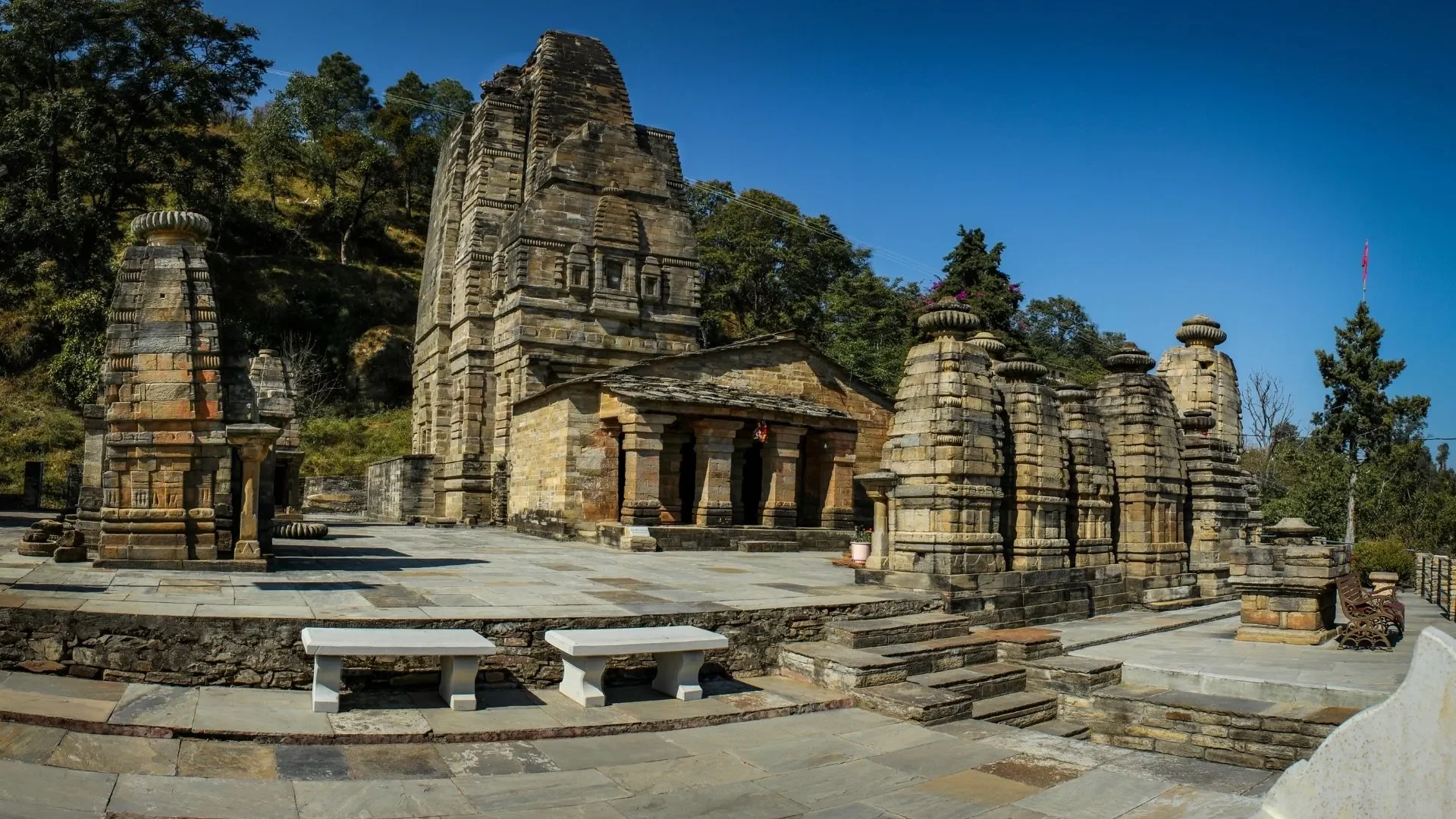
The main Muktinath Temple itself was built relatively recently, in 1815, constructed at the initiative of a queen of Nepal. Historical records of any past permanent structures are virtually non-existent, though simpler local temples or sacred markers may have preceded it.
Inside the temple sits the primary image, cast in copper, which depicts Vishnu standing centrally with Sridevi and Bhudevi positioned on either side. Notably, this exact same image is simultaneously revered by Buddhists as Avalokitesvara, the compassionate bodhisattva. Unlike the bustling, highly commercialized atmospheres typical of many temples in India, the Muktinath Temple offers profound peace, quiet, and an absence of aggressive, organized pressure. A Brahmin priest assists Hindu visitors in offering prayers to Vishnu, while a Buddhist nun assists devotees in praying to Avalokitesvara, presenting a living model of interfaith harmony and co-existence.
The 108 Water Spouts
Immediately adjacent to the temple exterior are 108 water spouts channelled directly from the mountain stream flowing past the complex. Each individual spout is uniquely shaped like the head of a bull. Hindu tradition holds that bathing beneath the freezing waters of all 108 spouts cleanses all sins and brings supreme blessings. For those unable to endure the freezing shock of a full bath, a widely accepted compromise involves running past the spouts while sprinkling a small amount of water from each onto one's head.
Jwala Devi and Surrounding Gompas
Just below the main temple complex lies the eternal flame of Jwala Devi, housed within a structure that functions as a Buddhist gompa while retaining deep Puranic roots. Additionally, a dedicated Buddhist gompa honoring Padmasambhava (Guru Rimpoche) stands near the temple grounds, further cementing the site's dual spiritual identity.

4. Key Settlements Along the Route
Kagbeni: Gateway to Upper Mustang
Located at an altitude of 9,250 ft, Kagbeni is a prosperous, deeply historic settlement marking the boundary of lower Mustang. From here, travel further north into upper Mustang (toward Lo Manthang, the traditional seat of the regional king) is strictly restricted and requires special permits.
At Kagbeni, the turbulent black waters of the Jhong Khola (river descending from Muktinath) merge directly with the Kali Gandaki River. According to Hindu mythology, devotees once gathered here to pray to Lord Shiva on Shivaratri, when a crow swooped down to steal an offering. A second crow chased the first, causing both to tumble directly into the river confluence, where they miraculously transformed into swans. Consequently, Kagbeni earned the alternative name Hansa Tirth ("the place of pilgrimage of the swans").
Kagbeni is considered exceptionally auspicious for performing sacred rites and offering prayers for departed forefathers (pitr paksha) during the dark moon fortnight preceding Dussehra in October. The town also features a prominent Yellow Hat Sect Buddhist monastery, the Kagchode Thubten Shambeling Gompa, and offers solid accommodation options for around NPR 200–300 per night.
Jharkot and Ranipauwa
- Jharkot: Situated at 11,482 ft on the steady climb from Kagbeni to Muktinath, Jharkot is an important township featuring good accommodation and stunning traditional architecture.
- Ranipauwa: This serves as the final settlement providing food and lodging before reaching the temple. Most of the basic infrastructure and resting facilities here were established by a benevolent Nepali queen for the comfort of weary pilgrims. The sacred Muktinath Temple is just a short, minutes-long walk uphill from Ranipauwa, surrounded by a peaceful grove of poplar trees.
5. Trekking Routes and Practical Travel Guides
For centuries, pilgrims have journeyed to Muktinath on foot. The trekking routes are well-marked and universally safe, despite past regional clashes between Maoist groups and the Nepalese army (with records consistently showing that tourists and pilgrims were never targeted).
Trekking Route Option 1: Via Ghorapani and Poon Hill (The Scenic Route)
-
Day 1: Drive from Pokhara to Nayapul (42 km, taking just over an hour by bus or taxi). From Nayapul, begin the trek, climbing 1,804 ft over approximately 4 hours to reach Tirkhedunga for an overnight halt.
-
Day 2: Face a steep climb to Ulleri, after which the gradient moderates as you ascend toward Ghorapani (9,842 ft), completing a total vertical climb of 4,460 ft. Ghorapani translates literally to "the place where horses are watered."
-
Poon Hill Excursion: From Ghorapani, an early morning 985-ft climb to Poon Hill offers one of the most magnificent sunrise panoramas in the entire Nepal Himalaya, lighting up Dhaulagiri, Annapurna I, Annapurna South, Hiunchuli, Nilgiri, and Machhapuchhare.
-
Descent to Tatopani: From Ghorapani, descend 5,577 ft down to Tatopani on the Kali Gandaki River. Tatopani ("hot springs") provides exceptionally relaxing accommodation with natural hot water baths.
Trekking Route Option 2: Via Beni (The Traditional Lower Route)
This traditional pilgrim route bypasses Ghorapani, keeping to lower altitudes along the Kali Gandaki River. Because snowfall is minimal here and altitudes are lower, this route remains open throughout the year.
- Travel by road from Pokhara to Beni (2,788 ft, a distance of 72 km).
- Following a night halt in Beni, embark on a day's walk to Tatopani, where this route merges seamlessly with the Ghorapani trail.
The Apple Pie Trail (Tatopani to Muktinath)
From Tatopani onward, the route follows the Kali Gandaki valley—affectionately dubbed the "Apple Pie Trail" due to the surprisingly excellent culinary facilities, fresh apple orchards (notably around Marpha), and comfortable lodges available along the way.
- Standard Daily Halts: Ghasa (2,952 ft), Larjung (2,296 ft), Marpha (656 ft elevation gain/marker context), and Kagbeni via Jomsom (656 ft).
- Pacing: Daily walking stages take between 5 to 8 hours and are structured to prevent altitude sickness by gaining height gradually.
Trekking Logistics, Porters, and Expenses
- Porters: Easily hired at starting trailheads for approximately NPR 200–300 (or INR 125–200) per day for a standard 30-kilo load. Food for porters (typically traditional dal-bhaat) is provided by the traveler (yatri).
- Guides: Because paths are clearly marked, guides are not strictly required for small groups. However, for large parties managing multiple porters, employing a guide for coordination is helpful.
- Food & Lodging: Private lodges along the trail offer beds, sheets, and quilts (though carrying a personal sleeping bag is recommended). Staple foods like dal-bhaat, vegetarian and non-vegetarian dishes, bottled water, and refreshments are widely available. Meals average around NPR 350 per day, with prices scaling up moderately as you ascend to higher, more remote reaches.
6. Comprehensive Fact File for Travelers
When to Go
- Best Season: February to May offers the most stable and favorable weather conditions for trekking and flying.
- Monsoon & Rain: June to August brings heavy rains, making landslides common across mountain roads and trails. September can also carry lingering weather uncertainties.
- Winter: November to February brings harsh cold suited only for the bravest travelers.
Identification and Currency Regulations
- Visas: Indian nationals do not require a visa to enter Nepal. However, a valid official photo identification document—such as a passport, voter ID card, or PAN card—is strictly essential, particularly for those utilizing domestic flights.
- Indian Currency Restrictions: While Indian currency is freely permitted to be carried into Nepal and exchanged, carrying Indian currency notes of denominations higher than INR 100 is strictly prohibited.
- Exchange Rate: The official exchange rate is fixed at INR 100 to Nepali Rupees (NPR) 160.
Getting to Muktinath from India and Kathmandu
-
Reaching Kathmandu: Kathmandu connects directly via regular international flights from major Indian cities including Delhi, Kolkata, Varanasi, Bangalore, and Patna (roughly a 1-hour flight from Delhi or Kolkata). Alternatively, travelers can cross by road via Birganj (near Raxaul on the Indian border) or Bhairawa (near Gorakhpur).
-
Reaching Pokhara (The Gateway): From Kathmandu, visitors travel onward to Pokhara either by a 30-minute domestic flight (costing around NPR 2,000, with right-side seating recommended for northward Himalayan views) or by road (200 km, taking 5–6 hours via tourist bus costing about NPR 600 per person, or via private taxi for roughly NPR 5,000). Pokhara itself offers extensive hotel infrastructure around the scenic Phewa Lake.
-
Pokhara to Jomsom & Muktinath:
-
- By Air: Fly from Pokhara to Jomsom (a 25-minute flight). Jomsom features a small mountain airstrip located right inside the deep Kali Gandaki gorge. Because fierce winds pick up on the river by 10:00 AM, flights operate strictly in the morning and are highly sensitive to cloud cover and visibility, particularly during the monsoon. At Jomsom (9,055 ft), travelers should spend at least one night to properly acclimatize before heading higher, and can visit the Mustang Eco Museum.
- By Foot or Pony from Jomsom: Walk or hire ponies (costing NPR 1,500–2,000) from Jomsom to Kagbeni along the river (about 4 hours), picking up shaligrams along the way. From Kagbeni, a steady 3 to 4-hour climb leads directly to Muktinath. Alternatively, a quick day-trip loop via Ekla Bhatti allows pilgrims to offer puja and return safely to Jomsom by afternoon.
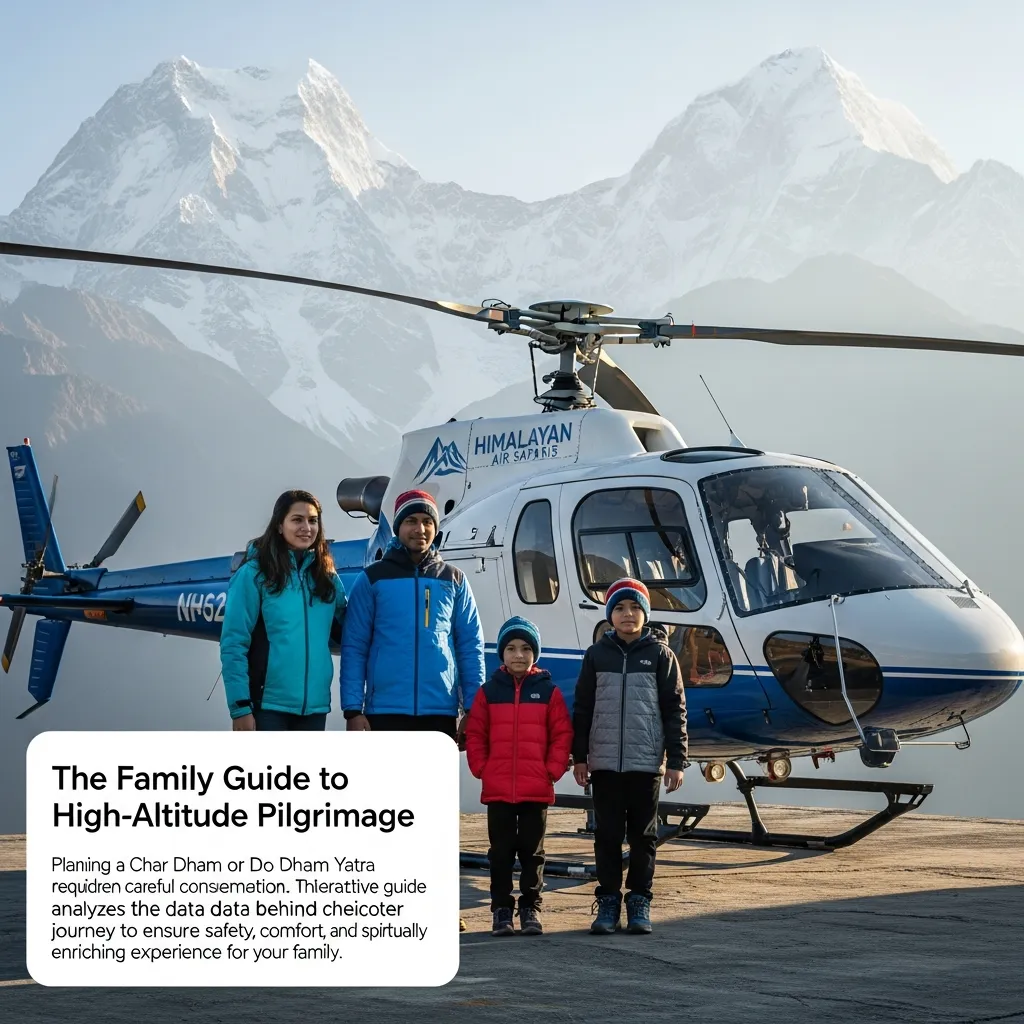
- By Helicopter: Private 4-seater helicopters can be chartered directly from Pokhara for a same-day return trip to Muktinath. Rates typically range between USD 1,500 to 2,000, and reservations should ideally be finalized directly in Kathmandu to avoid delays in Pokhara.

The platform is read by seekers across 24 countries and is hosted in India. Its tone is warm yet dignified, ancient yet contemporary, and deeply respectful of the reader’s inner journey. Spiritual Yatra is more than a website - it is a digital ashram of sorts: a calm, high-quality space where every soul’s sacred story is honored. It invites you to slow down, reflect deeply, and walk the path with greater awareness and care. Whether you’re looking for daily wisdom, profound teachings from the Upanishads, or simply a place that feels like a quiet companion on your spiritual journey, Spiritual Yatra offers something rare in today’s digital world: depth, sincerity, and gentleness. “Every soul has a sacred story.” This is where that story is welcomed and held with reverence.