
Himalayan & Mountain Shrines
Timmersain Mahadev Cave : Amarnath of Uttarakhand
The Timmersain Mahadev Cave has emerged as a significant destination for spiritual tourism and adventure in the high-altitude borderlands of Uttarakhand
 By Raj K. Vashyan
12 min read
By Raj K. Vashyan
12 min read
Timmersain Mahadev and the Niti Valley: A Guide to Uttarakhand's Chhota Amarnath
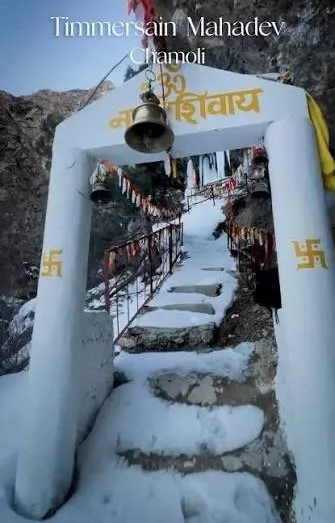
The Timmersain Mahadev Cave has emerged as a significant destination for spiritual tourism and adventure in the high-altitude borderlands of Uttarakhand. Often referred to by local communities and travelers as the "Chhota Amarnath of Uttarakhand," this natural cave shrine is dedicated to Lord Shiva. The site has gained widespread attention because of a unique natural phenomenon: a majestic ice stalagmite, or "ice lingam," forms inside the cave during the coldest months of the year, closely resembling the famous Amarnath shrine in Jammu and Kashmir.
Timmersain Mahadev offers a rare combination of deep spiritual heritage, quiet natural beauty, and rugged mountain adventure. Because it is located in a remote border zone, the cave remains untouched by heavy commercial development, allowing visitors to experience an authentic and highly peaceful spiritual journey.
Geographic Profile of Niti Valley and the Cave Location
The Timmersain Mahadev Cave is located in the beautiful Niti Valley, which is part of the Joshimath block within the Chamoli district of Uttarakhand. This remote valley is situated in the Inner Himalayas and borders the southern edge of Tibet. The entire region is ecologically sensitive and forms a critical buffer zone for the Nanda Devi Biosphere Reserve, which is home to rare Himalayan plants and animals, including the elusive snow leopard and the Himalayan blue sheep.
 (1,875 meters)
       │
       ▼ (via NH 107B - 61 km)
[Malari Checkpoint] (3,048 meters)
       │
       ▼ (21 km via Bampa & Gamshali)
 (approx. 2,800 - 3,000 meters)
       │
       ▼ (700-meter pedestrian walk)
To reach the cave, travelers journey along a dramatic mountain highway that connects Joshimath to the final border settlements. The cave itself is located on the rugged slopes of Timarsain Mountain, about 82 kilometers away from the base town of Joshimath. The mountain highway runs past the villages of Malari and Gamshali, ending near Niti Village, which is the last inhabited civilian settlement before the international border. The cave sits at an altitude of approximately 2,800 to 3,000 meters above sea level, while Niti Village further up the road rests at a higher elevation of 3,600 meters.
| Geographic Location / Landmark | District / Block | Altitude (Meters above Sea Level) | Distance from Joshimath Base |
| Joshimath Town | Chamoli / Joshimath | 1,875 | 0 km |
| Malari Village | Chamoli / Joshimath | 3,048 |
61 km |
| Timmersain Mahadev Cave | Chamoli / Joshimath | 2,800 to 3,000 |
82 km |
| Gamshali Village | Chamoli / Joshimath | ~3,400 | 80 km |
| Niti Village | Chamoli / Joshimath | 3,600 |
88 km |
| Niti Pass (Indo-Tibetan Border) | Chamoli / Border Zone | 5,800 |
~100 km |
The Natural Phenomenon of the Ice Lingam
The central highlight of the Timmersain Mahadev pilgrimage is the winter ice stalagmite, locally known as "Baba Barfani". This natural phenomenon is created by the freezing climate and unique geological structure of the limestone cave.
During winter, liquid water droplets seep slowly through the ceiling of the cavern. As these droplets fall to the cave floor, the freezing mountain air causes them to solidify instantly. Over several weeks, this steady dripping builds a vertical pillar of ice that can reach a height of two to three feet, and in years of heavy winter snowfall, it has been recorded at over ten feet tall.
This glistening white ice pillar is continuously washed by natural water dripping from the rocks above, a sight that local devotees view as a continuous, divine water-offering (abhishekam) to Lord Shiva. The ice lingam typically begins to take shape in January and remains frozen and visible through the early spring, usually melting away by mid-to-late April as seasonal temperatures begin to climb.
Religious Significance, Local Lore, and Cultural Heritage
The Niti Valley is rich in cultural history and ancient mountain traditions. For the people who live in these border villages, the Timmersain Mahadev Cave is not just a seasonal tourist site but an ancient sanctuary that has been actively worshipped for generations.
Ancient Legends of Sausa Mahadev
In local folklore, the cave and the surrounding mountain slopes are associated with the legendary travels of Hindu deities. The shrine is traditionally called "Sausa Mahadev" or "Saunsa Mahadev". According to regional beliefs, Lord Shiva chose this quiet cavern as a resting place during his epic journey (Kailash Yatra) to the sacred Mount Kailash.
Because of this deeply rooted history, the local communities have a profound spiritual connection to the cave. For decades, villagers have climbed the steep slopes of Timarsain Mountain to perform simple prayers and ask for blessings of safety, health, and prosperity. While the winter ice lingam is the main draw for outside pilgrims, local families also visit during the warm summer months when the cave is dry, offering prayers to the sacred rock formations of Lord Shiva, Goddess Parvati, and Lord Ganesha.
The Nomadic Lifestyle of the Rongpa Bhotiya Tribe
The cultural identity of the Niti Valley belongs to the Rongpa Bhotiya community, an indigenous Indo-Tibetan ethnic group. Before the Indo-China war of 1962, the Rongpa Bhotiyas were prosperous traders who navigated sheep and yak caravans across the high-altitude Niti Pass (5,800 meters) to exchange grains, oil, and spices for Tibetan wool, salt, and borax. Following the closure of the international border, the community adapted to a lifestyle of high-mountain farming, sheep rearing, and seasonal migration (transhumance).
Life in the valley is governed by a strict seasonal rhythm. The villagers live in the Niti Valley for only six months of the year, from mid-April to late October. During this time, they plant crops like potatoes, peas, and buckwheat, and graze their animals in the lush alpine pastures known as bugyals. In November, when heavy winter snows cover the entire landscape, the population packs up and migrates to lower, warmer elevations in the Chamoli district or near Dehradun.
During these quiet winter months, the valley is completely empty of civilians, and only the Indian border patrol remains behind. The returning migration in the spring is celebrated with great joy and community feasts dedicated to regional deities like Panchanath Devta in Bampa, Fela Devta in Gamshali, and the sacred Panch Nag (five serpent brothers) who are believed to guard the mountain water sources.
Travel Routes and Road Conditions
Reaching the Timmersain Mahadev Cave requires planning, as the route transitions from the well-traveled roads of the plains into steep, winding border highways.
       │
       ▼ (via NH 58 - Scenic River Valleys)

       │
       ▼ (via NH 107B - 61 km rugged road)
[Malari Checkpoint]
       │
       ▼ (21 km via Bampa & Gamshali)
The Journey to Joshimath
The journey begins by traveling to Joshimath, which serves as the central base camp for the entire pilgrimage. Travelers can fly into the Jolly Grant Airport in Dehradun (268 km away) or take a train to the Rishikesh railway station (250 km away).
From Dehradun or Rishikesh, the road to Joshimath follows National Highway 58 (NH 58), winding alongside the holy Ganga River and its major mountain tributaries. Travelers pass through several famous river confluences, including Devprayag (where the Alaknanda and Bhagirathi rivers merge), Rudraprayag, and Karnaprayag. A private taxi takes approximately 7 to 9 hours to complete this drive, while local buses departing early in the morning take between 9 and 11 hours.
Navigating the Niti Valley Highway
From Joshimath, the drive to the Niti Valley progresses along the Joshimath-Niti highway (NH 107B), covering roughly 82 kilometers of mountain terrain. The road is narrow, carved into steep cliffsides, and runs directly above the fast-flowing waters of the Dhauli Ganga River. This route passes through several historic settlements, including Tapovan, Lata, and the military checkpoint of Malari.
Travelers should note that the highway is vulnerable to natural events. For example, the severe mountain flood disaster of February 2021, which impacted the valleys of Tapovan and Raini, caused temporary damage to the local infrastructure and roads along this route.
While a standard car can manage the road in perfectly dry weather, a sturdy SUV with high ground clearance is highly recommended to safely navigate the rough patches, gravel roads, and occasional water crossings.
The Pedestrian Trail to the Cave
The motorable road ends approximately one kilometer before the village of Niti, between Gamshali and Niti. At this spot on the highway, travelers begin their walking journey.
The trail to the Timmersain Mahadev Cave is a short but steep 700-meter trek up the mountainside. The path is well-marked but can be physically demanding due to the thin mountain air. While senior citizens and average walkers can complete the climb with a slow and steady pace, utilizing trekking poles and a local guide is highly recommended for safety.
Important Permits and Security Guidelines
Because the Niti Valley lies in close proximity to the international border, the entire region is under the strict supervision of the Indian Army and the Indo-Tibetan Border Police (ITBP). To visit Timmersain Mahadev, all Indian citizens must obtain an official Inner Line Permit (ILP). Foreign nationals are restricted from traveling into the inner valley and are generally not permitted to go past the village of Malari.
Step-by-Step Permit Process
The state government of Uttarakhand has modernized the permit process, introducing an online system to make it easier for travelers while keeping a strict check on security.
-
Online Registration: Travelers can apply for the Inner Line Permit online through the official portal:
pass.chamoli.org. The online system is typically active during the annual Char Dham Yatra season. -
Required Documents: To complete the application, travelers must upload a valid government-issued photo ID (such as an Aadhaar Card or Voter ID), a recent passport-sized photograph, an affidavit, a police verification report from their home town, and a medical fitness certificate.
-
Fees and Quota Limits: The permit fee is fixed at ₹200 per person. To prevent overcrowding and protect the delicate mountain environment, the district administration limits the number of permits to a maximum of 35 per day.
-
Offline Processing: If the online system is unavailable, travelers must submit a completed application form, along with copies of their ID cards and their driver's documents, directly to the SDM Office or the Assistance Tourism Office in Joshimath at least two days before their planned travel date.
-
Permit Restrictions: The standard permit for Timmersain Mahadev is valid for a single day. Visitors are required to complete their journey and return to Joshimath by the evening of the same day.
Mandatory Medical Checkups
Due to the extreme cold and high altitude, a physical medical examination is mandatory for all pilgrims before they are allowed to start the yatra. The medical checkup is conducted at the health facilities in Joshimath.
Doctors will measure essential health parameters, including pulse rate, blood pressure, body mass index (BMI), and oxygen saturation ($SpO_2$) levels. Individuals over the age of 60, or those who have pre-existing health conditions such as asthma, high blood pressure, or heart issues, must carry a formal doctor's fitness certificate to be granted entry into the valley.
Accommodation, Local Food, and Practical Travel Advice
When planning a trip to the Niti Valley, travelers must understand that the infrastructure is highly rustic and simple. There are no luxury resorts, large commercial hotels, or modern shopping centers in the inner valley.
Homestay Registry in Niti Valley
To protect the local ecology and support the village economy, the state government encourages visitors to stay in community-run homestays. These traditional stone-and-wood homes are operated by local Bhotiya families, providing travelers with cozy rooms, warm blankets, and home-cooked meals.
According to the official Chamoli Tourism Registry, the available accommodations across the Niti Valley villages include:
| Village Name | Sample Properties | Total Properties | Total Rooms | Total Bed Capacity |
| Gurguti | Dhauli Ganga Homestay, Gangotri Homestay, House of Deodar | 4 | 10 | 25 |
| Gamshali | Gamshali Homestay, Gaanu Saki, Suhani Homestay, Aayu's | 5 | 17 | 38 |
| Niti | Yogesh Homestay, Hill View, Maa Nanda Devi, Thai View | 6 | 15 | 34 |
| Bampa | Himvash Homestay, Neelgiri, Amita, Deepak, Bampa Homestay | 10 | 26 | 62 |
| Farkiya | Yak Homestay, Aaradhya, Jeetu Bagdwal | 3 | 13 | 32 |
| Kosha | The Kosha Niti Homestay, Panchayat Ghar Kosha | 2 | 9 | 18 |
Staying in these homestays offers an immersive cultural experience. Guests have the opportunity to interact with the village elders, listen to ancient stories of trans-Himalayan trade, and observe traditional wool spinning and intricate wood carvings on the balconies of the deodar wood houses.
Traditional Cuisine
Food in the Niti Valley is prepared using fresh ingredients harvested directly from local fields. Homestays serve a simple, nourishing platter (thali) that typically costs between ₹100 and ₹150.
Key local dishes include Pahadi Rajma (highly flavorful red kidney beans grown in the valley, served with locally grown rice and fresh ghee) and Pahadi Aloo (potatoes cooked with mountain herbs). Travelers may also sample Suksa (a traditional dish of dried goat or sheep meat cooked into a warm, smoky broth) and Siddu (soft, steamed bread made from wheat or buckwheat flour, filled with sweet jaggery or walnuts). To combat the high-altitude cold, hosts often serve salty, warming Tibetan butter tea.
Practical Travel Tips and Packing List
-
Financial Planning and Fuel: Joshimath is the last major town with functioning banks, ATMs, and petrol pumps. Travelers must withdraw enough cash to cover their homestays and meals, and fill up their vehicle's fuel tank completely before entering the valley.
-
Mobile Network and Connectivity: Mobile signals disappear almost entirely after leaving Joshimath. While BSNL networks may work intermittently near the checkpoint in Malari, there is zero coverage for private networks like Jio, Airtel, or Vi in the inner villages. It is crucial to inform family members of the travel itinerary beforehand.
-
High-Altitude Acclimatization: To avoid altitude sickness, travelers should spend a full day resting in Joshimath or Auli to let their bodies adjust to the elevation before traveling to the higher parts of the Niti Valley.
-
Packing Essentials: High-altitude nights are extremely cold, with temperatures frequently dropping below 5°C even during the summer months. Visitors must pack high-quality thermal innerwear, heavy down jackets, windproof windbreakers, sturdy trekking shoes with good grip, a raincoat for sudden mountain showers, sunglasses to protect against high UV rays, and a personal medical kit containing pain relievers, rehydration salts (ORS), and medications for motion sickness and altitude acclimatization.
Best Time to Visit and Seasonal Insights
The timing of a trip to Timmersain Mahadev depends entirely on what the traveler wishes to experience.
-
The Ice Shivling Season (March to Mid-April): This is the ideal time for pilgrims who want to witness the spectacular "Baba Barfani" ice stalagmite. The yatra, organized by the Niti Mahadev Yatra Samiti, typically commences in the first week of March. During these weeks, the winter snow begins to melt slightly, making the roads to Niti village accessible while the ice pillar inside the cave remains fully formed and beautiful.
-
The Summer and Autumn Season (May to October): This is the best period for families, hikers, and nature lovers. The weather is pleasant and clear, with temperatures ranging from 4°C to 12°C, and the valley is filled with lush green grass and blooming wildflowers. During these months, travelers can meet the local Bhotiya community, explore scenic high-altitude viewpoints, and visit other ancient shrines in the valley.
-
The Monsoon Season (July to Mid-August): This period should be strictly avoided. Heavy monsoon rains frequently trigger severe landslides, mudslides, and sudden road blockages along the steep cliffsides of NH 107B, making travel highly dangerous.
-
The Deep Winter Season (November to February): During these months, the valley is completely closed to tourists and civilians. Heavy snowfall blocks the highways, temperatures drop far below freezing, and the entire population migrates to lower valleys, leaving the region inaccessible.
Keep Reading
View All Articles-
Legend & Pilgrimage of the Amarnath Cave
Tucked away at the far end of the Lidder valley in the Greater Himalayas, the Amarnath Cave
-
No Fear Is Visible to Faith at Yamunotri
Despite the long, exhausting journey, the fear of being struck by wooden sticks protruding from palakis (palanquins)
-
Shrikhand Mahadev Kailash Yatra
हिमाचल प्रदेश के कुल्लू जिले की गगनचुंबी हिमालयी श्रृंखलाओं में स्थित श्रीखंड महादेव कैलाश यात्रा न केवल भारत के सबसे कठिन पर्वतारोहण मार्गों में से एक है, बल्कि यह सनातन धर्म की गहरी आध्यात्मिक चेतना का जीवंत प्रतीक भी है ।