







Smart Itinerary
Guide to Hindu Religious Tourism in Goa
All ancient free-standing temples in coastal Goa were destroyed, the temple architecture visible today is a unique historical innovation developed between the seventeenth and twentieth centuries.
 By Raj K. Vashyan
22 min read
By Raj K. Vashyan
22 min read

Guide to Hindu Religious Tourism in Goa
Geopolitical Geographies of Conquest and the "Flight of Gods"
To understand the contemporary landscape of Hindu spiritual tourism in Goa, one must examine the geopolitical divisions of the territory under Portuguese colonial rule. The Portuguese conquest of Goa occurred in two geographically and temporally distinct phases: the Old Conquests (Velhas Conquistas) and the New Conquests (Novas Conquistas). The Old Conquests, comprising the central coastal talukas of Tiswadi, Bardez, and Salcete, fell under Portuguese control in the first half of the sixteenth century following the capture of Old Goa from Adil Shah of Bijapur in 1510. This territory became the epicenter of an aggressive colonial project characterized by the planned destruction of all temples inside its borders. Fueled by the request of Francis Xavier in 1545 and the subsequent launch of the Goan Inquisition in 1561, colonial authorities enforced a rigid policy of Catholic conversion. The state criminalized traditional Hindu rituals, prohibited public festivals, restricted the use of Konkani and Sanskrit, and demolished temples "stone by stone" to clear space for Catholic churches and chapels.
This structural violence triggered a phenomenon known as "The Flight of Gods". Devotees, desperate to save their revered idols from desecration, smuggled the deities across the colonial borders into the surrounding principalities. These adjacent territories which included Ponda, Bicholim, Quepem, and Pernem were ruled by regional Hindu dynasties such as the Marathas and the Kingdom of Sonde, who offered safe haven.
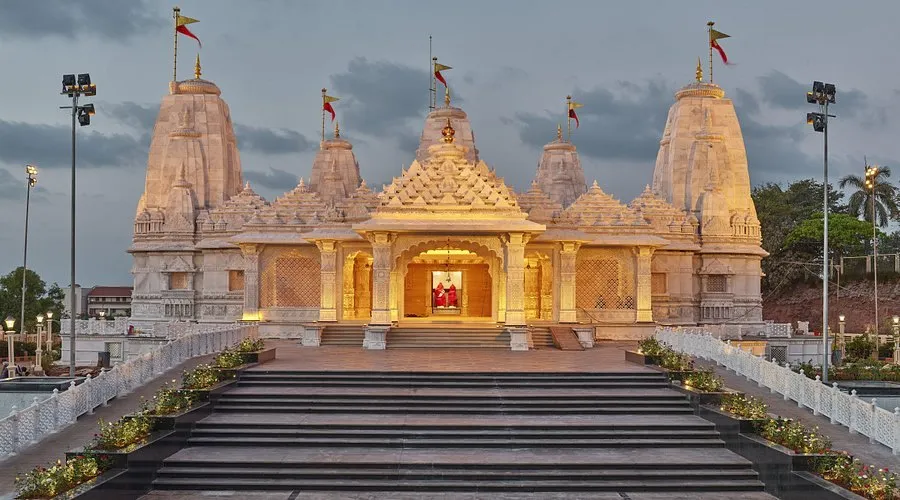
An essential sociological aspect of this displacement was that the physical relocation of the deities did not sever the socio-religious ties with their villages of origin. The long-standing regular visits that the newly converted Catholic population kept paying to their ancestral deities across the political borders remained a constant source of concern for the ecclesiastical authorities for centuries. The deities, initially housed in simple, hidden dwellings, were eventually installed in grand new shrines built during the seventeenth and eighteenth centuries. By the time the Portuguese annexed these safe havens in the late eighteenth century as the New Conquests, the initial colonial religious zeal had subsided, leaving these relocated structures untouched and preserved as living archives of Konkani Hindu resilience.
At the heart of the theological structure of these relocated sanctuaries is the practice of Panchayatana worship. Devised by Adi Shankara, this system arranges five deities the Sun (Aditya), Ganesha (Gananatha), the Goddess (Devi), Shiva (Rudra), and Vishnu (Keshav) in a specific quincunx format. This layout places the presiding deity at the center, surrounded on four sides by smaller shrines of associated deities.
In Goan temples, this theological structure is paired with a clear distinction between the Mula Murti (the ancient, original stone idol to which the elaborate alankar or adornment is applied) and the Utsava Murti (the ceremonial idol made of gold, silver, or alloys, which is carried during processions). Uniquely, Shiva and Parvati temples in Goa often exist independently of one another rather than together as family deities. Instead of Parvati, Shiva temples usually feature an image of a Grampurush a local man who helped establish the temple in its new location during the flight from Portuguese demolition. This dual structure reflects both the ancient orthodox traditions and the historically specific survival strategies of the Goan Hindu community.
The Evolution of Goan Temple Architecture: Syncretism and Anatomy
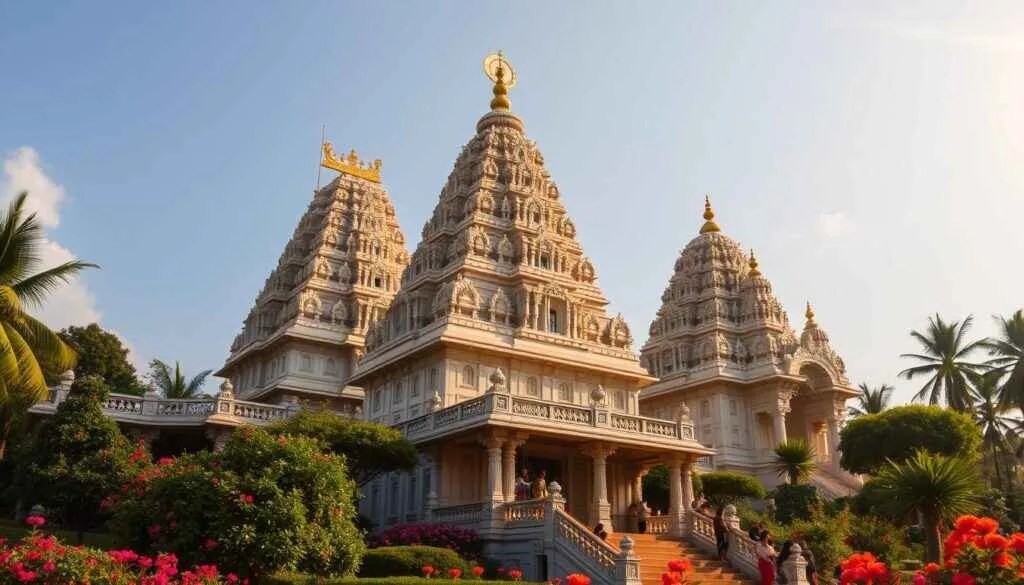
Because nearly all ancient free-standing temples in coastal Goa were destroyed, the temple architecture visible today is a unique historical innovation developed between the seventeenth and twentieth centuries. Rather than reproducing standard regional temple styles like the Nagara or Dravidian formats, Goan builders under Maratha and Sonde patronage engineered a remarkable syncretic style. This style combined traditional Hindu spatial norms with European architectural design elements borrowed directly from the Mannerist and Baroque Catholic churches of Old Goa. This hybridity can be interpreted as a dual strategy of socio-political camouflage and prestige. By incorporating church-like elements, the Goan Hindu elite (the Mahajans) built sanctuaries that projected socio-economic authority within the colonial framework without compromising the core Hindu spatial layout.
The architectural morphology of these temples evolved in two distinct phases :
- First Phase (17th Century): Marked by the direct incorporation of Neo-Roman Mannerist and Baroque features. Builders replaced the traditional pyramidal shikhara with large brick-and-mortar domes, often octagonal, quadrangular, or round, mounted on octagonal drums and topped with elegant spires. This phase also saw the introduction of arched entrances and the use of contrasting light and dark colors.
- Second Phase (18th Century onwards): Characterized by the integration of Maratha architectural elements. This included domed porches, interior pointed and cusped arches, colonnaded pavilions, and intricate wood carvings.
The physical anatomy of a complete Goan temple complex consists of several key elements :
- Sabhamandapa (Assembly Hall): A spacious hall designed to accommodate large congregations of devotees, frequently decorated with imported nineteenth-century European crystal chandeliers, glass lamps, and patterned tiles.
- Chowk: A sacred transitionary space supported by intricately carved wooden columns, where major rituals are performed under painted wooden ceilings.
- Antarala (Vestibule): A small transitional space or antechamber connecting the assembly hall to the inner sanctum.
- Garbhagriha (Inner Sanctum): The dark, cool sanctum sanctorum designed to house the primary deity (Mula Murti) carved from black basalt or granite, typically entered through doorways covered in highly decorative silver repoussé work.
- Sarvalli (Pradakshina Marga): A circumambulatory path around the inner sanctum.
- Tali or Tallay (Water Tank): A square or rectangular sacred pool located near the main entrance, used for ritual bathing and purifying the temple's micro-climate.
- Praveshdwar: A grand main entrance arch to the temple complex.
- Deepastambha (Tower of Light): A tall, multi-tiered octagonal column designed with multiple projection levels to hold hundreds of clay oil lamps during festivals.
- Auxiliary Buildings: These include the Agrashala (pilgrimage rest-houses) , Bhojanshala (dining hall) , Yagnyashala (sacrificial hall) , Vahanshala (hall for storing the wooden chariots or palanquins) , and Nagarkhana (drum tower).
Panaji Mahalaxmi Temple: The Re-emergence of Public Hinduism
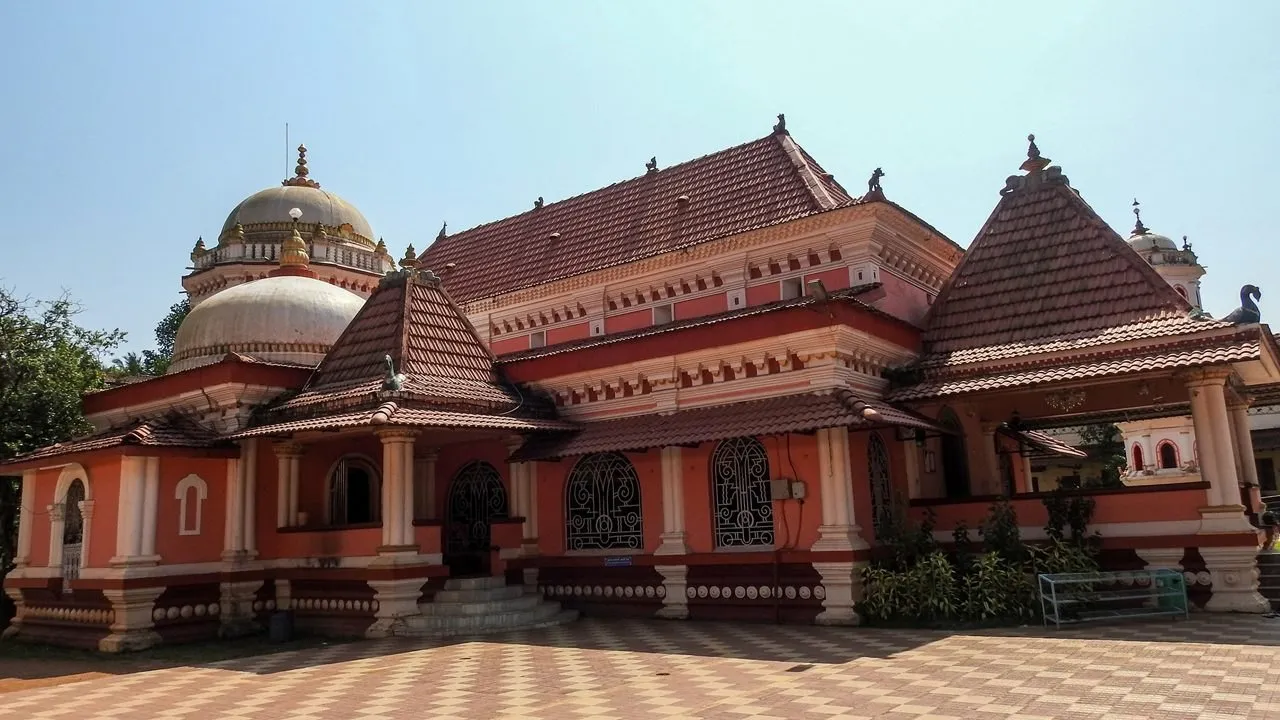
Located in the heart of Panaji along the Altinho foothill off Dada Vaidhya Road, the Shri Mahalaxmi Temple holds a special place in Goan history as the first Hindu temple allowed to be built by the Portuguese in the Old Conquests after a 300-year ban. Approved by the liberal governor Conde De Rio Pardo on July 2, 1818, the temple represents the transition of Goan Hinduism from secret, relocated shrines back into the public sphere.
The history of the temple’s deity is a remarkable record of survival and relocation. In the sixteenth century, the Havig Brahmins from the Karwar-Kumtha areas, who lived on alms and charity, carried the marble Mahalakshmi deity with them as they traveled. They eventually reached the village of Taleigao, where they sought shelter in the precincts of the local Vetal temple. When they learned of the conversion and temple-destruction policies of the Portuguese, they moved the deity to avoid its desecration.
While moving, they found a horse stable belonging to the Portuguese government and used it as a temporary hiding spot. Raghavendra Kamat Mhamai, a gentleman who worked for the Portuguese military, realized the stable was unsafe and secretly moved the deity to his own palatial house opposite the Adilshahi Palace (the Secretariat) in the heart of Panaji. Fearing for the safety of the deity, he later moved it to Mayem village in the Bicholim taluka, where it remained in safety for decades.
In 1817, the Mhamai family and their friend, Mr. Sinari, sought permission to build a temple to house the deity. The liberal Portuguese governor, Conde De Rio Pardo, granted this permission in 1818, and the temple was subsequently built using contributions from devotees. The temple was most recently renovated in 1983. The Panaji Mahalaxmi Temple stands as a monument to the endurance of Goan Hindu families who worked within the colonial system to preserve their spiritual traditions.
Monographic Analysis of Major Hindu Sanctuaries
Shri Mangueshi Temple: The Epitome of Goud Saraswat Heritage
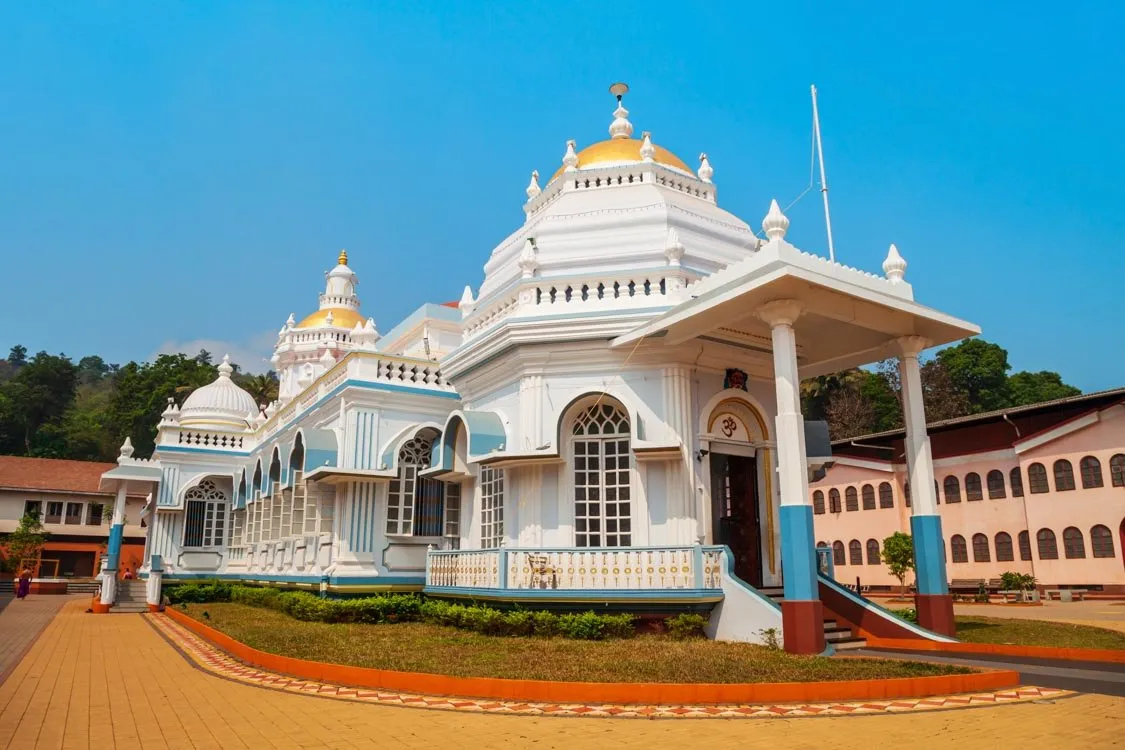
Nestled in the lush, hilly terrain of Priol village in the Ponda taluka, the Shri Mangueshi Temple is arguably the most famous and culturally representative Hindu sanctuary in Goa.
Historical Trajectory and Relocation
The temple’s primary deity is Lord Shiva, worshipped as Manguesh in the form of a sacred stone lingam. According to folklore, Shiva left Mount Kailash after losing a game of dice to his wife Goddess Parvati and settled in the jungles of Kushasthali (modern-day Cortalim). When Parvati came searching for him, Shiva transformed into a tiger to frighten her. Terrified, Parvati cried out, Trahi Mam Girisha! ("Save me, O Lord of the Mountains!"). Shiva immediately returned to his original form, and the phrase Mam Girisha eventually evolved into the name Manguesh.
The original temple was located in Kushasthali (Cortalim) on the banks of the Zuari River. In 1560, when the Portuguese began Christian conversions in the Mormugao taluka, Saraswat Brahmins of the Kaundinya and Vatsa gotras moved the Mangesh lingam to Priol, which was then ruled by the Hindu Kings of Sonde. The current structure was built under the Maratha Empire, and in 1739, the Peshwas donated the village of Mangeshi to the temple on the suggestion of their Sardar, Shri Ramchandra Malhar Sukhtankar, a devoted follower of Shiva. The temple is also well known for its historical association with the family of the legendary singer Lata Mangeshkar.
Architectural Merits and Deities
The temple architecture features a series of grand domes, pilasters, and balustrades in a distinct Indo-Portuguese style. The central courtyard is dominated by a majestic seven-storeyed octagonal Deepastambha, which stands inside the complex in the Saraswat architectural style. The temple also has a magnificent water tank, believed to be the oldest part of the temple, and a spacious Sabha Mandapa decorated with nineteenth-century chandeliers.
Alongside the main Shiva lingam, the temple complex houses shrines for other deities, including Nandi, Ganesha, Parvati, and the Gramapurusha Deva Sharma of the Vatsa gotra. Auxiliary shrines to the rear of the main building house Devtas like Mulakeshwar, Virabhadra, Shantadurga, Lakshmi Narayan, Surya, Garuda, and Kala Bhairav.
Shree Shantadurga Temple: The Mediation of Divine Conflict
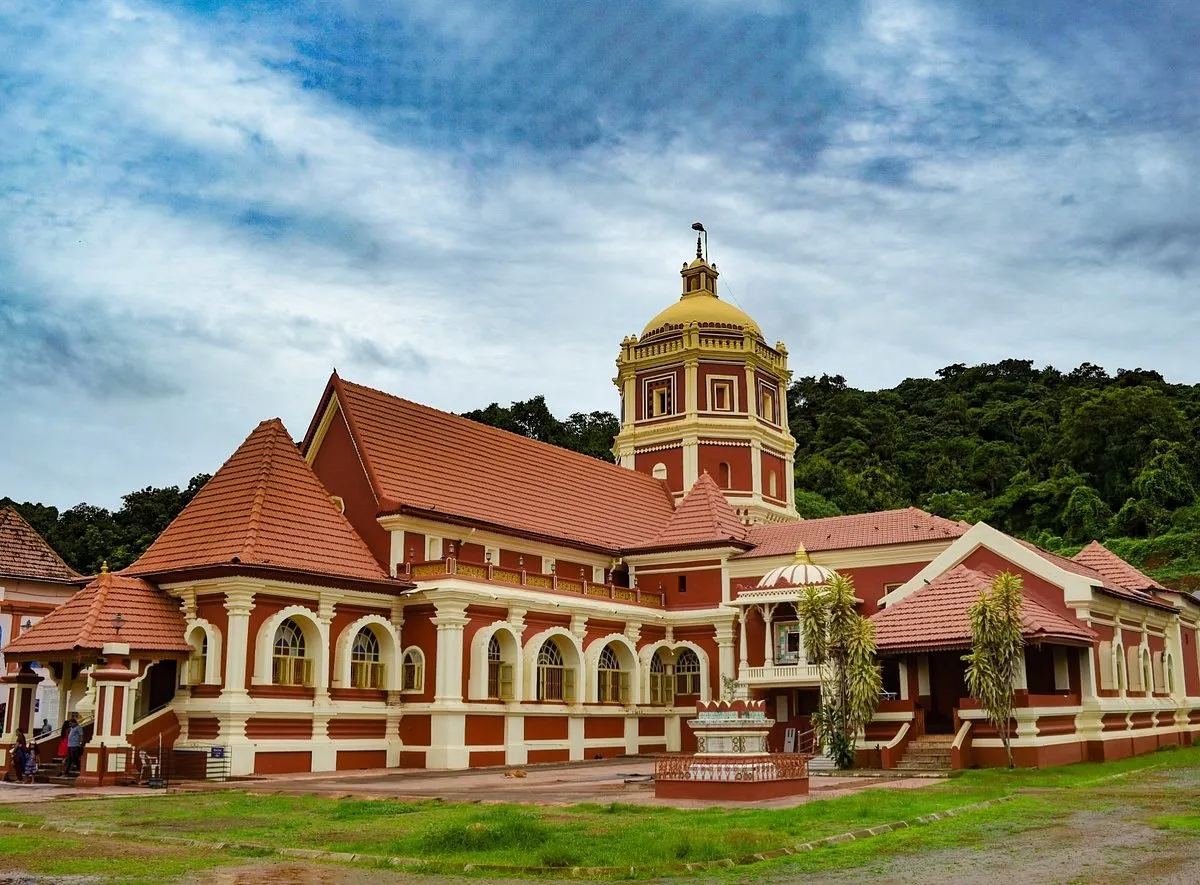
Located at the foothills of Kavlem village in the Ponda taluka, the Shree Shantadurga Temple is the largest temple complex in Goa and is dedicated to the Goddess of Peace, colloquially known as Santeri.
Legend and Iconography
The concept of Shantadurga represents a theological paradox: "Durga" is traditionally a fierce, warrior goddess, while "Shanta" denotes calm, tranquil peace. According to legend, a fierce battle once raged between Lord Shiva and Lord Vishnu. On Brahma's request, Parvati intervened, placing Vishnu on her right hand and Shiva on her left. This peaceful form of the goddess came to be known as Shantadurga (Durga who brings peace). Another legend attributes her with slaying the demon Kalataka, earning her the name Vijaydurga, and the temple is officially named Shantadurga Vijayate ("the calm goddess who wins").
History and Relocation
The original shrine of Shantadurga was located in the village of Keloshi. In 1564, the temple was destroyed by the Portuguese, and devotees relocated the deity to Kavlem. The current temple was rebuilt in 1738 under Maratha rule.
Because Keloshi was historically a Harijan village, the local Harijans who assisted in the establishment of the new shrine in Kavlem are traditionally honored to this day with gifts of the Goddess's offered saris. Additionally, the annual Palkhi (palanquin) procession is overseen by a member of the Sardesai family, a lineage that represented the Adil Shahi Sultanate in the sixteenth century.
Architecture and Ritual Mechanics
The temple architecture is a masterful synthesis of Saraswat and Roman-Baroque styles. It features a vibrant red color scheme, with multiple red pyramidal roofs surrounding a central, elongated cylindrical shikhara topped with a small dome. The windows are built with Roman-style arches filled with vibrant stained-glass panes. Inside, the temple features columns crafted from highly polished Kashmir stone, which must not be touched or damaged by visitors.
To control the flow of devotees, only one of the three entry points is kept open. For safety and decorum, foreigners are restricted from entering the inner temple. A unique daily morning Aarti ritual utilizes a large mirror at the entrance to reflect natural sunlight directly onto the face of the golden-adorned deity, instantly illuminating her features for the gathered devotees. Visitors can also experience a traditional Mahaprasad (communal lunch) at the nearby house of Priest Vinayak Pendse for a set fee.
Shri Mahalasa Narayani Temple: The Divine Feminine as Protector
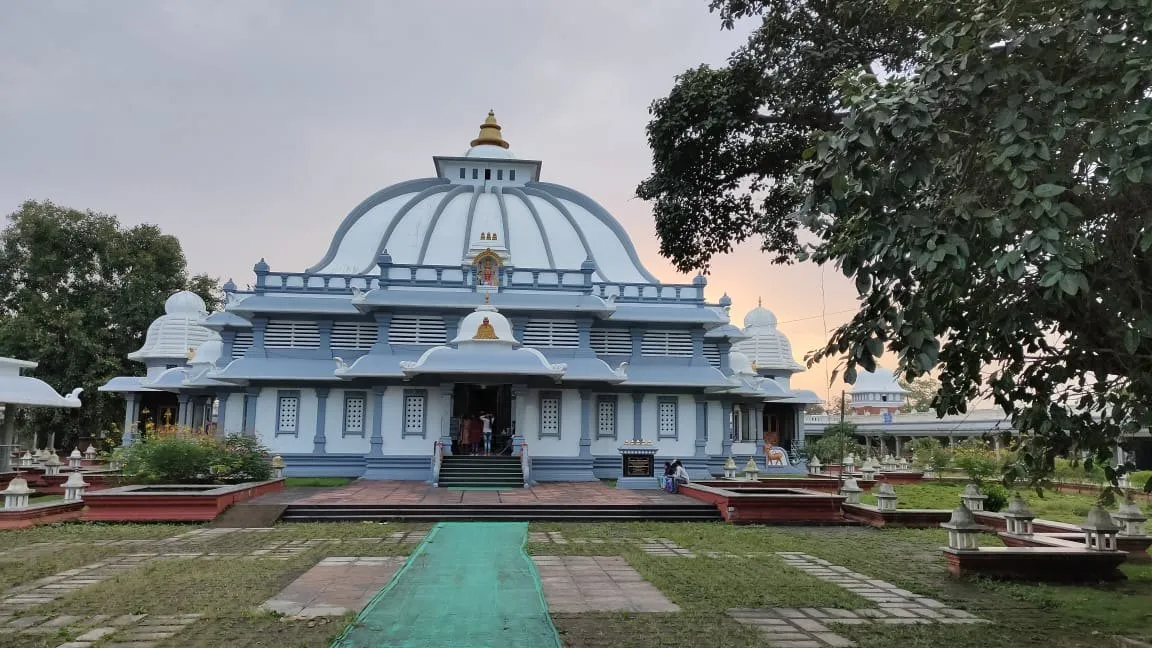
Situated in the tranquil village of Mardol, just nine kilometers from Ponda, the Shri Mahalasa Narayani Temple is dedicated to Goddess Mahalasa, identified as Mohini—the female avatar of Lord Vishnu assumed during the churning of the cosmic ocean (Samudra Manthan).
History, Iconography, and Legal Significance
Originally located in Verna in the Salcete taluka, the idol was rescued in the sixteenth century and moved to Mardol. Unlike standard representations of female deities, the black stone image of Mahalasa at Mardol is uniquely depicted wearing a Yagnopavitra (the sacred thread typically reserved for male priests and deities). She possesses four hands, carrying a trishula (trident), a sword, a severed head, and a drinking bowl, and stands upright over a prostrate demon, representing the triumph of divine order over chaos.
Historically, this temple was famous across the Konkan for its massive brass confession bell. Local belief held that anyone who lied while ringing this bell would face divine retribution, typically in the form of a tragic death, within three days. This belief was so deeply entrenched that even the Portuguese colonial administration recognized testimonies sworn before the temple's confession bell as legally binding in courts of law.
Shree Saptakoteshwar Temple: Resilience and Royal Restoration
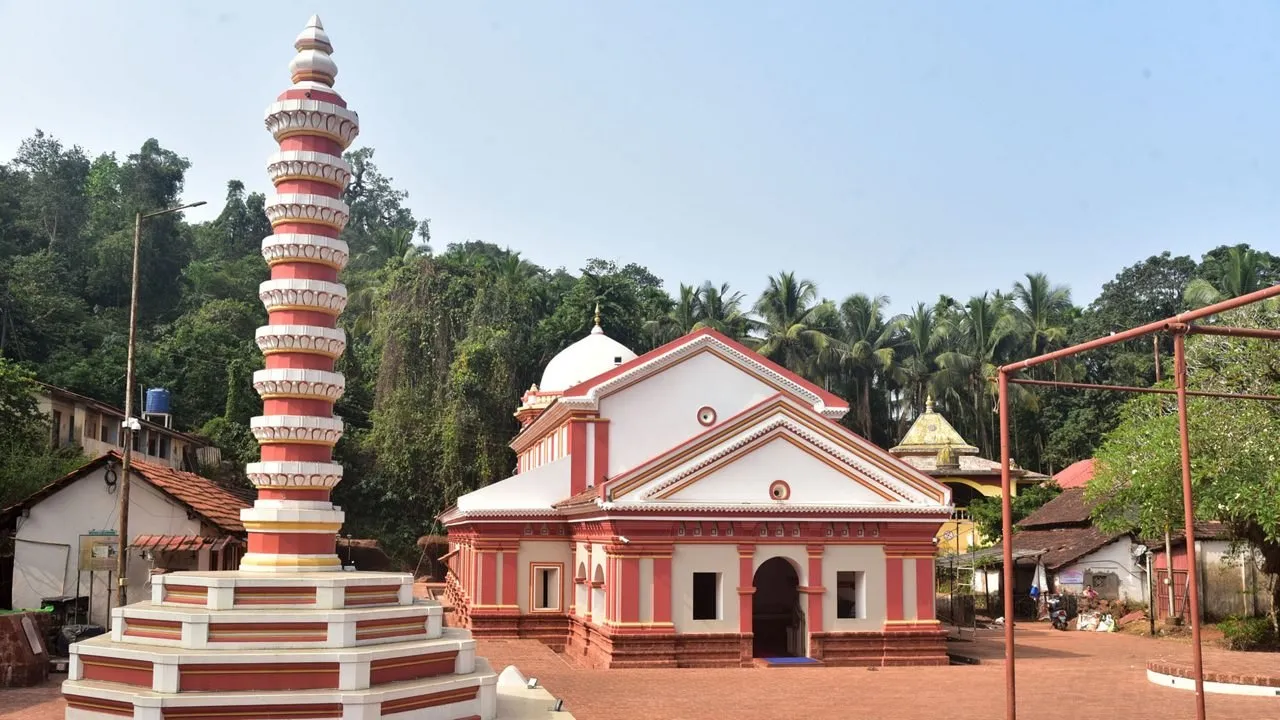
Located in the quiet village of Narve in the Bicholim taluka, the Shree Saptakoteshwar Temple is one of the most historically significant Shiva temples in the Konkan region, acting as a symbol of Hindu cultural survival.
SAPTAKOTESHWAR HISTORICAL TIMELINE
[ 12th Century ] =======> Family Deity of Kadambas (Divar Island)
[ 1352 C.E. ] =======> Linga excavated by Bahmani Sultan's troops
[ 1367 C.E. ] =======> Rebuilt by Vijayanagara's Madhava Mantri
[ 1560 C.E. ] =======> Demolished by Portuguese; Linga used as well shaft
[ Late 16th C. ] =======> Smuggled to Bicholim by Narayan Shenvi Sardesai
[ 1668 C.E. ] =======> Monumental stone temple built by Shivaji Maharaj
Origin, Destruction, and Reconstruction
The primary deity is Lord Shiva, worshipped as Saptakoteshwar ("Lord of the Seven Crores"). According to legend, seven holy sages (the Saptarishis) performed rigorous penance for seven crore (seventy million) years on the island of Divar. Pleased by their devotion, Shiva appeared and agreed to reside at the site in the form of a metallic lingam. Saptakoteshwar was the patron deity of the Kadamba dynasty (tenth to fourteenth centuries), and the dynasty's gold coins, known as Saptakotisha-Gadyanakas, proudly bore the inscription "with the grace of Lord Saptakoteshwar".
The temple's history is a record of repeated destruction and reconstruction.
- Bahmani Invasion (1352): The Kadamba kingdom was conquered by Bahmani Sultan Allauddin Hasan Gangu, whose troops excavated and damaged the temple's sacred lingam.
- Vijayanagara Restoration (1367): The Vijayanagara King Harihararaya defeated the Bahmani forces and commissioned his minister, Madhava Mantri, to reconstruct the temple and restore the lingam.
- Portuguese Demolition (1560): Following their conquest, the Portuguese demolished the temple on Divar Island and erected a chapel dedicated to Nossa Senhora De Candelaria on its ruins. The sacred lingam was desecrated and placed at the mouth of a well, where it was utilized as a pulley shaft, forcing people to step on or touch it to draw water.
- The Bicholim Rescue: Appalled by this desecration, Narayan Shenvi Suryarao Sardesai, a local Hindu chieftain, gathered a small band of men who crossed the river under the cover of night, smuggled the lingam out of Portuguese territory, and hid it in a rock-cut cave in Bicholim.
- Maratha Reconstruction (1668): In 1664, Chhatrapati Shivaji Maharaj conquered the region. Recognizing the historical import of the deity, Shivaji ordered the construction of a grand stone temple in Narve in 1668 to permanently house the lingam. A historic stone plaque recording this royal decree remains visible near the temple entrance today.
Architectural Restoration
In 2019, on the 350th anniversary of its construction by Shivaji Maharaj, the Government of Goa launched an extensive, scientifically-guided conservation project. To protect the structure from groundwater damage, a peripheral trench was excavated to expose and repair the damaged historical plinth moldings. The restoration process successfully revived the temple's traditional Kaavi art—a form of monochrome plaster etching using reddish-brown laterite soil and organic binders—which decorates the interior walls of the Sabhamandapa. The complex is located near the Panchaganga Tirtha, a sacred river confluence where a natural freshwater spring feeds the temple's ritual tank.
Mahadev Temple of Tambdi Surla: The Untouched Kadamba Relic
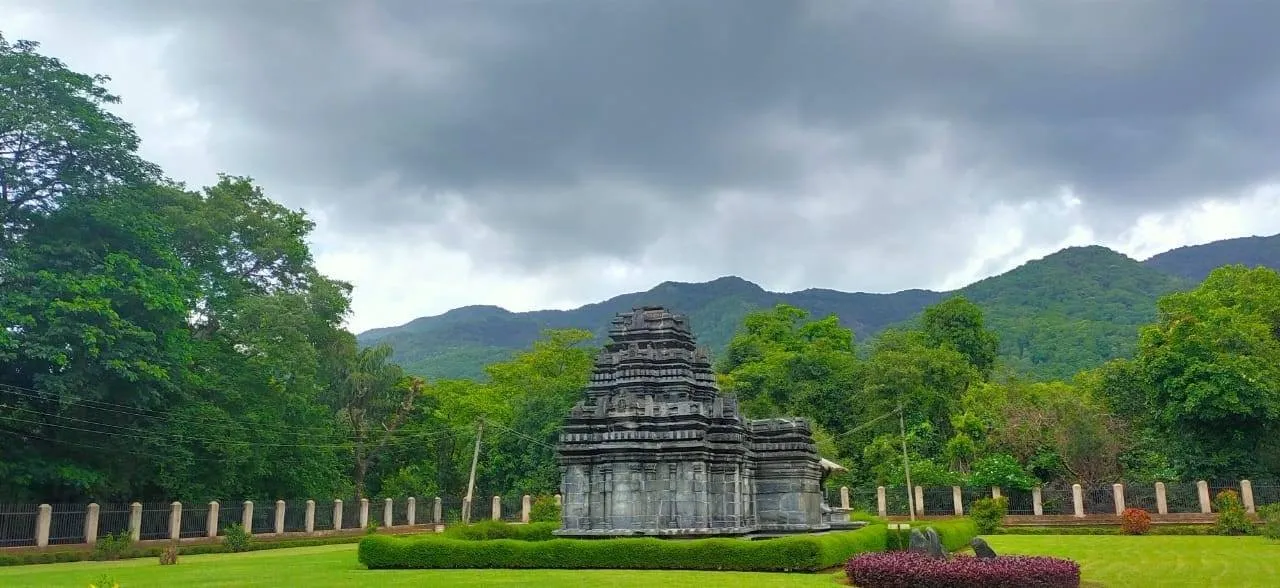
Deep within the dense, humid forests of the Bhagwan Mahavir Wildlife Sanctuary, at the base of the Anmod Ghat in Sanguem, stands the Mahadev Temple of Tambdi Surla. Built in the twelfth century, this is the only pre-Portuguese stone temple in Goa that survives in its original form (in situ).
Survival and Construction Mechanics
The temple’s survival is entirely due to its isolated location, which kept it hidden from both Islamic iconoclasts and Portuguese inquisitors. It was constructed under the Kadamba-Yadava dynasty and is structurally attributed to Hemadri, a high-ranking minister in the Yadava court of Devagiri; hence, its architecture is classified as Hemadpanti.
The temple is constructed entirely of dense, weather-resistant grey-black basalt. Because basalt is not naturally found in coastal Goa, these massive stone slabs were carved by craftsmen on the Deccan Plateau and transported across the Western Ghats.
The engineering of the temple is an extraordinary feat of dry masonry: the entire structure was built without the use of cement, lime, or mortar. Instead, the basalt blocks were carved with precise grooves, mortises, and tenons that fit together like a puzzle, allowing the temple to withstand seismic shifts and centuries of monsoon rains.
Layout and Stone Carving Artistry
The temple is elevated on a raised plinth to protect it from forest dampness. It comprises three distinct, axially-aligned chambers:
- Nandi Mandapa: A pillared assembly hall supported by four highly polished basalt columns. The base of one of these columns features the carved symbol of the Kadamba kingdom—an elephant trampling a horse. The ceiling of the hall is decorated with a beautiful carved lotus flower in full bloom.
- Antarala: The transitional vestibule space decorated with bas-relief panels.
- Garbhagriha: The dark, cool inner sanctum housing a black basalt Shiva lingam.
The exterior walls are adorned with stone panels depicting scenes from the Puranas, including Ganesha, Vishnu's avatars, and Durga as Mahishasuramardini. The stepped pyramidal tower (shikhara) features horizontal stone bands characteristic of the Kadamba style, reflecting designs found in northern Karnataka.
Devaki Krishna Temple of Marcel: Celebrating Maternal Love
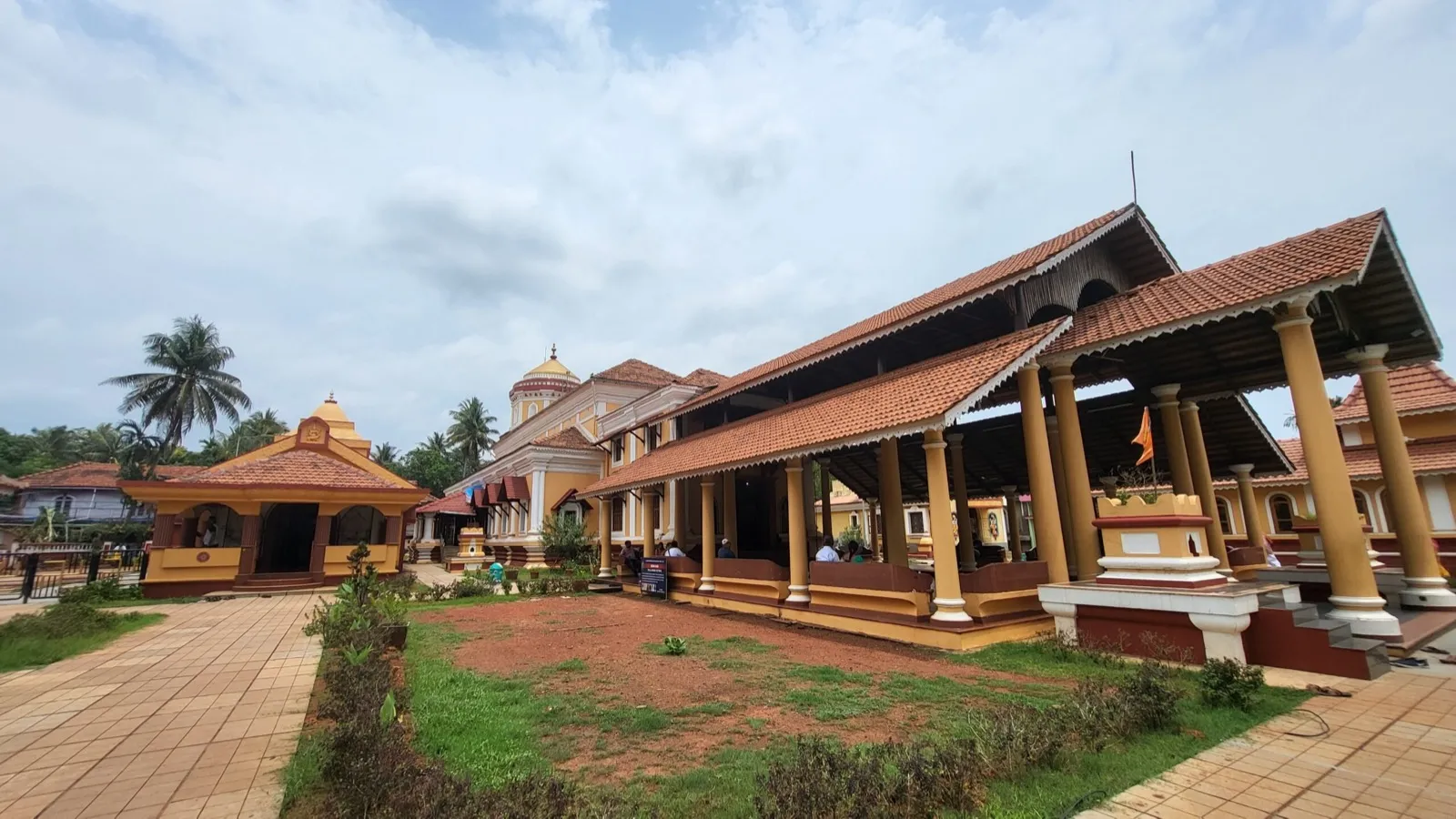
Located in Marcel (historically known as MahaShaila) in the Ponda taluka, this unique temple is the only place of worship in India where the primary deity is Devaki holding her child, Lord Krishna.
History, Legend, and Sculpture
The original shrine was located on the island of Chorao (Chudamani), a dense forest island where, according to local legend, Krishna once hid to meet his mother. During the intense Portuguese conversion drives on Chorao, the idol was moved first to Mayem in Bicholim, and eventually to Marcel, where it was initially kept in a family home until the current temple was built in 1842.
The central idol, carved from black granite by the famous sculptor Renjal Gopal Krishna Shenoy, depicts mother Devaki in a standing posture with the child Krishna sitting astride her hip. Consecrated by H.H. Srimad Sudheendra Thirtha Swamiji in 1981, this maternal composition has led historians to investigate whether the prominent images of the Madonna and Child in neighboring Portuguese churches influenced the design of this temple, or if it represents an independent convergence of maternal iconography.
Nagesh Maharudra Temple of Bandora: Reflections and Epic Carvings
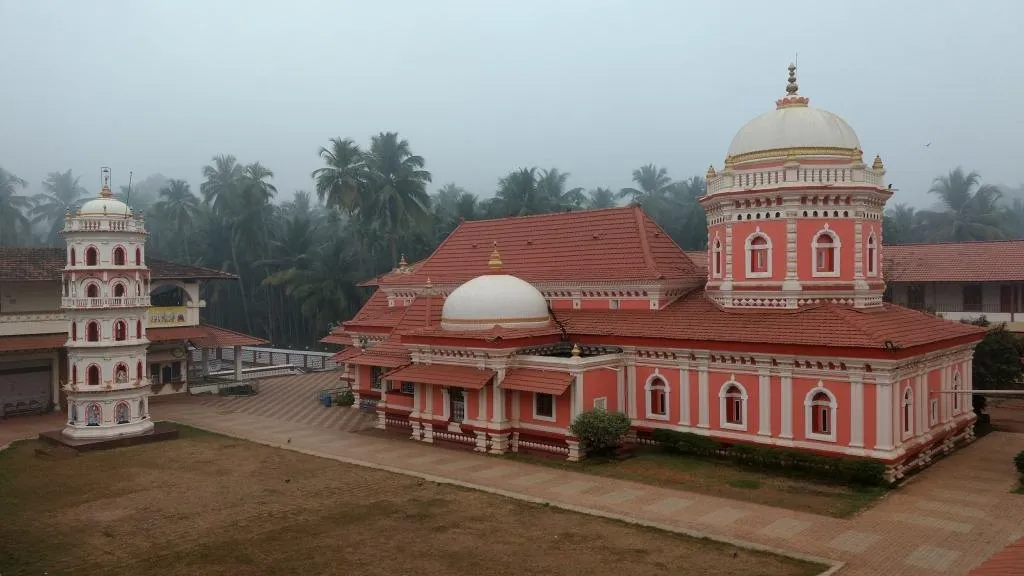
Located in the village of Bandora in the Ponda taluka, the Nagesh Maharudra Temple (commonly known as the Nagueshi shrine) is a beautiful sanctuary dedicated to Lord Shiva. The temple is famous for its stunning sacred water tank situated directly in front of the main entrance. By walking to the far end of the tank, visitors can view a perfect reflection of the entire temple structure shimmering on the water's surface.
A notable architectural feature of the temple is the continuous, running wooden panel decorated with stories from the Ramayana and Mahabharata carved in bright, vivid colors. The temple's Deepastambha is also unique, featuring detailed carvings of the eight guardian deities of the eight directions (Ashtadikpalas) at its base.
Lord Brahma Temple of Carambolim: A Rare Regional Icon
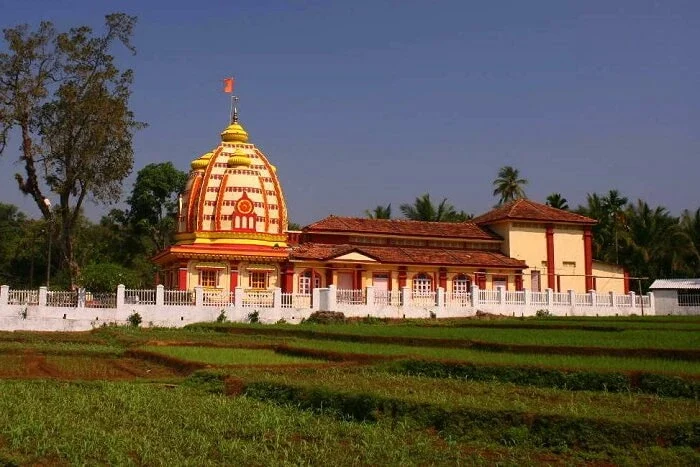
Situated in the remote village of Nagargao in the Valpoi area of the Sattari taluka, the Lord Brahma Temple is one of the extremely rare shrines in India dedicated entirely to the creator deity, Lord Brahma. The temple houses a magnificent twelfth-century black basalt idol carved during the Kadamba period.
The idol depicts Brahma in his Trimurti form, sporting a detailed beard and holding symbolic items in his four hands. The temple stands as an important destination for Hindu pilgrims, as independent temples dedicated to Lord Brahma are exceptionally rare in mainstream Hindu worship.
Shree Shantadurga Kunkallikarin Temple of Fatorpa: The Chariot of Faith
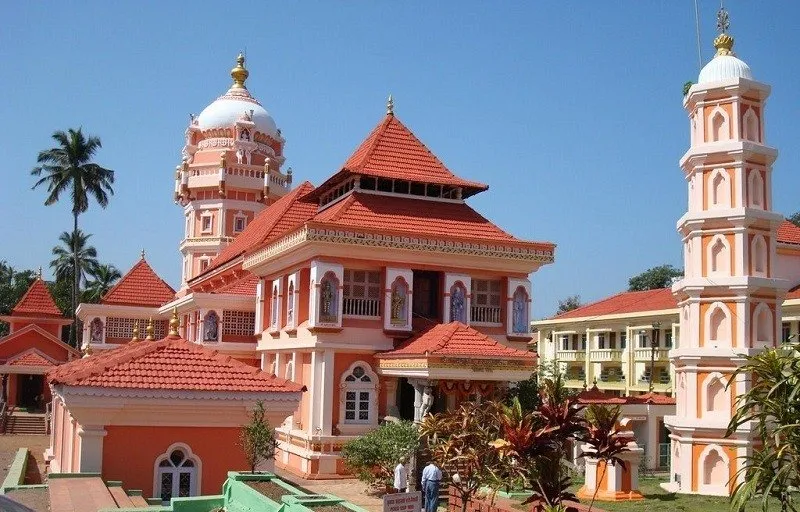
Located in the village of Fatorpa in South Goa, the Shree Shantadurga Kunkallikarin Temple is a major spiritual center that draws thousands of devotees from Goa, Karnataka, and Maharashtra. The temple is famous for its vibrant annual Jatra, which features massive, ornate wooden chariots (raths) and palanquins (palkhis) carrying the deity through the village streets.
During the festival, devotees perform the ritual of offering padd to the Goddess, which consists of a ceremonial offering of two coconuts, green bangles, a piece of cloth, rice, fruits, and flowers to seek her blessings for family prosperity and protection.
Dynamic Festivals and the Socio-Religious Tapestry of Goan Hinduism
The spiritual practice of Goan Hinduism is dynamically expressed through its annual Jatras (temple festivals) and unique local rituals. These festivals combine deep religious devotion with vibrant community celebrations, keeping alive the rich cultural heritage of the region across generations.
The Lairai Jatra of Shirgao in the Bicholim taluka is one of the most spectacular festivals in Goa. The festival celebrates Goddess Lairai, who is worshipped in the form of a sacred copper pot (Kalash) symbolizing the unmanifest source of all creation (Trigunatmika Adishakti). The festival is famous for its barefoot fire-walking ritual (agnidivya) performed by thousands of devotees known as Dhonds. At midnight, a massive bonfire (Homkund) of wood is lit in the temple courtyard. Around 4:00 AM, the Dhonds run barefoot across the hot, glowing embers while chanting the name of the Goddess, demonstrating their absolute faith and devotion.
Other villages in Goa host equally unique festivals that reflect the diverse ritual traditions of the Konkan region :
- Jayanchi Jatra (Mardol): During this festival, the entire sanctum of the temple is decorated with local fragrant jasmine flowers known as Jayo. Local flower growers and sellers do not sell any of their blooms on this day, offering their entire harvest to the Goddess instead.
- Gadyanchi Jatra (Sal): A unique night festival that includes a spirit-invocation ritual, where local mediums perform sacred dances to connect with ancestral spirits.
- Ghadanchi Jatra (Calangute): Famous for its massive ritual offerings, where devotees present thousands of bunches of local bananas to the deity.
- Shisaranni Festival (Canacona): A spectacular and intense ritual where rice is cooked in clay pots placed directly on the heads of three selected devotees, with the sacred fire lit between their heads.
- Vasco's Saptah: A major annual festival dedicated to Lord Damodar, the protector deity of Vasco city, drawing massive crowds for public prayers and devotional music.
To organize these diverse local celebrations, the following table compares the unique ritual practices and locations of Goa's major Hindu festivals:
|
Festival Name |
Principal Location |
Key Ritual / Offering |
Cultural Significance & Community Role |
|
Lairai Dhondachi Jatra |
Shirgao Village, Bicholim |
Barefoot fire-walking (agnidivya) over hot embers. |
Represents deep penance; strengthens interfaith ties with Mapusa's Milagres Church. |
|
Jayanchi Jatra |
Mardol Village, Ponda |
Decoration of the sanctum with Jayo (jasmine) flowers. |
Demonstrates community gratitude; local flower sellers donate their entire harvest. |
|
Gadyanchi Jatra |
Sal Village, Bicholim |
Sacred spirit-invocation and mediumship dances. |
Connects the community with ancestral guardians and village protectors. |
|
Ghadanchi Jatra |
Calangute, North Goa |
Ritual offering of thousands of banana bunches. |
Celebrates agricultural abundance and offers the first harvest to the deity. |
|
Shisaranni Festival |
Canacona, South Goa |
Cooking ritual rice in pots balanced on devotees' heads. |
An extraordinary feat of faith and endurance, symbolizing divine protection. |
|
Vasco's Saptah |
Vasco da Gama, South Goa |
24-hour continuous singing of devotional hymns (bhajans). |
Celebrated to thank Lord Damodar for protecting the port city from historic plagues. |
Comprehensive Comparative Reference and Operational Protocols
To assist spiritual travelers and cultural researchers in planning their journeys, the following comparative matrices outline the structural profiles, timings, and practical guidelines for visiting Goan Hindu sanctuaries.
Practical Visitor Protocol and Timing Matrix
|
Temple Name |
Location & Distance |
Darshan Timings |
Strict Dress Code Requirements |
Practical Visitor Guidelines |
|
Shri Mangueshi Temple |
Priol, Ponda Taluka (~22 km from Margao) |
6:00 AM – 10:00 PM (Darshan pauses during afternoon rituals) |
Covered shoulders and knees; no shorts, miniskirts, or sleeveless tops. |
Footwear must be removed ; paid parking on site ; temple rentals available. |
|
Shree Shantadurga Temple |
Kavlem, Ponda Taluka (~33 km from Panaji) |
6:00 AM – 8:30 PM (Varies during major festivals) |
Covered shoulders and knees; no revealing clothing. |
Foreigners restricted from the inner temple ; no photography inside the sanctum. |
|
Shri Mahalasa Narayani Temple |
Mardol, Ponda Taluka (~22 km from Panaji) |
6:30 AM – 8:30 PM (Aartis at 12:30 PM and 7:30 PM) |
Traditional and formal clothing; revealing clothes strictly banned. |
No photography inside ; Sunday Palkhi Seva is a major highlight. |
|
Shree Saptakoteshwar Temple |
Narve, Bicholim Taluka (~35 km from Panaji) |
7:00 AM – 7:00 PM |
Modest and respectful attire expected. |
Accessible via a scenic ferry route from Divar Island ; peaceful setting. |
|
Mahadev Temple of Tambdi Surla |
Sanguem Taluka (~65 km from Panaji) |
7:30 AM – 5:30 PM |
Modest wear; shoulders and knees must be covered. |
Located in a wildlife sanctuary ; spotty cellular network ; sacred river dip nearby. |
|
Devaki Krishna Temple |
Marcel, Ponda Taluka (~3 km from Banastari Bridge) |
6:00 AM – 12:00 PM & 4:00 PM – 8:00 PM |
Traditional modest clothing expected. |
Located along the Panaji-Ponda road ; quiet and serene atmosphere. |
The study of Goan Hindu temples reveals a rich history of cultural survival, local adaptation, and artistic syncretism. Rather than being passive copies of metropolitan styles, Goan temples represent a sophisticated adaptation to the challenges of colonial rule. By merging Western Baroque forms with traditional Hindu layout principles, Konkani builders preserved their spiritual lineages and established an architectural style unique to the region.
- The Spatial Logic of Camouflage: The use of Baroque domes, pilasters, and balustrades acted as a form of cultural protective coloring, allowing Hindu communities to build grand shrines within a colonial state.
- The Social Fabric of Devasthans: The Mahajani system and Gramasansthas (village assemblies) kept the social, economic, and ritual ties between relocated deities and their ancestral villages intact across generations.
- Syncretic Continuities: Rituals like the flower-and-oil exchange between the Shirgao Lairai Temple and the Mapusa Milagres Church demonstrate how pre-conversion kinship structures survived colonial divides.
For Goa to develop as a sustainable spiritual tourism destination, several key initiatives must be prioritized:
- Preservation of Living Heritage: Structural interventions must use traditional, local materials and minimal modern alterations, following the approach of the Saptakoteshwar project. This is essential for protecting delicate features like Kaavi wall art.
- Sustainable Site Management: Sites of high historical and environmental value, such as the Tambdi Surla temple inside the Bhagwan Mahavir Wildlife Sanctuary, require careful conservation to prevent ecological damage from increased visitor numbers.
- Socio-Cultural Respect: Maintaining strict dress codes, photography restrictions, and clear visitor protocols is vital for keeping these sites as active, peaceful places of worship rather than commercialized tourist attractions.
Ultimately, Goa's historic temples offer a window into a past of resilience, artistic dialogue, and survival, making them a unique and rich experience for the thoughtful spiritual traveler.
Keep Reading
View All Articles-
Complete Guide to Muktinath (Muktikshetra): The Ultimate Pilgrimage in Nepal
Muktinath, known traditionally as Muktikshetra (the site for salvation), stands as one of the most spiritually profound, historically rich, and visually breathtaking pilgrimage destinations in the world.
-
Kailash-Manasarovar: The Nepal Route
Axis Mundi: Spine of the Universe, The Ultimate Guide to Kailash Manasarovar Yatra via Nepal: Itinerary, Safety, Sacred Geography, and Preparation
-
Guide for the Gangotri to Gaumukh Alpine Route (2026 Season)
The high-altitude corridor connecting the holy town of Gangotri to the glacial snout at Gaumukh