VAISHNO DEVI YATRA, JAI MATA DI: GLORY TO THE GODDESS
-
State : Jammu and Kashmir
-
Important temples : The holy cave of Mata Vaishno Devi, Adkuwari, Charan Paduka, Bhairon Mandir
-
Location: The holy cave is located in the folds of three mountains called Trikuta, at an altitude of 5,200 ft, in north-western Himalaya
-
Distances: 12 km NE of Katra, 62 km NE of Jammu
-
Route from Jammu : NH1A to Domel; district road to Katra; trek to Vaishno Devi
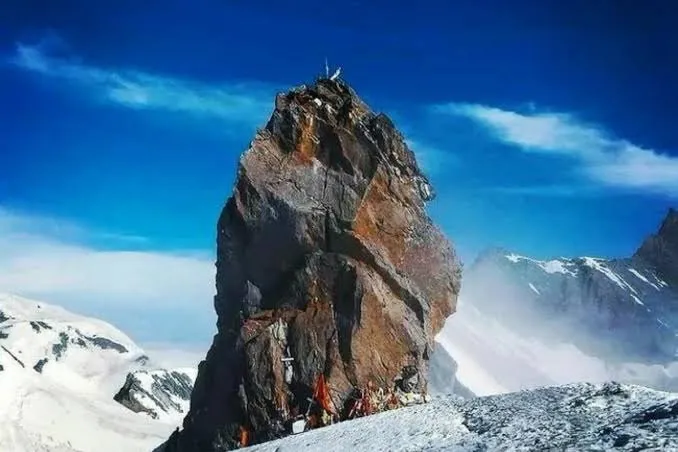
The Vaishno Devi complex, located in the folds of three mountains called Trikuta

The devotion and faith of the Vaishno Devi pilgrim cannot help but touch even the most skeptical observer. Every one of the lakhs of visitors here will surely enjoy the feeling of oneness amongst the yatris, their faith in Ma Vaishnavi's generosity, their belief that she will know what's best for them, and that she will reach out to help. No description of the Vaishno Devi Yatra can do justice to the pilgrimage
in its entirety because one's own goals determine the experience of the visit. It is a personal need that draws the pilgrim, and many come again and again - for specific requests or as thanksgiving for the mother's continued blessings. Whatever the reason, it is believed that the visit to the Vaishno Devi happens because maa aap bulaandi (the mother herself calls). This unshakeable conviction is shared by every yatri. One just has to take one step; the rest of the journey just follows by her divine grace.
In search of Trikuta, the goddess appeared as a child to a Brahmin named arrange for a Shreedhar and asked him to mighty feast. Shreedhar was poor but by the goddess' grace, the bhandara was hugely attended. One of the guests at the feast was Bhairon. He was the disciple of Gorakhnath, a spiritual master of Tantra, who wished to test Vaishnavi's righteous- ness and virtue. Bhairon tried to force Vaishnavi into serving the guests alcohol and non-vegetarian food. She refused and escaped to continue her journey, with Bhairon in pursuit. Two guards, Veer and Langur, accompanied her. En route, she fired an arrow to quench the thirst of her guards. This spring of water is the Ban- ganga River. The imprints of the goddess' feet are worship- ped at Charan Paduka, where she stayed for sometime en route to the holy cave.
In the short time during which the Shrine Board Trust has been operating, the development in the area has been tremendous. Vaishno Devi is one of the cleanest and best maintained kshetras in India. This befits the devotion of the yatris who have contributed to the upkeep of the facilities. The natural beauty of the mountains and the well-maintained road, right to the top, is literally out of this world. While one may like to plan the trip meticulously, and it is known that the peak crowds are during the Navaratras, the locals and those who are in the know say that some days are simply unpredictable. Once you have received the bulava (the call), it is best to step forward, go with the flow, and soak in the experience. Whether you find great crowds or are treated to a leisurely darshan, whether you can wait to see a beautiful sunrise and sunset from the mountain top or you return quickly by helicopter, whether you sing energetically with other pilgrims or find yourself breathless on the steep slope, the Vaishno Devi Yatra will surely be an unforgettable journey linked to your very soul.
LEGENDS AND MYTHOLOGY
It's believed that Goddess Vaishnavi took birth in human form in the house of Ratnakar Pandit, in Rameswaram. She wished to marry Lord Vishnu, who had taken birth in his incarnation as Lord Ram. At this time, Ram was in exile and Sita had been abducted to Lanka. Vaishnavi app- roached him. He promised to marry her on his return from Lanka with Sita, provided Vaishnavi could recognise him. When she failed to do so as he was disguised as an old hermit, he asked her to wait for Kaliyug, on the Trikuta Mountain. As he resided in every human being, he said he would visit her as part of every devotee who came to see her. And when all humanity had taken her blessings, he would marry her in his Kalki e avatar. The goddess waits to this day.
In search of Trikuta, the goddess appeared as a child to a Brahmin named shreedhar and asked him to arrange for a mighty feast. Shreedhar was poor by the goddess grace the bhandara was hugely attended. One the guests at the feast was bhairon. He was the disciple of Gorakhnath, a spiritual master of tantra, who wished to test vaishnavi righteousness and virtue. Bhairon tried to force vaishnavi into serving the guest alcohol and non-vegetarian food. She refused and escape to continue her journey, with bhairon in pursuit. Two guards veer and langur, accompanied her. Enroute, she fired an arrow to quench the thirst of her guards. This spring of water is the Banganga River. The imprints of the goddess feet are worship at charan paduka, where she stayed for some time enroute to the holy cave.
Thereafter, the goddess settled herself Adkuwari, in a womb-shaped cave, which came to be known as Garbha Joon. She meditated here for nine months. But Bhairon followed her here too. She pierced her way out with her trident and escaped to the holy cave where she now resides. When Bhairon refused to heed her warnings, she took the form of Mahakali and severed his head, which fell on a neighbouring mountain. Bhairon, seeing her in the form of the Divine Mother, begged to be forgiven. Seeing his repentance, Ma Vaishno Devi forgave him. For his devotion, she granted him a place near her abode before discard- ing her human form and changing herself journey to her shrine would be complete into a rock. She also promised him that a only if the pilgrim visited the temple to him on the nearby hill. This is the Bhairon Mandir. The holy cave itself is like a tunnel, at the end of which the mother has called pindi. revealed herself in a natural rock form called pindi.
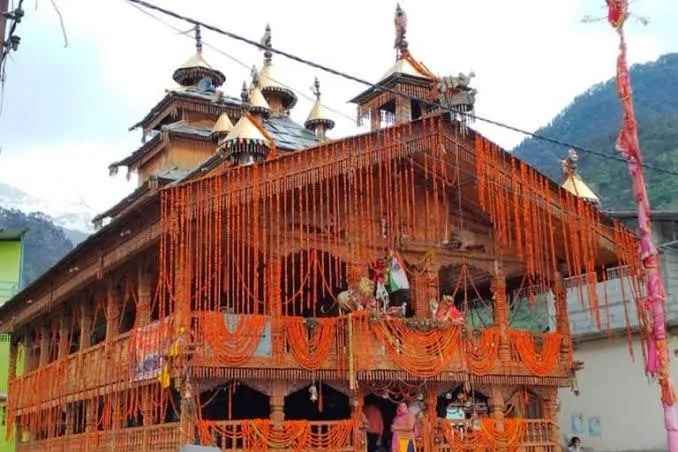
One of the best kept kshetras in India is reached, devotees believe, only when the goddess herself calls
It is believed that Shreedhar Pandit discovered the cave 700 years ago when the directions were revealed to him in a dream by the Mata. Before the formation of the Shri Mata Vaishno Devi Shrine Board in 1986, the temple was controlled by a private trust and local residents called baridaars took turns in collecting the offerings. The chief priest is a descendant of Shreedhar Pandit's family.
THE YATRA
Known as the 'munh maangi muraaden poori karne wali Mata', Goddess Vaishno Devi is believed to fulfil all the longings of human life - dharma, artha, kama and moksha. The time taken for the yatra itself depends on the fitness and enthusiasm levels of the pilgrim, the weather and crowds. It is good to plan for at least two days for a return journey but the yatra can be completed in a day during the lean period. The 12-km long walking path is wide, paved and well-maintained. The entry is from what is called the Darshani Deodhi. There is a view of the entire Trikuta Mountain from here, which is 1 km away from the Katra Bus Stand, and can be reached on foot or by autorickshaw (Rs 20, or Rs 5 for a shared seat). One's own vehicle may be parked here. It's best to remove valuables as parking is at your risk. The Shrine Board also runs an hourly bus service from the bus stand to the Darshani Deodhi. After the checkpost comes a small bridge under which flows the River Banganga. Some pilgrims like to take a dip in the Banganga before proceeding further.
At various points along the yatra, there are two routes to choose from the old one has steep steps, the newer main track has a much gentler gradient. Heart patients and asthmatics are advised to use the main track. Some pilgrims do take the steps for reasons of nostalgia, and as the steps keep crossing the main track at regular intervals, the yatris can continue to choose between the paths. Steps are preferred on the way down but they are steep. Basic conveniences like toilets have been set up on the main track at regular intervals. They are well-maintained. About 112 km from the Banganga River is the Charan Paduka imprints of the Mata's feet on a rock slab. Thus, symbolically, one can take the mother's blessings at the start of the journey.
At Indraprastha, 5 km from Banganga, an alternate track to Bhavan (the hilltop site) has been built. This is wider, cleaner and has a gentler gradient and bypasses Adkuwari, which is 500m from Indra- prastha on the older route. Those who I wish to have darshan at Adkuwari need not return to Indraprastha to join the new track. A subway is available from Adkuwari to the new/ alternate track.
Fluttering flags and the temple spires of Adkuwari can be seen much before actually reaching the yatra's halfway mark. This is where the Mata meditated in a cave known as Garbha Joon for nine months. Only one person can pass through the cave at a time. Doing this is considered a rejuvenating experience. Not more than 4,000 pilgrims can pass through this cave in 24 hrs. A special group number is provided to 50 pilgrims at a time. When the number is displayed, members of the group are required to queue up and pass through.
From Adkuwari onwards, there are two tracks. The old one passes via Himkoti (the most scenic spot), Haathi Mattha (so named because of the steep climb), and Sanjhhi Chhat (which is the highest point at 5,200 ft), from where it is a 3-km downhill walk to Bhavan. At Bhavan, one crosses a small patio-like structure. On the right is the way to the original cave. It's narrow and remains closed when the crowd is larger than 8,000 pilgrims on a given day.
In the holy cave, it is believed that the pilgrim also has darshan of 330 million gods and goddesses who have at some time visited the mother goddess. At the entrance, on the left, is the symbol of Ganesh, and adjacent to him are Surya and Chandra Dev. It is believed that the 14- foot long rock here is Bhairon's torso.
The legendary River Charan Ganga flows by the feet of the mother, and pil- grims have their feet washed by the holy waters as they move closer towards the god- dess. About 20 ft down, the cave flares out and the entire weight of the rock appears to rest on an image of the many headed- serpent Seshnag. Just below Seshnag is the havan kund and by its side are the sacred symbols of shankh (conch), chakra (disc), gada (mace) and padma (lotus). Further down is Sher ka Panja, which symbolises the lion, the goddess' mount. Two new tunnels facilitate the movement of larger crowds one for entry and the other for exit. After crossing the original cave, the pil- grim walks through a corridor where many bells have been suspended from the ceiling. Further down is a broad platform, upon which a life-size idol of the Mother has been enshrined. At the end of the tunnel (the original or the new corridor) is the raised marble platform on which the Mother has revealed herself in a natural rock formation. There are no statues, pic- tures or idols inside. The pindi to the extreme left is worshipped as Saraswati, the supreme energy of creation. This is whitish in colour. In the middle is a somewhat yel- low pindi of Lakshmi, the supreme energy of maintenance. The black pindi on the right is known to be of Ma Kali, the supreme energy of dissolution. Ma Vaishno Devi is consid- ered to be an incarnation of all these three energies. One only gets a glimpse of the deities as the queue is long and pilgrims are required to keep moving but it is a moment that remains with the devotee for a lifetime.
The various idols and ornaments donated by different kings were earlier placed in the cave, but after the formation of the Shrine Board Trust, these have been reduced in order to offer a more satisfying darshan for pilgrims. Just outside the exit is Amritkund, where the water flowing from the holy cave collects. This water can be carried home in bottles, which can be purchased in the shops nearby. Chunnis and chola, and gold and silver coins, offered and blessed, are also available as prasad and souvenirs in a shop run by the trust. Another souvenir shop is located at the Katra Bus Stand.
The Bhairon Mandir is 1.4 km away from the holy cave. It is reached by anoth- er steep climb, which can be done by foot, pony or palanquin. The rock deity here symbolises the severed head of Bhairon Baba. The ash from the havan kund here is believed to provide protection from untoward happenings and ailments.
Timings: The shrine is open round-the-clock throughout the year. The cave is closed for darshan for 2 hrs, for aarti at sunrise and sunset
Related info: There is no fee for darshan. But special darshan is possible in the Shraddha Suman Vishesh Puja Aarti. As the cave has very limited space, only five people are allowed to participate in this aarti for a payment of Rs 11,000. Reservations can be made at the Niharika Complex, Katra (see Fact File), or through the website (maavaishnodevi. org). Daily havans are performed near the cave. A family of five can participate by paying Rs 5,100. This havan can also be done in the name of devotees if they send the requisite amount through procedures specified on the website (Rs 1,100 for five persons). Prasad is sent by post.
The main offerings inside the holy cave are red chunnis, saris, silver or gold ornaments, dry fruits and flowers. Sweets and food items aren't allowed inside the cave. If you are carrying a coconut, you need to deposit it at a counter in the main waiting hall, against a slip. After puja, a coconut can reclaimed from another counter after darshan. No coconuts are allowed to be broken near the holy cave. Pilgrims generally take a bath before darshan. Bathing facilities are available near the cave. The most important festivals at the shrine are: Chaitra Navaratra (Mar-Apr) and Sharad Navaratra (Sep- Oct) when the Shat Chandi Yagna is organised for peace and the prosperity of mankind. Diwali is also celebrated with great fervour.
Fact File
Registration and other info
Registration Upon arrival in Katra (2,500 ft), pilgrims must register at the Registration Coun- ter, open round the clock at the Bus Stand. One person can register for nine fellow pilgrims. No one is allowed to cross the first checkpoint without the white registration slip, which is valid for 6 hrs. If the crowd is large, red/ pink waiting slips are issued, which in turn help in securing final registration. A second Registration Counter has been set up on Udhampur Road, 1 km from the main bus stand.
Check posts About 500m from the Darshani Deodhi is the first checkpost. Mobile phones, video cameras and other electronic equipment are not allowed beyond this point. Yatris are advised not to carry these items while embarking upon the yatra; it might be best to leave them behind at the place of stay. The yatra slip is checked at the second check post. It is mandatory to have a valid yatra slip for making the journey.
Cloakrooms are available free of charge. The Shri Mata Vaishno Devi Shrine Board (SMVDSB) has a cloakroom at the Niharika Complex near the bus stand. Many shops en route double as cloakrooms for extra income.
Ponies, palanquins, porters Many pilgrims prefer to do the trek on foot but ponies, palanquins and porters are available for those who are unable to walk the distance to the shrine (pithus or porters Rs 250; ponies Rs 380- 450 depending on one's weight; palanquins Rs 1,520-2,140 depending on the weight of the pilgrim and the number of carriers, which can be 4 or 6; all fares are for the round-trip).
These should be hired from official counters next to the Darshani Deodhi, at the begin- ning of the yatra. Their official identification card should be kept with you until return for ensuring proper service.
Food, water, other essentials available en route.
Electric vehicles ply from Adkuwari (halfway to the holy cave, at 6 km; fare Rs 100 per person). The number of vehicles is limited and their batteries take a long while to charge. Hence, the facility is used mainly by the old and the sick. The road is well-lit so yatris can travel in safety throughout the night. Many prefer to walk at night to avoid the heat, especially in summer.
Where to stay
After Katra, no private accommodation is available for the yatra. Pilgrims must contact the SMVDSB Office for reservations for places to stay. Dormitory beds are also available. The best way to book rooms is to send a demand draft to any of the SMVDSB offices after checking availability telephone. Bookings can be made on their official website too maavaishnodevi.org
Next to the Jammu Railway Station, the Shrine Board has two facilities: the Vaishnavi Dham and Saraswati Dham (Tel: 0191- 2473270/ 75; Tariff: Rs 550-700; dorm bed Rs 50). At Katra, the board has two guest houses, Niharika and Shakti Bhavan (Tel: 01991- 234053; Tariff: Rs 350-750; dorm bed Rs 50). Facilities on the hilltop are at the Bhavan, Adkuwari and Sanjhhi Chhat (Tariff for all: Rs 350-750; dorm bed Rs 50). Bookings can be made from the board offices at Niharika next to the Katra Bus Stand. At the Bhavan, the yatris are provided blankets free of charge for stay, against a security deposit. Free accommodation is provided in a big hall, where the blanket has to be used as mattress. There are common toilets, which are very clean. In fact, accom- modation provided by the Shrine Board is clean and spacious, and remains the best bet, and they have to be contacted for accommodation after Katra anyway.
In Katra, yatris also have the option of staying at one of the many private hotels there. Prices vary from day to day and rates are negotiable. Try Hotel Asia (Tel: 01991- 232061; Tariff: Rs 2,000-3,000), Hotel Vaishno Devi (Tel: 233301; Tariff: Rs 1,550- 3,850), Hotel Tridev (Tel: 232108; Tariff: Rs 1,190-1,590), Hotel Mayur (Tel: 232144; Tariff: 850-1,500) and Hotel Subhash (Tel: 232055; Tariff: Rs 350-550).
Where to eat
Vegetarian food is available in Katra and all along the route. The Shrine Board runs no- profit, no-loss food counters at the Bhavan. Smoking and drinking are prohibited during the entire yatra.
When to go
The yatra is open through the year. Peak crowds are seen in May, June and July, and during the festive period of the Navaratras (Mar-Apr and Sep-Oct). Year-end/ New Year vacations in December also witness huge crowds. Comfortable darshan may not be possible at such times. Devotees often have to wait 12-20 hrs for darshan. On any day, 20,000-22,000 people are allowed to have darshan. When the crowds peak, pilgrims have to wait for their turn in Katra.
One good way to plan your journey is to log on to maavaishnodevi.org and check the flow of visitors. If the inflow is less than 15,000 persons on a given day, then the trip can be expected to be comfortable. Monsoon (Jul- Aug) and winter (Jan-Feb) are good periods to avoid crowds. During the monsoon, nature is at its scenic best. There are views of lush green mountains and glorious waterfalls on the journey. The original holy cave is open only during winters. Darshan from this cave is a unique mystical experience. For the rush per- iod, and for other seasons, an alternate passage has been built. In the summers, it is easier to walk in the night so the crowd for the morning darshan is larger. At such times, one may like to plan the darshan in the afternoon. The shrine is closed for aarti for 2 hrs at sunrise and sunset, but is otherwise open round the clock. NOTE Vaishno Devi is situated in the state of J&K, which has been experiencing insurgent violence for some time now. The route is also prone to landslides and devotees should listen prone carefully for directions from the authorities. Loudspeakers have been provided for all along the route. Regulation and security checking is rigorous.
Getting there
Air Nearest airport: Jammu (50 km/ 11/2 hrs to Katra). Taxis charge Rs 500-800 to Katra Helicopter service Every 15 mins Deccan Aviation (see alongside for contact details) operates chopper flights (5-min trips) from Katra to Sanjhhi Chhat, 3 km before the holy cave. Round-trip fare: Rs 8,288 per person, Rs 12,538 per couple. This fare includes overnight stay in Katra and priority darshan
Rail Nearest railhead: Jammu. Buses for Katra available just outside the station (2-21/2 hrs/ Rs 50). Buses also available at the main Jammu Bus Stand, 1 km away
Road Outstation travellers can take the Kunja- wani Bypass, 10 km off Jammu, on NH1A, which connects Delhi to Katra and Udhampur. From Jammu City, take the road to Srinagar. At Domel (30 km from Jammu), the road bifurcates into two; one heads towards Srinagar, and the other to Katra Buses Available for Katra and Jammu from all major destinations in northern India. Roads are hilly but in excellent condition. Be prepared for security checks.
Tourist/travel/ Shrine Board offices Director Tourism IB
JK Tourism, Tourist Reception Centre Vir Marg, Jammu Tawi Telefax: 0191-2520409, 2548172
- Office of the Chief Executive Officer IB SMVDSB, Katra
- Tel: 01991-232238, 232025, 232367 Fax: 232089, 232769
- Email: [email protected]
- [email protected]
Office of the Senior Manager IB SMVDSB, Niharika Complex Near Katra Bus Stand
-
- Tel: 01991-232125, 232025 Fax: 232887
- Office of the Dy Div Manager IB SMVDSB, Vaishnavi Dham, Near Rly Stn Jammu Tel: 0191-2473270/5
- Delhi Tel: 011-26145085-86 Mumbai Tel: 022-26611601-02 Katra Tel: 01991-234378-89

The platform is read by seekers across 24 countries and is hosted in India. Its tone is warm yet dignified, ancient yet contemporary, and deeply respectful of the reader’s inner journey. Spiritual Yatra is more than a website - it is a digital ashram of sorts: a calm, high-quality space where every soul’s sacred story is honored. It invites you to slow down, reflect deeply, and walk the path with greater awareness and care. Whether you’re looking for daily wisdom, profound teachings from the Upanishads, or simply a place that feels like a quiet companion on your spiritual journey, Spiritual Yatra offers something rare in today’s digital world: depth, sincerity, and gentleness. “Every soul has a sacred story.” This is where that story is welcomed and held with reverence.