



Spiritual Guides and Gurus
Badrinath Rawal Ji : A living legacy of Adi Shankaracharya
The institutional structure of the Badrinath Temple, situated in the Chamoli district of Uttarakhand at an elevation of approximately 3,133 meters (10,279 feet) above sea level, represents one of the most resilient systems of trans-regional religious management in the Indian subcontinent.
 By Spiritual Yatra
16 min read
By Spiritual Yatra
16 min read

Central to this sacred administration is the Rawal, the chief priest (head pujari), whose office serves as a spiritual, legal, and administrative bridge between the distinct cultural spheres of North and South India. Established during the early medieval revival of orthodox Brahmanical traditions, the position of the Rawal has survived centuries of dynastic transitions, colonial encroachments, and the post-colonial shift toward democratic state oversight. This report analyzes the historical genesis, qualifications, ritual systems, trans-regional symbioses, and modern legal-institutional transitions of the Badrinath Rawal.
The Historical Origin of the Rawal Institution
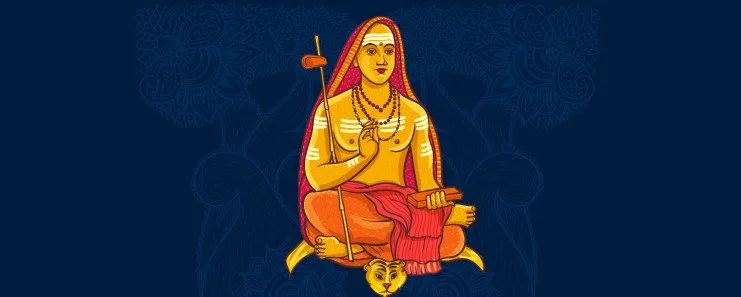
The origin of the Rawal institution is tied to the 8th-century philosophical and missionary campaigns of Adi Shankaracharya, a native of Kerala who undertook the systematic revival and consolidation of Sanatana Dharma across the subcontinent. Shankaracharya identified Badrinath long celebrated in texts such as the Skanda Purana, Vishnu Purana, and Bhagavata Puranaas a core site of Vaishnavite devotion. According to historical tradition, the original black stone idol of Lord Badrinarayan had been cast into the Narad Kund (a hot-water pool in the Alaknanda River) during a period of Buddhist dominance in the region. Shankaracharya recovered the idol from the river and re-consecrated it in a cave near the Tapt Kund, establishing a formal, uniform tantric mode of worship.
To secure the long-term theological and ritual integrity of the temple, Shankaracharya established a system of trans-continental priestly appointments. He decreed that the chief priest of Badrinath must be a Nambudiri Brahmin from Kerala. This decision was part of a larger, integrated cartography of sacred administration across the four major corners of India (Char Dham):
- Badrinath (North): Served by Nambudiri Brahmins from Kerala.
- Rameswaram (South): Served by Joshis from Kashi, Kashmir, Nepal, or Maharashtra.
- Dwarka (West): Served by Chowbey Brahmins from Odisha.
- Jagannath Puri (East): Served by Pandas from Gujarat.
Historically, before the exclusive institutionalization of the Nambudiri lineage, Dandi Brahmins (staff-bearing sanyasis) from Southern India, who were close associates of Adi Shankaracharya, performed the principal rites at Badrinath. Following the gradual decline or extinction of these specific sanyasi lineages around the 17th or 18th century, the appointment of Nambudiri Brahmins from Kerala was formalized as an absolute norm to ensure the preservation of the traditional Tantra-Vidhi of Shrauta.
This institutional arrangement had deep political-theological implications. By ensuring that the highest spiritual authority in a northern Himalayan shrine was held by a southern intellectual elite, Shankaracharya created a self-reinforcing network of cultural and national integration. This system successfully transcended the highly fragmented regional politics of medieval India, maintaining a unified orthodox liturgy across vast geographic and linguistic boundaries.
Iconography and Divergent Descriptions of the Presiding Deity
The physical description of the deity at Badrinath varies across historical records, administrative documents, and local oral traditions. These variations highlight the complex evolution of the shrine's visual culture and the different ways it has been documented over time.
|
Dimension / Height |
Primary Material |
Visual and Positional Attributes |
|
1 Foot (0.30 meters) |
Black Granite |
Seated in the meditative Padmasana (lotus posture); considered one of the eight svayam vyakta kshetras (self-manifested deities) of Lord Vishnu. |
|
3.3 Feet |
Black Stone (Saligram) |
Depicts Lord Badrinarayan armed with a Conch (Shankha) and a discus (Chakra) in two lifted arms, while the other two arms rest in a classic yogic pose. Seated under the gold canopy of the Garbha Griha. |
|
5 Feet 9 Inches |
Shaligram Rock |
Seated in Padmasana; local texts and regional guides record this larger measurement, reflecting the visual presence of the entire sculpted panel including flanking figures. |
Despite these differing descriptions of its physical size, the idol is universally recognized as representing Lord Vishnu in a state of deep meditation under the shade of a Badri (jujube or Indian Ber) tree. The surrounding valley was historically described as a dense jujube forest, though these trees are no longer found in the high-altitude climate of the contemporary town. According to the Brahma Vaivarta Purana, Lord Vishnu undertook severe penance at this spot. During his meditation, his consort, Goddess Lakshmi, took the form of a Badri tree to shelter him from the harsh Himalayan winter. This act of devotion pleased Vishnu, who named the sacred site Badrika Ashrama.
Qualifications, Selection, and the Anointment Pipeline
The selection of the Rawal of Badrinath is a highly structured process involving religious, state, and former royal authorities. The office demands a unique combination of ascetic discipline, textual mastery, and physical stamina, given the extreme high-altitude conditions of the Garhwal Himalayas.
To be eligible for the office of Rawal, a candidate must traditionally be a Nambudiri Brahmin from Kerala. However, historical and regional records show that Brahmins from the Choli or Mukani castes are also eligible to serve if they meet the strict ritual requirements. The candidate must possess an Acharya degree in Sanskrit, demonstrate deep knowledge of Vedic mantras, and be well-versed in the specific Tantra-Vidhi of Kerala temples.
The requirement of celibacy is central to the ritual structure of the temple. The Rawal must remain a bachelor during his active service to prevent the occurrence of sutakashaucha (ritual impurity resulting from births or deaths within an immediate household), which would immediately disqualify him from entering the Garbha Griha (sanctum sanctorum) and performing daily rites. This requirement stands in sharp contrast to other major Hindu temples, such as the Mookambika temple in Karnataka, where the chief priest is required to be a married householder.
The administrative process begins when the Uttarakhand government formally requests the Kerala government to recommend suitable candidates from eligible Nambudiri families. Following a preliminary vetting of qualifications, Sanskrit credentials, and physical fitness, a list of nominees is forwarded to the temple administration. The final approval remains the prerogative of the erstwhile Maharaja of Tehri Garhwal, who serves as the historical patron and tutelary head of the temple. The selected priest is then formally invested during the Tilak ceremony, where he is presented with a ceremonial Khilat (robe of honor) and a gold brocade umbrella, officially elevating him to the ecclesiastical status of "His Holiness".
Ritual Practices and Ascetic Discipline
Once consecrated, the Rawal is subject to strict ritual boundaries. He is the sole individual permitted to physically touch the main idol of Lord Badrinarayan during the active pilgrimage season. He is also prohibited from crossing the Alaknanda River during the open season until the specific festival of Vamana Dwadashi.
The Rawal's daily ritual routine is highly rigorous, mirroring the traditional practices of Kerala temples:
- 04:00 AM – Awakening the Deity: The Rawal begins the day by waking the Lord from his sleep, disrobing the idol, and wiping off the stale sandal paste from the previous evening's rituals.
- The Maha-Abhishek: The Rawal performs the ritual bathing of the idol, beginning with warm water from the Tapt Kund, followed by milk, yogurt, honey, and perfumed rinses.
- Alankara (Ornamentation): The idol is decorated with fresh lotus, Tulsi (sacred basil), and rose flowers, and adorned with the sacred gems Kausthubham and Sreevatsam.
- Baala Bhojanam & Morning Puja: The first food offering of the day, consisting of fresh fruits, raisins, and sugar candy, is presented on five silver salvers, followed by the Deepaaraadhana (worship with the lamp).
- Midday and Evening Rituals: The temple doors close at 8:00 AM, reopen for midday worship and lunch offerings, and close again in the afternoon. The Rawal returns for evening rituals and dinner offerings, concluding his duties as the temple doors close for the night at 9:30 PM.
This daily ritual cycle requires significant physical and mental discipline. The Rawal must undergo purificatory hot-water baths in the natural sulfur-rich waters of the Tapt Kund before and after each puja session. During periods of late autumn and early spring, when temperatures drop below freezing and the temple precinct is frequently covered in snow, the Rawal is required to climb the temple stairs and perform his duties barefoot. To protect his ritual purity from accidental physical contact with pilgrims, he is escorted up and down the temple steps by two ceremonial guards. Furthermore, oral traditions indicate that the Rawal is the custodian of a secret mantra, transmitted exclusively within the lineage, which must never be disclosed under penalty of spiritual and physical demise.
To maintain the high state of mental and physical purity required for these rituals, the Rawal's lifestyle is grounded in the traditional principles of Brahmacharya (celibacy) and Vrata (vows). This discipline involves avoiding sensory stimulants, restricting food intake to prevent lethargy, and adhering to strict dietary rules—such as avoiding root crops like onions, garlic, and potatoes, and reducing fats, oils, and milk. This dietary control is intended to minimize sleep to three or four hours a night, ensuring the priest remains focused on his spiritual and ritual responsibilities.
The Ecological-Seasonal Cycle and the Dual Winter Seats
The administrative and ritual rhythms of Badrinath are dictated by the extreme climate of the Garhwal Himalayas. The temple is accessible to pilgrims for only six months of the year, typically from late April or early May to November. For the remaining half of the year, heavy winter snowfall buries the region, rendering the roads impassable and requiring a systematic shutdown of the mountain shrine.
The process of closing the temple is initiated on the festival of Vijayadashami (Dussehra) in October, when the Rawal, the chief executive officer of the Temple Committee, and other senior officials consult Vedic calendars to determine the exact date of closure. The final doors are locked on the auspicious day of Bhai Dooj (two days after Diwali), which fell on November 13, 2026.
The closing ceremony, known as the Badri-Kedar Utsav, involves a structured division of the sacred icons:
- Joshimath (Narsingh Temple): The primary spiritual presence of the deity is transferred to Joshimath, located 45 kilometers downstream. The Rawal historically spent the winter months here or returned to his native village in Kerala.
- Pandukeshwar (Yog Dhyan Badri & Vasudev Temples): The mobile, representative images of Kubera (the treasurer) and Uddhava (the childhood friend of Krishna) are carried in a royal procession to Pandukeshwar, located 23 kilometers downstream in the Alaknanda Valley.
During this six-month winter dormancy, the temple is believed to be under the spiritual stewardship of the sage Narada, who performs the necessary daily pujas in the unpopulated, snow-locked sanctum. The Akhanda Jyoti (eternal ghee-fueled lamp) is left burning in the locked inner chamber; its viewing during the spring reopening is considered one of the most auspicious moments for returning pilgrims.
The process of spring resurrection begins on Basant Panchami at the royal court of the Tehri Garhwal King in Narendra Nagar. Here, the King, in consultation with astrologers and the Rawal, determines the precise muhurta (auspicious hour) for opening the gates. For the 2026 season, this date was announced on January 23, 2026, confirming the opening of the temple doors for April 23, 2026, at 6:15 AM. This announcement is followed by the Gadu Ghada ritual, in which a sacred pitcher filled with sesame oil prepared in Joshimath is carried in procession to Badrinath to be used for the initial Maha-Abhishek on opening day.
Regional Symbiosis: The Rawal and the Dimri Brahmins
The operational structure of the Badrinath Temple relies on a symbiotic relationship between the trans-regional Southern elite (the Rawal) and local Northern priestly communities, most notably the Dimri Brahmins. The Dimri Brahmins hail from the picturesque village of Dimmar, located near Karnaprayag in Chamoli district, which has served as a center for Sanskrit education and liturgical training since at least 1910.
According to regional accounts, the ancestors of the Dimri Brahmins arrived in the Garhwal region alongside Adi Shankaracharya during his 8th-century campaign to recover the Badrinath shrine from Buddhist control. Over the centuries, a clear division of religious labor emerged:
- The Rawal: Holds the exclusive right to touch and perform direct daily worship on the primary stone image of Lord Badrinath.
- The Dimri Brahmins: Serve as the chief administrative and operational assistants. They are responsible for preparing the Prasad (sacred food offerings) in the temple kitchens , coordinating the logistical arrangements of the Maha-Abhishek , managing the transit of the deities during the winter migration, and overseeing the daily worship at the winter abodes of Pandukeshwar and Joshimath.
This institutional collaboration bridges classical Vedic-Tantric orthodoxy with local, vernacular geography. By integrating local Garhwali Brahmins into the core of the temple's daily operations, the Rawal is able to maintain a highly exclusive, pure South Indian ritual standard while securing local legitimacy, administrative efficiency, and deep community support in the high Himalayan valleys.
This centuries-old relationship has also left a lasting imprint on the local culture, most notably through culinary exchanges. The Southern priests and their local assistants introduced Mandua (finger millet, also known as Raagi) to the Garhwal region. This crop became a staple of the local diet and led to the creation of traditional Garhwali sweets like arse and rot, which are closely related to South Indian temple sweets and are still prepared by Dimri cooks today.
The Royal Canopy: "Bolanda Badri" and the Tehri Garhwal State
The political-theological framework of Badrinath is anchored by the Royal Family of Tehri Garhwal (the Panwar Dynasty). The historical relationship between the Panwar rulers and Badrinath dates back to King Kanakpal (c. 7th or 8th century AD), who is said to have assisted Adi Shankaracharya in re-establishing the Badrinath idol. The Panwar kings adopted Lord Badrinath as their Kula-devta (family deity), effectively fusing the authority of the state with the patronage of the temple.
This union led to the theological concept of the King of Tehri Garhwal as Bolanda Badri (the "Speaking Badri" or the living, speaking incarnation of Lord Badrinath). Under this arrangement, the physical idol in the high mountains remained silent, while the living king in the capital exercised sovereign, vocal authority as his earthly representative. Until the late 19th century, devotees would pay formal ritual obeisance to the King of Garhwal before embarking on the arduous trek to the high-altitude shrine.
This relationship faced significant administrative challenges during the transition to British colonial rule. Following the Gurkha invasion (1804–1815) and the subsequent British intervention, the Garhwal Kingdom was divided. The East India Company assumed direct control over the territory containing the Badrinath shrine (the Painkhanda Pargana), while the Tehri Garhwal state was reduced to a princely state under British paramountcy.
Despite losing territorial sovereignty over the physical land of Badrinath, the Tehri Raja vigorously defended his traditional religious rights. He successfully pressured the British to leave the spiritual, financial, and administrative control of the temple in his hands. However, when the British civil procedure code was extended to the Garhwal district in 1908, the Tehri King declined to take a formal seat on the newly proposed Temple Management Committee. He feared that being legally suable in British Indian courts would compromise his princely sovereignty and secular authority.
Bureaucratization, Legal Battles, and Modern Transitions
The mid-20th century marked a major transition for the Badrinath Temple, shifting it from a feudal-priestly domain to an administrative state structure. Prior to 1939, the Rawal wielded immense economic and administrative power, holding the legal rights to all financial and material offerings made by pilgrims.
This absolute authority was curtailed by the passage of the Shri Badrinath and Shri Kedarnath Mandir Act (Act No. 30 of 1948, originally enacted as Act No. 16 of 1939). This legislation established a state-nominated management committee to administer both temples, reducing the Rawal's financial share to a fixed salary plus a small percentage (7.5%) of the physical offerings.
This bureaucratization met with strong resistance from the ecclesiastical authorities. Vasudev Namboodiri, who had left his native village of Vaikom in Kerala at the age of 19 to serve as the Naib Rawal, served as the chief priest for 22 years making him the longest-serving Rawal of the 20th century. He chose to resign his post in protest of the 1939 Act, arguing that state intervention undermined the spiritual autonomy and traditional authority of the Rawal.
Rather than returning to Kerala as was traditional for retired priests, Vasudev Namboodiri chose to remain in the Himalayas. He entered the householder stage of life (Grihastha), married a local woman from the Brahmin Bhatt family of Joshimath, and constructed a prominent residence known as Rawal Niwas. This decision created a permanent, trans-regional lineage in the Garhwal hills, with all six of his daughters marrying into local Garhwali families.
During his tenure, Vasudev Namboodiri was also the principal defendant in the landmark Indian legal case, Narhari Shastri vs Vasudeva Namboodiri. The suit arose from conflicts between local pilgrims, pandas, and the absolute authority of the chief priest. The eventual rulings by the High Court and Supreme Court established a crucial precedent in Indian ecclesiastical law:
- Devotees' Rights: Legally affirmed the right of all Hindu devotees to enter the temple precincts for quiet contemplation and worship without mandatory fees.
- Ecclesiastical Autonomy: Firmly upheld the Rawal's absolute, exclusive authority over the internal sanctum, daily tantric rituals, and the physical handling of the deity.
This legal framework continues to govern the temple’s operations, ensuring that its spiritual practices remain insulated from external administrative and political interference.
Contemporary Leadership and Calendrical Cycles
The modern administration of Badrinath Dham continues to balance ancient lineage traditions with administrative oversight. In July 2024, the active chief priest, Ishwari Prasad Namboodiri, requested voluntary retirement from the Shri Badrinath-Kedarnath Temple Committee (BKTC) on health grounds.
Following the approval of BKTC Chairman Ajendra Ajay and Chief Executive Officer Yogendra Singh, the Deputy (Naib) Rawal, Amarnath Namboodiri (Kulappurath Varanakode Brahmasri Amarnath Namboodiri, from the Kannur district of Kerala), was elevated to the position of Acting Chief Rawal. After the completion of formal religious and administrative requirements, he was permanently promoted to Chief Rawal. This transition triggered a new selection cycle for the vacant office of Naib Rawal, with the BKTC publishing notifications in major newspapers across Kerala to identify qualified young Nambudiri bachelors to enter the high-altitude priesthood.
The Rawal's public duties also extend beyond the temple walls, occasionally involving cultural outreach to educational institutions to inspire youth and emphasize the integration of academic pursuits with traditional spiritual values. During the active seasons, the Rawal coordinates with local and state officials including state political leaders, district magistrates, and traditional family astrologers (Dharmadhikari and Rajpurohit) to manage the massive influx of pilgrims and maintain the strict ritual standards of the temple.
To illustrate the long-term continuity of this sacred office, the following timeline traces the key milestones of the Badrinath Temple administration, from its medieval founding to contemporary priestly successions:
|
Year / Historical Era |
Key Event / Administrative Milestone |
|
c. 823 CE |
The Garhwal Kingdom is founded by Prince Kanakpal of Malwa, establishing royal patronage for the Badrinath Temple. |
|
8th Century CE |
Adi Shankaracharya recovers the Badrinarayan idol from Narad Kund, consecrates it, and establishes the Nambudiri priesthood. |
|
16th Century CE |
The King of Garhwal moves the deity from its early cave shrine near the Tapt Kund to the present-day temple site. |
|
1803 CE |
The great Garhwal earthquake causes severe damage to the temple structure, which is later rebuilt with aid from the King of Jaipur. |
|
1815–1816 CE |
The Treaty of Sugauli divides Garhwal; the British take administrative control of Badrinath, but preserve the religious authority of the Tehri King. |
|
1939–1948 CE |
Passage of the Shri Badrinath and Shri Kedarnath Mandir Act, creating a state-appointed board and ending the Rawal's absolute financial control. |
|
July 2024 |
Ishwari Prasad Namboodiri retires due to health; Naib Rawal Amarnath Namboodiri is elevated to Chief Rawal. |
|
January 23, 2026 |
The 2026 opening date is officially announced at the court of Tehri Naresh for April 23, 2026, under the direction of Rawal Amarnath Namboodiri. |
The office of the Rawal of Badrinath is a living monument to the geopolitical and cultural integration of India. Initiated in the 8th century by Adi Shankaracharya, this institution has maintained its core ritual and lineage requirements across more than a millennium of political, social, and environmental shifts. By reserving the physical touch of the deity for a celibate Nambudiri Brahmin of Kerala, while relying on the local Dimri Brahmins of Garhwal for administrative support, the temple preserves a unique regional symbiosis. Despite the transition from royal patronage under the "Bolanda Badri" of Tehri Garhwal to the modern, bureaucratic oversight of state-led committees, the Rawal's absolute authority over the Garbha Griha remains legally protected. This institutional resilience ensures that Badrinath Dham remains not only a major site of pilgrimage but also a preserve of ancient Vedic and Tantric ritual practice.
Keep Reading
View All Articles-
Aghoracharya Baba Keenaram
This article provides a comprehensive historical, philosophical, and anthropological analysis of Baba Keenaram hagiography, his seminal literary contributions, the sacred geography of his headquarters at the Krim Kund Sthal in Varanasi
-
स्वामी अवधेशानन्द गिरि : आचार्य महामंडलेश्वर श्री पंच दशनाम जूना अखाड़ा
संन्यासी सत्ता का आधुनिकीकरण: स्वामी अवधेशानन्द गिरि और श्री पंच दशनाम जूना अखाड़ा के विकास का एक विस्तृत विश्लेषण
-
द्वाराहाट: महावतार बाबाजी की साधना स्थली और क्रिया योग की शाश्वत परंपरा
इसकी भौगोलिक संरचना में ऐतिहासिक द्वाराहाट कस्बा, सिद्ध शक्तिपीठ दूनागिरी और अंतिम मोटर मार्ग बिंदु कुकुछीना शामिल हैं, जो महावतार बाबाजी की गुफा के मुख्य प्रवेश द्वार के रूप में कार्य करते हैं ।