



Scriptural Reasoning
Vedic Gods Part 1: Indra, Varuna, Agni, Rudra & Mitra in Vedic Tradition
Explore the major Vedic gods in Part 1, including Indra, Varuna, Agni, Rudra, and Mitra. Learn their roles, symbolism, powers, and spiritual significance in the Rigvedic and Upanishadic tradition. This article offers a clear introduction to Vedic deities, ancient beliefs, and the evolution of divine worship in Indian philosophy and mythology.
 By Ashish Kumar
9 min read
By Ashish Kumar
9 min read
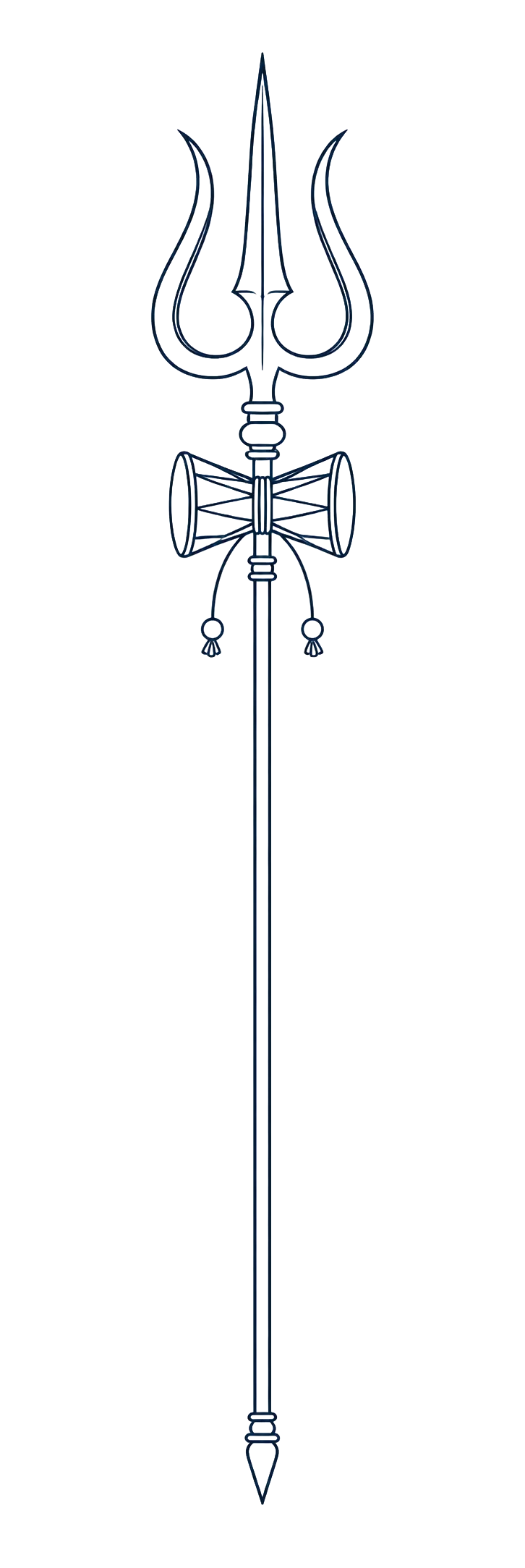
Vedic Gods Part 1
Indra
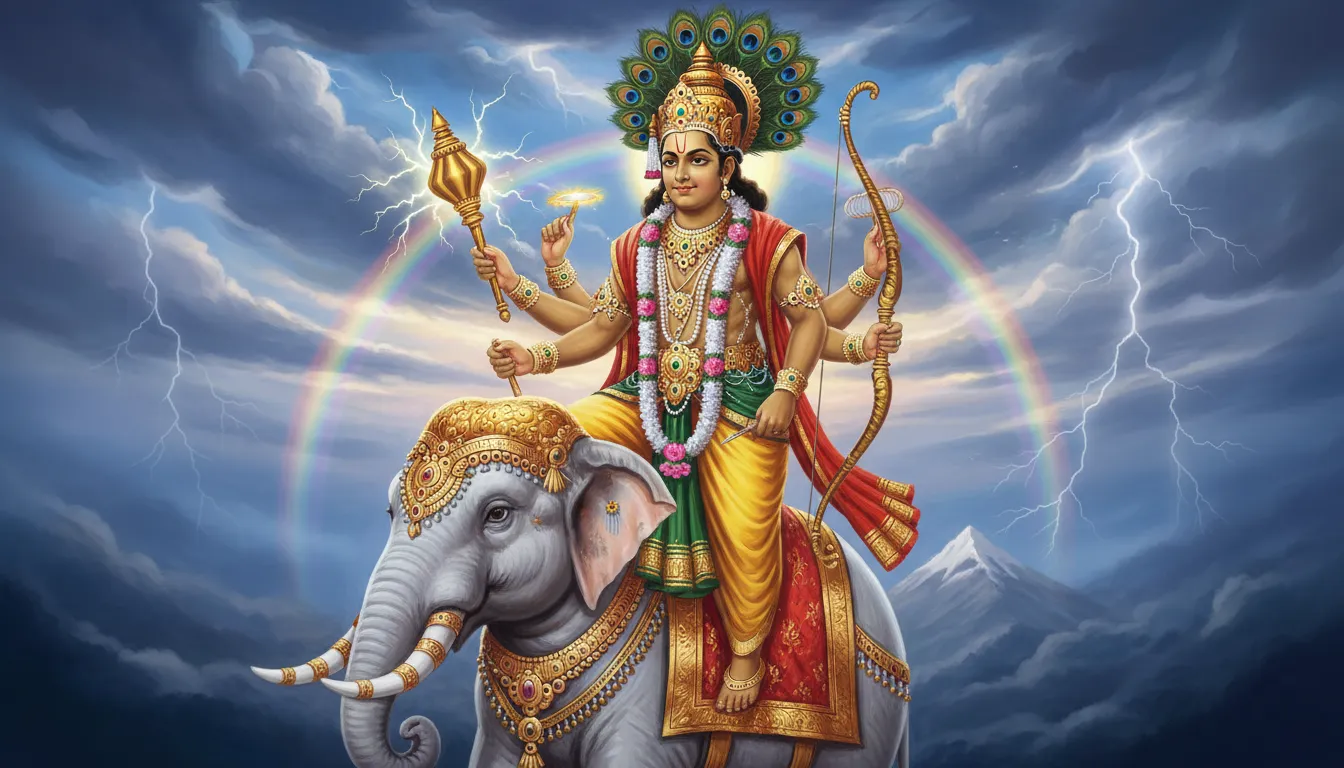
Indra is the lord of the heavens. He is the most popular and powerful of the vedic deities. He is described as the god of the blue sky. He rides a white elephant called Airavata and wields the dazzling weapon of lightening called Vajrayudh made by another god Tvastur. He fought many battles to drive the demons away and ensure victory to the gods. He also destroyed many cities of his enemies. His most famous achievement was slaying of Vratasura. He killed the demon of the dark skies (symbolically the clouds) with his weapon (the lightning) and released the cows (waters) that were held in captivity by him.
Prone to drinking soma, often losing control over himself, mighty and sensuous, always concerned about his survival and status as the leader, at times scheming and at times troubled, Indra is more like a king upon the earth than of heavens. He has a spiritual side too. According to the Kena Upanishad, he is the only god to have gone nearest to Brahman and was to know Him as Brahman. This act of him earned him the right to become the ruler of heavens. In the Chandogya Upanishad we are told that he studied under Prajapathi Brahma and learned the secrets of immortality. in the images, Indra is generally shown with four arms and as riding on a while elephant. Sometimes he is shown with his wife, Sachidevi, but mostly alone. With the emergence of Saivism and Bhagavatism in the post Vedic period, the importance of Indra gradually declined.
Varuna
If we find in Indra the qualities of a war lord or a typical king, in Varuna we see the earliest signs of an omniscient, omnipresent, omnipotent and compassionate God, the precursor the Upanishadic Brahman. Varuna is the ruler of the worlds, the ordainer and enforcer of law and upholder of the world order. In one of the Rigvedic hymns he is described as the Lord of the earth and heaven who sustains the tree that has its roots in heaven and braches down below. This description reminds us of the famous Asvattha tree of the latter day scriptures.
Varuna is the knower of all and controller of all. He is the supreme God capable of controlling and dispensing justice. "He knows the path of birds that fly through heaven, and, Sovran of the sea. He knows the ships that are thereon. True to his holy law, he knows the twelve moons with their progeny. He knows the moon of later birth. He knows the pathway of the wind, the spreading, high, and mighty wind. He knows the Gods who dwell above. Varuna, true to holy law, sits down among his people; he, Most wise, sits there to govern. all." (R.V)
And how does he know all this? With innumerable spies (rays of light) who are spread every where acting as his eyes and ears, he knows all that goes on in this world. If two people talking together, beware that Varuna is there watching every thing that is going on. Born to Aditi, and friend and brother of Mitra, Varuna is the protector, "the Holy One, helper of all mankind, the law maker whose holy laws remain unweakened."
Together with Mitra, he controls the world order, Rta and when people transgress the moral order and commit sin, he knows and punishes them. But if they repent and seek forgiveness, he forgives them too.
He causes the rains to come down and the sun to travel. He makes the rivers flow. The rivers that flows because of him know no weariness, nor they cease flowing. Many invocations of Varuna repeatedly beseech him to forgive sins, like this one," If we have sinned against the man who loves us, have ever wronged a brother, friend, or comrade, the neighbor ever with us, or a stranger, O Varuna, remove from us the trespass. If we, as gamesters cheat at play, have cheated, done wrong unwittingly or sinned of purpose, cast all these sins away like loosened fetters, and, Varuna let us be thine own beloved."
Varuna lost much of his importance as an omnipotent and omnipresent god after Indra assumed more prominence. He was subsequently relegated, or rather demoted to the position of a dikpala or ruler of a quarter (the western hemisphere) and lord of the oceans and water.
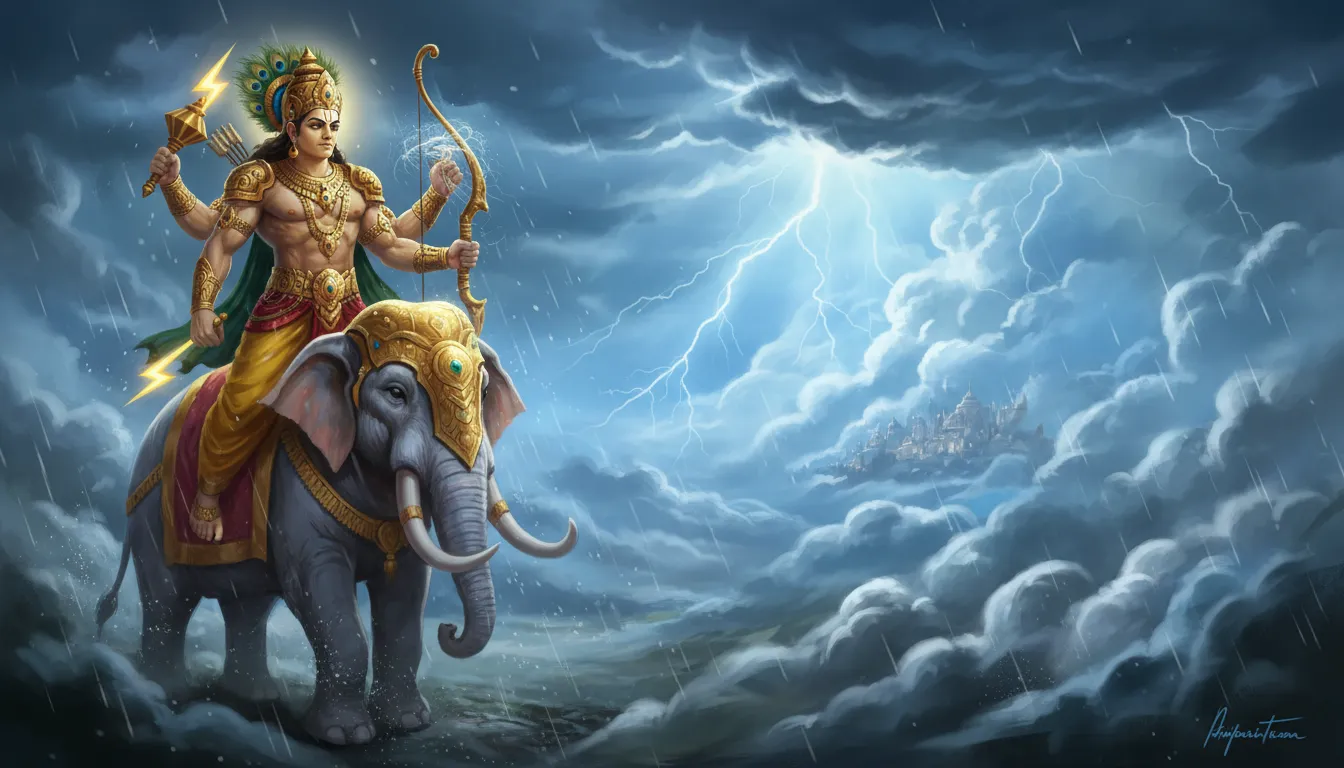
In the iconography he is depicted as the rider of a chariot drawn by seven swans, with four hands and an umbrella over his head. In some images the swans are replace by a crocodile, suggestive of his lordship over the aquatic life.
Agni
Agni is the chosen Priest, God, minister of sacrifice, the hotar, who lavishes wealth and dispels the darkness. Sapient-minded priest, truthful, most gloriously great, ruler of sacrifices, guard of Law eternal, radiant One, no sacrifice is complete without his presence. His presence verily ensures the success of a sacrifice, because whatever sacrifice he accepts goes to the gods. Agni is the messenger, the herald, master of all wealth, oblation-bearer, much beloved, who brings the willing Gods from the heavens and makes them sit on the grass with him near the sacrificial altar.
He is appointed by Manu as the priest. He is often invoked along with Indra, with whom he shares the passion for soma drink. He is also invoked along with Maruts probably to ward off the dangers of forest fires. Agni, was the earliest Angiras, a Seer.
After his holy ordinance the Maruts, were born with their glittering spears. Addressed as immortal Jatavedas, many-hued effulgent gift of Dawn, bearer of offerings and the charioteer of sacrifice, Agni is the Lord of Red Steeds, who loves songs. Kind and bountiful giver of gifts, of wondrous fame, Agni is the friend of all, loved by many in their homes.
The Vedic Aryans were well aware of his destructive ability, as he sets the forests aflame. "Urged by the wind he spreads through dry wood as he lists, armed with his tongues for sickles, with a mighty roar. Black is thy path, Agni, changeless, with glittering waves! when like a bull thou rushes eager to the trees, with teeth of flame, wind-driven, through the wood he speeds, triumphant like a bull among the herd of cows, with bright strength roaming to the everlasting air: things fixed, things moving quake before him as he flies." We also know some thing about his origins. Matariswan brought him down from the heavens and handed him over to the Bhrigus for keeping.
In some of the hymns like the following ones, we see Agni being elevated to the status of a supreme god, " Agni is the Vaivashnara the center of all people ... He is in the sky as well as at the center of the earth." A similar notion can be found in this hymns also. "Commingling, restless, he ascends the sky, unveiling nights and all that stands or moves, as he the sole God is preeminent in greatness among all these other Gods."
In the images, Agni is depicted with two heads, long flowing hair, a pot belly, six eyes, seven hands, four horns and three legs. His seven hands represent the seven flames and the three legs represent the three worlds which he reigns. His pot belly denotes his love for rich oily food. His consorts are svaha and svadha. Being a dhoomaketu, smoke is his banner. The Ram is his vehicle, and the ram being a typical sacrificial animal, his association with it denotes his connection with sacrificial rituals.
Rudra and Rudras
The Rudra of the Rigveda is a militant god of storms and lightening and a "provider of medicines". Though he did not enjoy the same status as Indra, Rudra definitely enjoyed his own importance in the Vedic pantheon because of his tempestuous nature, his association with storms and storm gods called Maruts and his ability to bring medicines to the people to prolong their lives.
He is a fierce looking god, well built and golden in color, with braided hair, "of firm limbs, multiform, strong, tawny, who adorns himself with bright gold decorations. The strength of Godhead never departs from Rudra." Father of Maruts, the Rigvedic hymns describe him eloquently, "Of your pure medicines ... those that are most wholesome and health bestowing, those which our father Manu hath selected, I crave from. Rudra for our gain and welfare."
He wields the thunder bolt, bow and arrow, and sends down streaks of lightening shaking the worlds, making people nervous with fear and trepidation and disturbing the cattle in the cow pens. Intelligent, and benevolent, he protects people from their enemies. We do not know whether the Rigvedic Rudra was a precursor to the Rudra of later times. But the resemblance in some fundamental traits between the two and the appeal to both in prayers and supplications not to harm the cattle and the people with their anger, is too evident to be ignored.
The following hymn is one such example, which in many ways sounds like a verse from the Svetavatara Upanishad, "O Rudra, harm not either great or small of us, harm not the growing boy, harm not the full-grown man. Slay not a sire among us, slay no mother here, and to our own dear bodies, Rudra, do not harm. Harm us not, Rudra, in our seed and progeny, harm us not in the living, nor in cows or steeds, Slay not our heroes in the fury of thy wrath. Bringing oblations evermore we call to thee. Even as a herdsman I have brought thee hymns of praise: O Father of the Maruts, give us happiness, Blessed is thy most favoring benevolence, so, verily, do we desire thy saving help."
Some times the hymns refer to not just one Rudra but a group of Rudras eleven in number. According to some this is a symbolic reference to the ten vital breaths and the mind or suggestive of his association with the Maruts.
Mitra
Mitra and Varuna are both lords of the heaven. Together they uphold the law, cause the cows to stream, the plants to flourish, and, "scattering swift drops, send down the rain-flood". Both are Adityas and mostly are invoked together probably because of their close friendship. The watchful twain, most potent, together uphold Rta or the
moral order. "Firmly set in heaven is Mitra's home, and Aryaman's and Varuna's. Thence they give forth great vital strength which merits praise, high power of life that men shall praise." We are informed from the hymns that Mitra stirs men to action and sustains both earth and heaven. Both Mitra and Varuna are guardians of the world, who sit in a gold hued chariot from day break and behold the infinity. In course of time, Mitra came to be associated with morning light, while Varuna with night sky.
Keep Reading
View All Articles-
Hindu Mythology: Celestial Beings & Sacred Deities
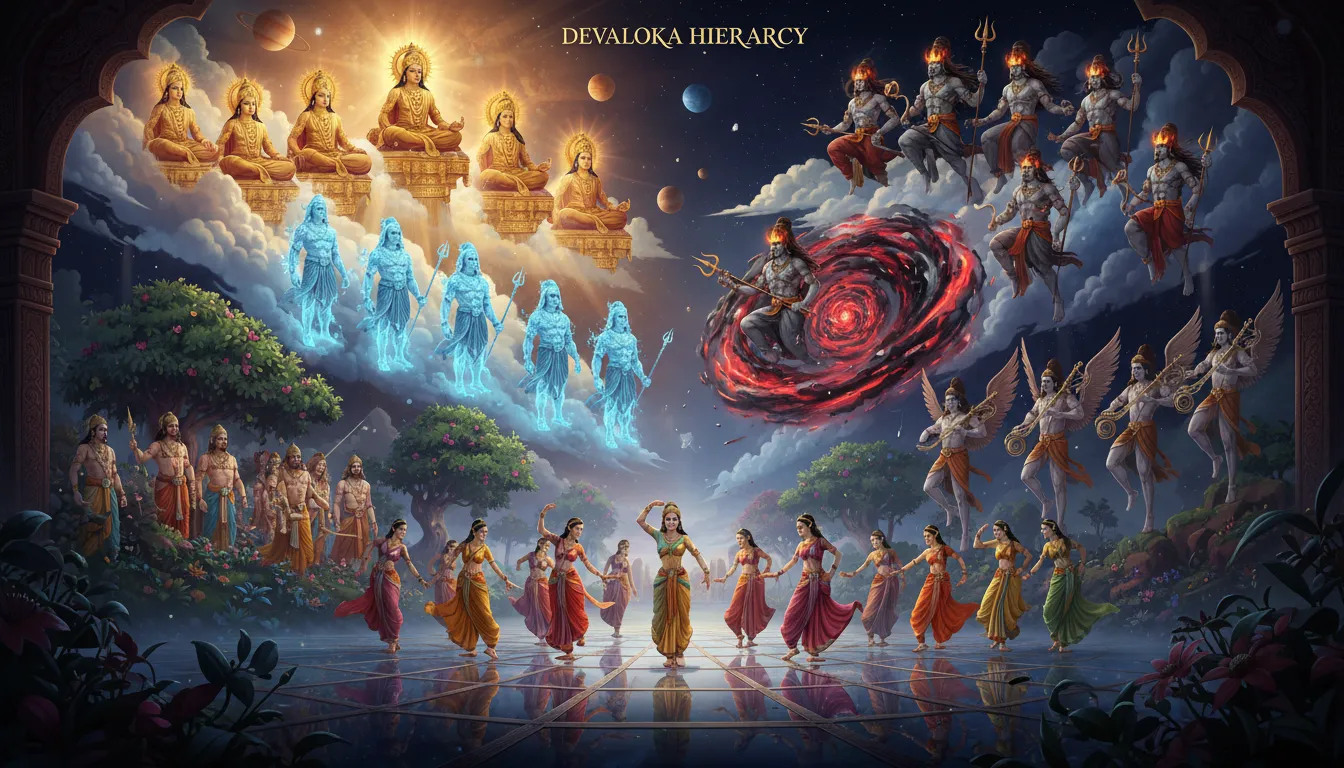
Explore the hierarchy of celestial beings in Hindu texts, including the 12 Adityas, 8 Vasus, 11 Rudras, Yakshas, Gandharvas, and Apsaras
-
Ayurveda Mind-Body Connection: Sutrasthana
Discover Ashtanga Hridayam Sutrasthana Chapter 1. Learn how Ayurveda links mental stress, jealousy, and anxiety to physical chronic illness.
-
Goddess Kaalratri: The Fierce 7th Form of Navdurga
Maa Kaalratri is the seventh form of Goddess Durga and is worshipped on the seventh day of Navratri. Known as the destroyer of fear, negativity, evil forces, and obstacles, she is a powerful divine form associated with courage, protection, and spiritual awakening.